Sacred Reciprocity

Last of the Spirit Keepers – and Gift Offering from Sacred Fire

Announcing Publication of My Article by Sacred Fire Magazine

and Gift Offering for You

For several years I have been sponsoring spiritual travel programs to Chiapas Mexico that include time in the rainforest village of Najá. I’ve been quite honored that Don Antonio Martinez, a Lacandón Maya elder, has been willing not only to meet with us, but to hold the balché ceremony while we’re there. Don Antonio is the last elder still practicing the sacred ways. When he passes it’s likely that these ancient traditions will be gone forever. Over these years I’ve watched the aggressive impact of evangelicals eating away at the Lacandón Maya culture and spiritual traditions, aside from influences from Western culture.
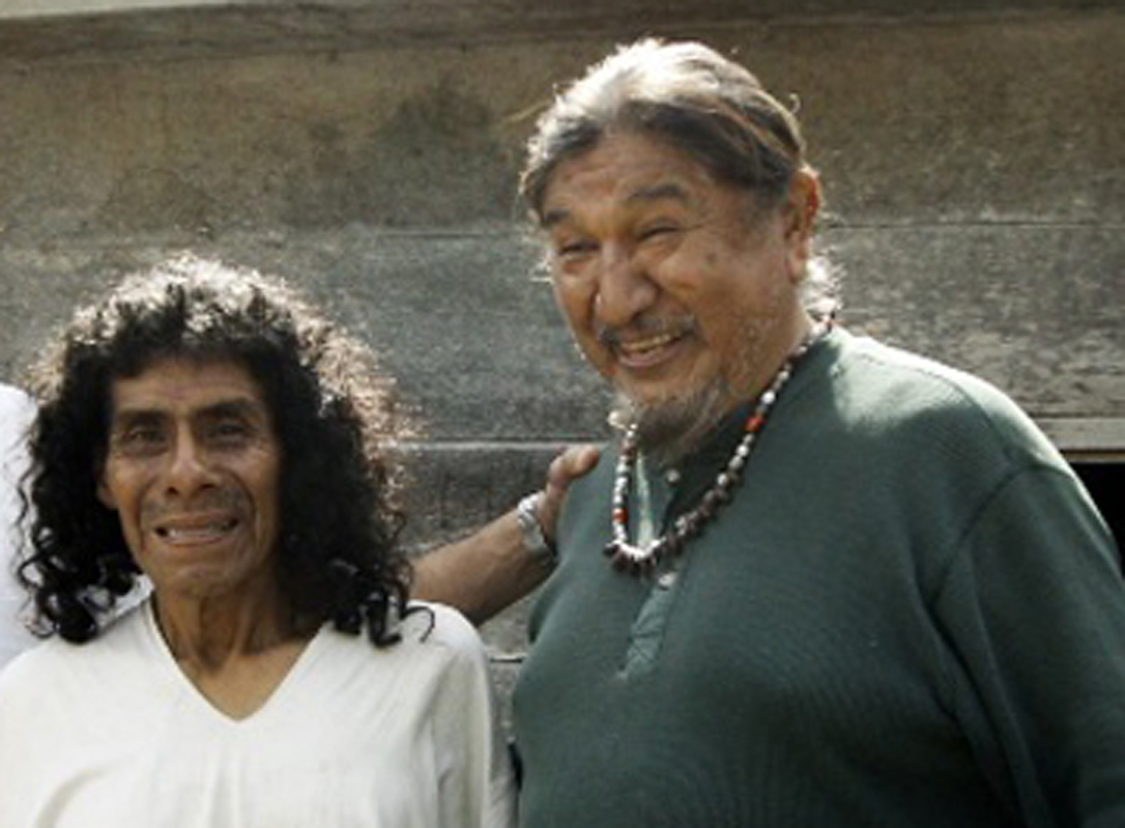
Don Antonio Martinez and Harold Joseph

Lacandón Maya elder Don Antonio Martinez
and Hopi elder Harold Joseph.
Photo credit: Darlene Dunning

Beginning 2009 through Kenosis Spirit Keepers, the nonprofit extension of Kenosis, we’ve been sponsoring Hopi Wisdom Keepers from Shungopavi on these same programs. I’ve written an article highlighting this progressive story of connection between the Hopi and Lacandón Maya and what can happen when relations come together in a beautiful way.

Kenosis Spirit Keepers is a friend and affiliate of Sacred Fire Magazine, published by Sacred Fire Foundation.  Sacred Fire is the only magazine I know of that shares the stories of ceremony, healing and community that bring us all together so we can thrive in these changing times.

Sacred Fire Magazine Issue #16

Fittingly, the article I wrote…

LAST OF THE SPIRIT KEEPERS:
Surrounded by the growing influence of
evangelicals, a Lacandón Maya
Elder tries to keep the godpots burning.

…will be featured in the next issue of Sacred Fire, due out  in early November.

The Magazine would like to gift my readers, colleagues and clients in the US a free copy as a way of introduction. If you would like to know more about Sacred Fire and receive the issue with my article click here.

To receive your gift copy—a $10 value—you can enter your shipping information with this link. Please note that you must submit your order by October 31 to receive your gift copy.

Sharon Brown, the publisher of Sacred Fire, has asked me to tell you that while the gift offer is for US folks at this time, they are working to make a similar offer to those of you outside the US with payment only for shipping. Stay tuned and I hope to make that announcement soon.

Until then…I hope you join me in thanking Sacred Fire for their generosity and important work in service of the planet and global community.
Categories: Healing, Indigenous Wisdom, Lacandón Maya, Sacred Reciprocity, Spiritual Travel | Tags: , , , , | 2 Comments

Sacred Reciprocity – Part II

Excerpted from Navigating Your Lifepath by Carla Woody.

THE NATURE OF TRUE COMMUNITY

In Part I, I wrote about ayni, which can be loosely translated from the Quechua as “sacred reciprocity.” In my estimation, it bears exploring over and over again, as we can dip more deeply into the meanings that rest beneath the surface. Ayni is not merely a concept, something nice to talk about, to the people of the Andes and other Native peoples. It is an actual day-to-day practice so embedded that they don’t even question it.

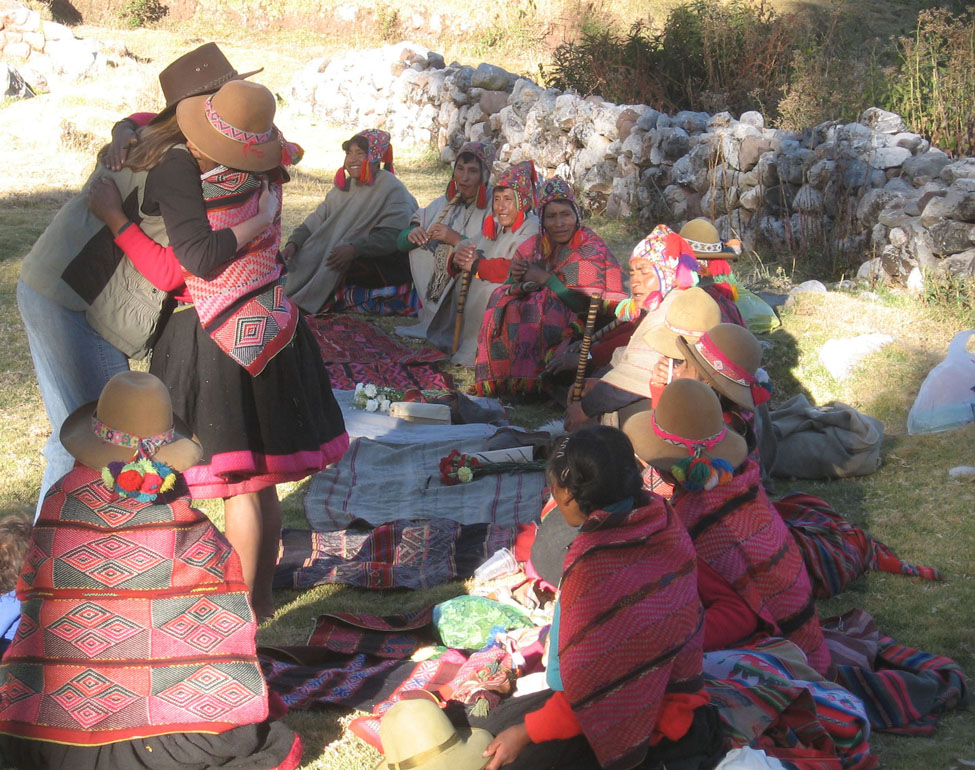
Carla and Q'ero Waikis

The author greeting Doña Carmina and other Q’ero waikis (friends) before a despacho (blessing) ceremony outside Cusco.
Photo credit: Oakley Gordon

In Western culture we think more in terms of giving and receiving. I give you something. You owe me something in return. In the Andean tradition there’s a much different flavor to giving and receiving. It has to do with the support of the entire community, not just one person.

If one person knows how to do something very well and the other person doesn’t, the one who has the skill automatically shares the teaching. The reciprocity comes to the first person in two ways. First, the teacher is validated for her knowledge base and may also learn more through the teaching. Maybe even more importantly, the entire community benefits because there are now two people with added value instead of just one.

COLLABORATION ONLY WELCOME

In 2004 I heard a radio program on global cultural change called “Andean Harvest” on Worlds of Difference that lent a further distinction to ayni and its influence. The interview took place in one of the mountain villages in Peru and had to do with the potato crop, of which there are a few hundred varieties. The challenge had to do with the farmers growing more of the different kinds of potatoes and getting them to market. To do so would give the opportunity to increase their livelihood. As a part of this undertaking, they were being advised by outside sources.

But the farmers rejected most of the sources’ advice. In the interview one of the elders said, “We will do nothing that would put one of us in competition with the other.” He went on to explain that introducing competitiveness would negatively impact the overall health of the community. What he said gave me pause and a great deal of consideration by contrasting it with my home culture.

THE WORTH OF WHO WE ARE

In Western culture, competition is considered healthy, naturally a part of our capitalistic society. Sports teams compete. Sportsmanship behavior is encouraged. But there are a few other strange, although familiar twists, which get in the way and preclude the practice of true ayni as yet.

The programming of our society says that success means we have to “be somebody.” That translates to a profession: doctor or lawyer but not “merely” a mother or father. If we define our worth and identity through career choice, or lack of thereof, there’s a huge convolution to the psyche; it sends the ego scrambling. The natural follow-on is one of competition, individual gratification, the need to “win” in order to be validated. The behaviors that come of this particular mindset produce not community, but a fractured society generating discordant energy.

Competition introduced into locales such as those in the Andes would create confusion, disrupting their underlying spiritual tradition. People there are known not so much by what they do, but by who they are. Many of the shamans and mystics that I have come across in Peru and elsewhere can determine who we are by seeing our energy field. That tells everything. A light energy field and the intent to evolve are what garner respect, not a livelihood.

Witnessing our own thoughts and actions is a slippery slope at best. The ego has all kinds of rationale to convince us that what we do is for our own good and that of those around us. Coming from the culture we do, unconsciously ingesting what we have, we perform a service to ourselves, and ultimately our communities, by being alert and wiser than the ego mind. The Core Self insists on it. Here are a couple of questions to consider.

– How do you find the level of competition around you?

– How can you make space for and “sponsor” others?

***

Go to Sacred Reciprocity, Part I.

Categories: Indigenous Wisdom, Personal Growth, Sacred Reciprocity, Spiritual Evolution, Spiritual Travel, Travel Experiences | Tags: , , , , , , , | 2 Comments

Sacred Reciprocity – Part I

In the traditions of the Andes, ayni is a way of life. This Quechua word has no real translation but loosely summarized means sacred reciprocity, merely one of the life-affirming teachings about balance and flow. I’ve taken it to heart—and attempted to pass the teaching on in my home culture. I say “attempt” because it’s been a real challenge where, in Western culture, it’s so much more about “winning” on an individual level. In other words: What’s In It For Me? When I was a fledgling organizational development consultant decades ago, I even remember being taught to appeal to people through “WIIFM”…in teambuilding workshops, a paradox for sure.

A Marker in Spiritual Evolution

My sense is that when a person reaches certain markers in their spiritual evolution there’s an inherent understanding of the circle of life—that to hoard interrupts a natural flow, not only to the individual, but affects global wellbeing detrimentally. Instead, there’s an automatic desire to give in whatever ways can be given…and there’s no obsession about how something will be received in turn—what is “due” on the other side.

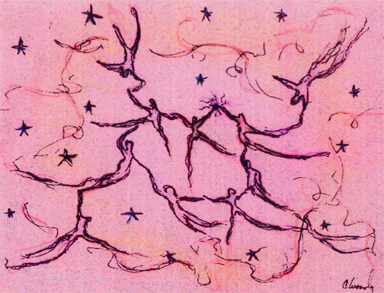
Connection Mixed Media by Carla Woody

Connection, Mixed Media
©1996 Carla Woody

How Sacred Reciprocity Connects Us

In a recent post, I reviewed Jamie Reaser’s new book of poetry Sacred Reciprocity: Courting the Beloved in Everyday Life with beautiful verses about exchange with the Infinite through nature. Ayni touches many places in our lives.

In my review of the documentary El Andalon I introduced you to humanitarian healer Don Sergio Castro, who works with impoverished Maya communities around San Cristóbal de las Casas in Chiapas, Mexico. It was an act of ayni on the part of filmmakers Veremos Productions to have produced it and are donating part of the proceeds to his mission.

Without that film I wouldn’t have known about Don Sergio’s work. As a result of that introduction, audiences with Don Sergio are now part of the itinerary of my spiritual travel program in Chiapas. I’ve asked travelers to bring simple first aid supplies to donate, along with a monetary amount I will make as an offering.

Don Sergio attending young Maya girl

Don Sergio attending young Maya girl.
Photo: Patricia Ferrer

But it doesn’t stop there. One of my subscribers, who lives in France, contacted Patricia Ferrer, who is in Tucson and connected with Don Sergio, alerting her to my review. Patricia has been volunteering with Don Sergio for a few years now, spending between two to five weeks per year. She gives of her skills selflessly. We corresponded and I had the good fortune to meet her in person when I was recently in Tucson for a speaking engagement.

Don Sergio and Patricia working.

Don Sergio and Patricia working.
Photo: Patricia Ferrer

Here are some of Patricia’s words from the article The Circle of Life posted on Meg Pier’s blog View from the Pier:

…Many of the Indios do not want to go to the hospital as they feel discriminated against, they don’t trust the hospital system, and they don’t understand the system nor does the system understand them. Many times they wait too long to go to the hospital and when they finally do go they die as their condition has become too severe…

 …Don Sergio knows these people well and even when he recommends they go to the hospital they are still reluctant: some do, some don’t. The one constant is if they come to Don Sergio he will do his best to help them although he knows the outcome is not good.  The unwavering trust from the Maya is clear when they arrive to his museo, which is also used as a clinic…

Another Opportunity for Ayni

We currently have six more openings for the January 13-25, 2013 Entering the Maya Mysteries program in Chiapas. A portion of tuition is tax-deductible and already designated toward Grandmother Flordemayo’s project to preserve Native seeds.

However, I have promised Patricia that, for each person she refers to me for registration through this blog post or otherwise, I will donate an additional $100 to Don Sergio’s work, aside from what I’ve already planned to personally donate. So, if you are someone who is called to practice ayni in this way while having a life-enhancing experience yourself, please contact Patricia through her blog, or me. When registering for the January program mention her name to ensure the additional donation will be made.

This is one way the circle of life continues to expand.

Ayni has a flow all its own.

Go to Sacred Reciprocity, Part II.

Categories: Healing, Indigenous Wisdom, Sacred Reciprocity, Spiritual Evolution, Spiritual Travel, Travel Experiences | Tags: , , , , , | 8 Comments

Blog at WordPress.com.