Sacred Reciprocity – Part II

Excerpted from Navigating Your Lifepath by Carla Woody.

THE NATURE OF TRUE COMMUNITY

In Part I, I wrote about ayni, which can be loosely translated from the Quechua as “sacred reciprocity.” In my estimation, it bears exploring over and over again, as we can dip more deeply into the meanings that rest beneath the surface. Ayni is not merely a concept, something nice to talk about, to the people of the Andes and other Native peoples. It is an actual day-to-day practice so embedded that they don’t even question it.
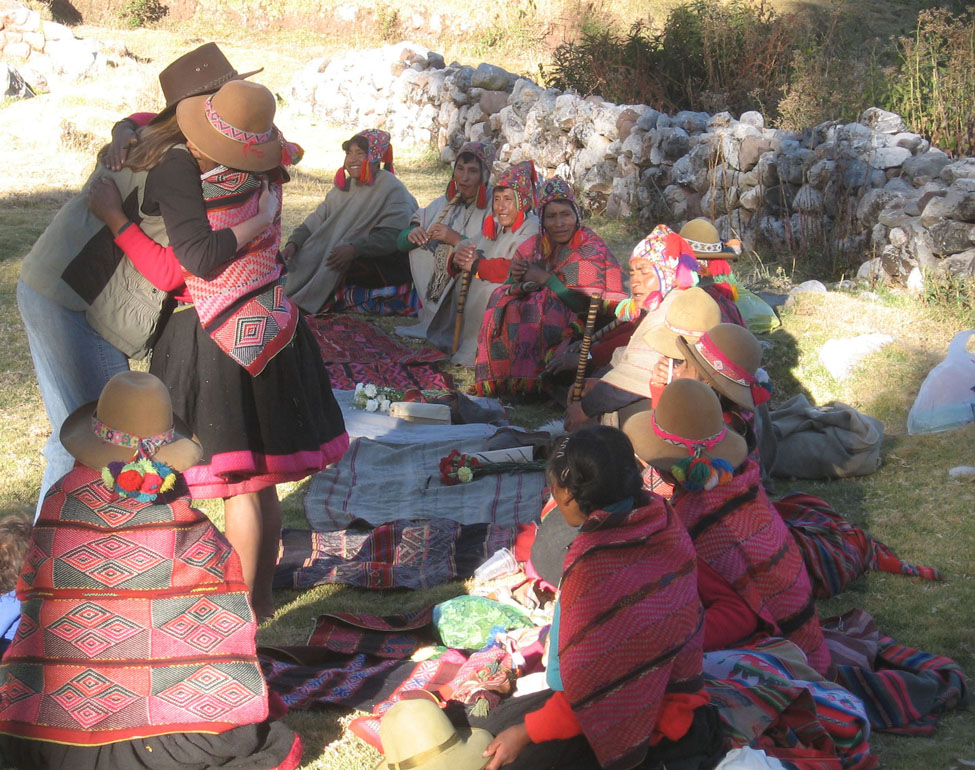
Carla and Q'ero Waikis

The author greeting Doña Carmina and other Q’ero waikis (friends) before a despacho (blessing) ceremony outside Cusco.
Photo credit: Oakley Gordon

In Western culture we think more in terms of giving and receiving. I give you something. You owe me something in return. In the Andean tradition there’s a much different flavor to giving and receiving. It has to do with the support of the entire community, not just one person.

If one person knows how to do something very well and the other person doesn’t, the one who has the skill automatically shares the teaching. The reciprocity comes to the first person in two ways. First, the teacher is validated for her knowledge base and may also learn more through the teaching. Maybe even more importantly, the entire community benefits because there are now two people with added value instead of just one.

COLLABORATION ONLY WELCOME

In 2004 I heard a radio program on global cultural change called “Andean Harvest” on Worlds of Difference that lent a further distinction to ayni and its influence. The interview took place in one of the mountain villages in Peru and had to do with the potato crop, of which there are a few hundred varieties. The challenge had to do with the farmers growing more of the different kinds of potatoes and getting them to market. To do so would give the opportunity to increase their livelihood. As a part of this undertaking, they were being advised by outside sources.

But the farmers rejected most of the sources’ advice. In the interview one of the elders said, “We will do nothing that would put one of us in competition with the other.” He went on to explain that introducing competitiveness would negatively impact the overall health of the community. What he said gave me pause and a great deal of consideration by contrasting it with my home culture.

THE WORTH OF WHO WE ARE

In Western culture, competition is considered healthy, naturally a part of our capitalistic society. Sports teams compete. Sportsmanship behavior is encouraged. But there are a few other strange, although familiar twists, which get in the way and preclude the practice of true ayni as yet.

The programming of our society says that success means we have to “be somebody.” That translates to a profession: doctor or lawyer but not “merely” a mother or father. If we define our worth and identity through career choice, or lack of thereof, there’s a huge convolution to the psyche; it sends the ego scrambling. The natural follow-on is one of competition, individual gratification, the need to “win” in order to be validated. The behaviors that come of this particular mindset produce not community, but a fractured society generating discordant energy.

Competition introduced into locales such as those in the Andes would create confusion, disrupting their underlying spiritual tradition. People there are known not so much by what they do, but by who they are. Many of the shamans and mystics that I have come across in Peru and elsewhere can determine who we are by seeing our energy field. That tells everything. A light energy field and the intent to evolve are what garner respect, not a livelihood.

Witnessing our own thoughts and actions is a slippery slope at best. The ego has all kinds of rationale to convince us that what we do is for our own good and that of those around us. Coming from the culture we do, unconsciously ingesting what we have, we perform a service to ourselves, and ultimately our communities, by being alert and wiser than the ego mind. The Core Self insists on it. Here are a couple of questions to consider.

– How do you find the level of competition around you?

– How can you make space for and “sponsor” others?

***

Go to Sacred Reciprocity, Part I.
Categories: Indigenous Wisdom, Personal Growth, Sacred Reciprocity, Spiritual Evolution, Spiritual Travel, Travel Experiences | Tags: , , , , , , , | 2 Comments

Sacred Reciprocity – Part I

In the traditions of the Andes, ayni is a way of life. This Quechua word has no real translation but loosely summarized means sacred reciprocity, merely one of the life-affirming teachings about balance and flow. I’ve taken it to heart—and attempted to pass the teaching on in my home culture. I say “attempt” because it’s been a real challenge where, in Western culture, it’s so much more about “winning” on an individual level. In other words: What’s In It For Me? When I was a fledgling organizational development consultant decades ago, I even remember being taught to appeal to people through “WIIFM”…in teambuilding workshops, a paradox for sure.

A Marker in Spiritual Evolution

My sense is that when a person reaches certain markers in their spiritual evolution there’s an inherent understanding of the circle of life—that to hoard interrupts a natural flow, not only to the individual, but affects global wellbeing detrimentally. Instead, there’s an automatic desire to give in whatever ways can be given…and there’s no obsession about how something will be received in turn—what is “due” on the other side.

Connection Mixed Media by Carla Woody

Connection, Mixed Media
©1996 Carla Woody

How Sacred Reciprocity Connects Us

In a recent post, I reviewed Jamie Reaser’s new book of poetry Sacred Reciprocity: Courting the Beloved in Everyday Life with beautiful verses about exchange with the Infinite through nature. Ayni touches many places in our lives.

In my review of the documentary El Andalon I introduced you to humanitarian healer Don Sergio Castro, who works with impoverished Maya communities around San Cristóbal de las Casas in Chiapas, Mexico. It was an act of ayni on the part of filmmakers Veremos Productions to have produced it and are donating part of the proceeds to his mission.

Without that film I wouldn’t have known about Don Sergio’s work. As a result of that introduction, audiences with Don Sergio are now part of the itinerary of my spiritual travel program in Chiapas. I’ve asked travelers to bring simple first aid supplies to donate, along with a monetary amount I will make as an offering.

Don Sergio attending young Maya girl

Don Sergio attending young Maya girl.
Photo: Patricia Ferrer

But it doesn’t stop there. One of my subscribers, who lives in France, contacted Patricia Ferrer, who is in Tucson and connected with Don Sergio, alerting her to my review. Patricia has been volunteering with Don Sergio for a few years now, spending between two to five weeks per year. She gives of her skills selflessly. We corresponded and I had the good fortune to meet her in person when I was recently in Tucson for a speaking engagement.

Don Sergio and Patricia working.

Don Sergio and Patricia working.
Photo: Patricia Ferrer

Here are some of Patricia’s words from the article The Circle of Life posted on Meg Pier’s blog View from the Pier:

…Many of the Indios do not want to go to the hospital as they feel discriminated against, they don’t trust the hospital system, and they don’t understand the system nor does the system understand them. Many times they wait too long to go to the hospital and when they finally do go they die as their condition has become too severe…

 …Don Sergio knows these people well and even when he recommends they go to the hospital they are still reluctant: some do, some don’t. The one constant is if they come to Don Sergio he will do his best to help them although he knows the outcome is not good.  The unwavering trust from the Maya is clear when they arrive to his museo, which is also used as a clinic…

Another Opportunity for Ayni

We currently have six more openings for the January 13-25, 2013 Entering the Maya Mysteries program in Chiapas. A portion of tuition is tax-deductible and already designated toward Grandmother Flordemayo’s project to preserve Native seeds.

However, I have promised Patricia that, for each person she refers to me for registration through this blog post or otherwise, I will donate an additional $100 to Don Sergio’s work, aside from what I’ve already planned to personally donate. So, if you are someone who is called to practice ayni in this way while having a life-enhancing experience yourself, please contact Patricia through her blog, or me. When registering for the January program mention her name to ensure the additional donation will be made.

This is one way the circle of life continues to expand.

Ayni has a flow all its own.

Go to Sacred Reciprocity, Part II.

Categories: Healing, Indigenous Wisdom, Sacred Reciprocity, Spiritual Evolution, Spiritual Travel, Travel Experiences | Tags: , , , , , | 8 Comments

What Is Renewal? – Part II

In the Part I of What Is Renewal I relayed my experience at a conference back in 2007 put on by the Bali Institute of Global Renewal when a young man asked me…

Do you think it’s time for some traditions to die

so the next thing can come along?

And after my initial shock at his question I recovered enough to answer…

The thought of that happening hurts my very soul.

I don’t remember what else I said and it probably wasn’t as coherent as I’d have liked just because of the powerful emotions washing over me in that moment. But I do know that I thanked him for his question; I said it was personally quite significant to me. He looked perplexed.

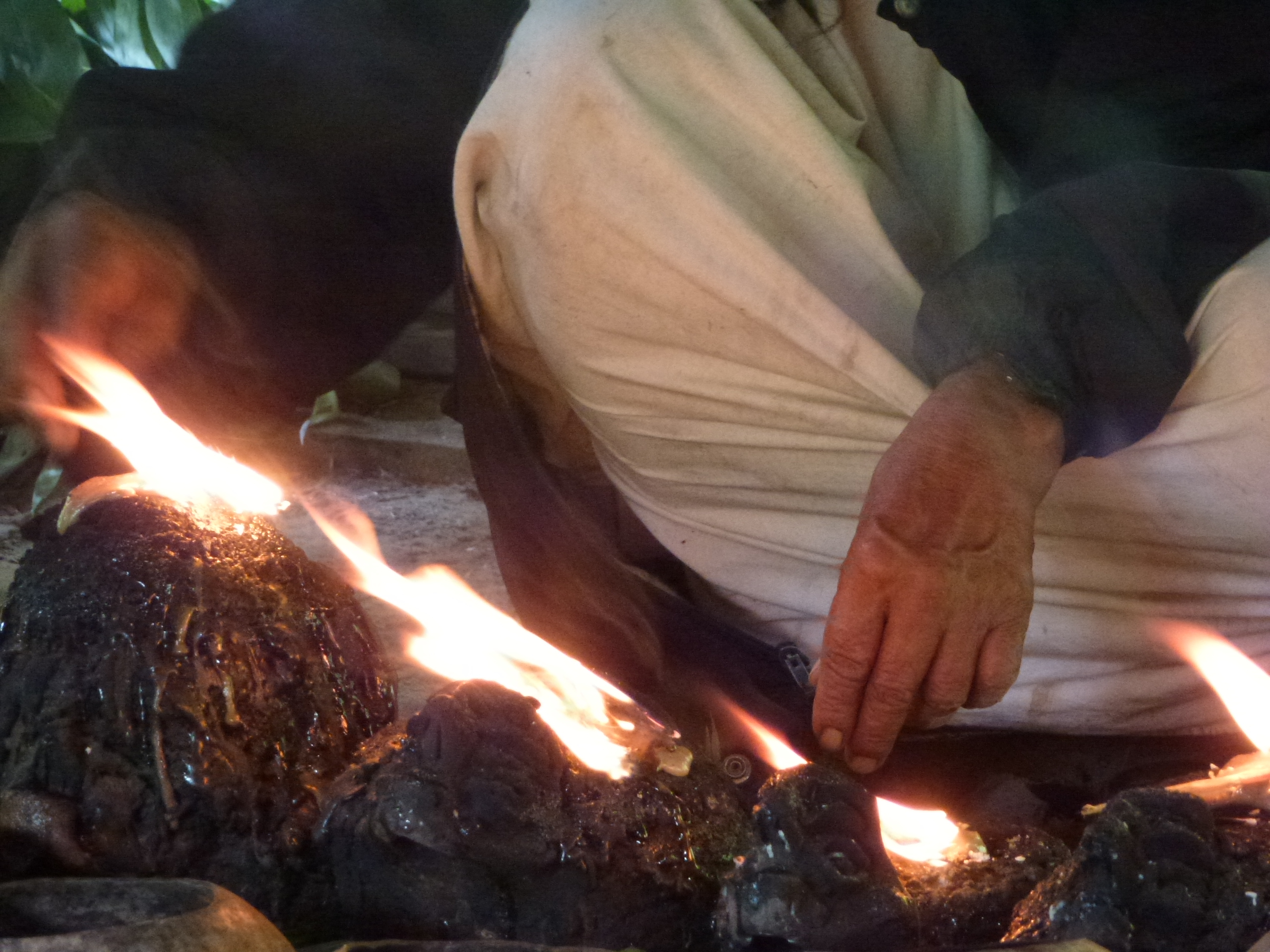
Don Antonio lighting the godpots

Don Antonio Martinez lighting the godpots during the sacred balché ceremony of the Lacandón Maya.
Photo: Carla Woody

WE HAVE A HUNGER

Do I understand about cycles, death and rebirth, seasons? Of course. Transition is the nature of the work I do every day. Is it time for these traditions to return to the ether? No! At least, certainly not yet.

Through my experiences with Native peoples over the years, I’ve learned these things: They are people who touch the earth, live close to it, who understand the nature of connection of all things…energy…sharing in community…a global consciousness. They hold these threads sacred in their now fragile traditions.

If you’re reading this article, then you probably belong to a culture that has largely forgotten these things. And we’re hungry for these aspects that are so rare or fleeting in our present-day societies—especially because the pendulum swing seems stuck toward destruction of these values.

Part of my involvement at the conference was to help facilitate a track called “Language of the Soul.” On the final day of that forum, and as a culmination to our activities and discussions, I guided a despacho ceremony—learned from Q’ero spiritual leaders— with those who had chosen that track, about forty people. To my knowledge only one other person there was familiar with the blessing ritual. But all actively participated: folks from such far-flung places like China, Malaysia, Indonesia, Zimbabwe, Australia, United States and others. Afterwards, they made comments about the effect it had on them, such as feeling moved and the sensation of energy for the first time.

BEARING WITNESS

Hopi Harold Joseph sharing traditions in Don Antonio's godhouse

Hopi elder Harold Joseph (left) sharing traditions in Don Antonio’s godhouse after the balché ceremony.
Photo: Darlene Dunning

I fully believe that if we honor Indigenous traditions such as those I discussed in Part I…if we’re willing to sit in circle…to take part in these deeply held spiritual rituals…then we touch what’s timeless. We’re injected. A transmission takes place that gets integrated into who we are in the world.

And when we hold sacred witness to those who have had the difficult and usually thankless role of holding these filaments—and honor them for the stake they’ve held—a sacred reciprocity occurs. There is a ripple that goes out. When there are enough of us engaged in this way, then perhaps it’s time for some traditions to relinquish themselves. That’s hardly yet though, is it?

Isn’t it ironic that this consideration came to me at a conference whose subject matter was global renewal? Maybe it’s easier to create a careful cocoon, to insulate ourselves, to stick our collective heads in the sand and ignore what’s happening around us. I can’t do it.

My soul won’t let me.

I offer spiritual travel journeys with the premise of supporting Indigenous traditions that are so in danger of decimation through influence from Western culture. Through Kenosis Spirit Keepers, the nonprofit extension of my organization, we sponsor Native Spirit Keepers living in the US so that they may sit in circle and reconnect with Maya, Q’ero and Quechua spiritual leaders and community. Through this intangible process I have witnessed the important effect it has—spiritual beauty and strength.

For Western travelers who accompany me, I view our participation and witnessing as a gift of respect, aside from the transformational aspects it has on us.

And the long-term effects are forever carried in our souls.

***

For those who are moved to support this work in preservation of Native wisdom traditions and well-being of the Maya people, please join us for Entering the Maya Mysteries, January 13-25, 2013. Your participation matters. Also see my post on the humanitarian work of Don Sergio Castro. Grandmother Flordemayo of the International Council of 13 Indigenous Grandmothers will be with us in January blessing our travels with prayers.

Categories: Healing, Indigenous Wisdom, Lacandón Maya, Spiritual Evolution, Spiritual Travel | Tags: , , , , , , | 3 Comments

What Is Renewal? – Part I

(Original article written in 2007 with additions here.)

Recently I had the good fortune to be invited to participate in a conference on global renewal sponsored by the Bali Institute. It was held in Ubud, considered to be the cultural and spiritual center of Bali. This was a significant gathering bringing together people from many countries with at least one thing in common — a vision for a better, kinder world and the strong desire to make it happen now. I’m still digesting all that happened for me. Part of it I will share with you here.

GLOBAL RENEWAL

Balinese temple figure

Balinese temple figure.
Photo: Carla Woody

It was the second day of the conference and I had arrived early to the Bali Classic Centre where it was held. It’s a site too beautiful for words with temples, lush foliage and meandering pathways throughout. I was standing in the open-air pavilion where people tended to gather during breaks, just enjoying my surroundings, when a young man approached me asking if he could speak to me. He indicated he had seen some literature on the programs I’m doing with the Maya in the Chiapas region of Mexico. In particular he was interested in Don Antonio Martinez, the last Spirit Keeper practicing the ancient sacred traditions of the Lacandón Maya. Then he said something I didn’t at all expect.

 Do you think it’s time for some traditions to die

so the next thing can come along?

 Whether his question came out of earnest interest or a flip attitude didn’t really matter. His words hit me like a shock wave that reverberated in hidden, interior places. This was a question I had come to Bali to hear.

FRAGILE TRADITIONS

Don Antonio and Balche Ceremony

Don Antonio Martinez of the Lacandón Maya during the balché ceremony.
Photo: Carla Woody

While I’m fairly sure the effect of the missile wasn’t apparent from the outside, my mind was immediately flooded with images. I replayed a time earlier that year with Don Antonio in the middle of the rainforest village of Najá, in his lone god house, burning copal in two of his god pots, chanting, invoking connection with Hachäkyum, the principal deity of the Lacandón, and another god in honor of our visit. He’d chuckled softly when the copal in one of the pots had at first refused to light saying that god was shy that day.

There was evidence of hundreds of such ceremonies in the burnt residue in his god pots, mounded to overflowing. He needed to retire these god pots and replace them with new ones. When asked why he hadn’t, he said that since the road had cut through the jungle to Najá it brought too much noise for the sacred renewal ritual. I remember remarking to myself how very little disturbance there was in contrast with what we visitors had at home. But still, it was an affront to the gods.*

Q'eros of Peru

Sitting in circle with Q’ero spiritual leaders.
Photo credit: Monty DeLozier

Another image came to me in the next split second, this time in the high mountains of the Andes in Peru, sitting in circle with Q’ero paq’os, or shamans, and other members of the Q’ero Nation, participating in a despacho, or blessing, ceremony. The absolute sense of collectively touching something beyond what is ordinarily presented, my eyes swept the circle of travelers who had come with me; I noted the ceremony’s subtle and sometimes dramatic effect on them.

These experiences are precious and will perhaps soon border on extinction just like in the Lacandón rainforest and the myriad other places where the footprint of modern society has been placed. A road is planned to Q’ero, which, until this time, has remained isolated at 17,000 feet in altitude with traditions pure and intact.

Hopi Spirit Keepers 2007

The author with Hopis Clarence Washington (lft) and David Washington (rt) at Salk’awasi, Mollamarka, Peru.
Photo: Darlene Dunning

Then my mind came to rest on the memory of the Hopi father and son that we sponsored to the Andes that past summer. I recalled the gratitude they expressed frequently, through tears, to be gifted with the opportunity to be in circle with their Quechua brothers and sisters and what it meant to them.

As I absorbed the ultimate meaning of the young man’s question coupled with these recollections, I was surprised to find tears welling up from my heart, through my throat, discovering moisture in my eyes. And in a cracking voice, this is what I said to him.

The thought of that happening hurts my very soul.

***

Go to Part II.

*In an area now thoroughly infiltrated by missionaries and decimated by logging companies, Najá was the last hold-out until Chan K’in Viejo, their powerful Spirit Holder, passed in 1997 at about 105 years old. Don Antonio, his son-in-law, is now the last Spirit Keeper maintaining the traditional beliefs and ceremonies.

If you are called to support preservation of these fragile traditions—and have a life-transforming experience yourself—I invite you to join us for Entering the Maya Mysteries, January 13-25. Among other opportunities to engage with authentic Maya spiritual leaders, Grandmother Flordemayo, a member of the International Council of 13 Indigenous Grandmothers, will travel with us…lending her prayers to our circles.

Categories: Healing, Indigenous Wisdom, Lacandón Maya, Spiritual Evolution, Spiritual Travel, Travel Experiences | Tags: , , , , , , , | 1 Comment

Review – Sacred Reciprocity: Courting the Beloved in Everyday Life

The Poetry of Jamie Reaser

The beauty of Jamie Reaser’s poetry causes my heart to thrill, to ache, to still—with each turning of lyrical phrase. In Sacred Reciprocity she is both transparent seeker, sitting in deep communion, and gentle guide, gracefully leading us to those innermost places where the Soul revels.

The Sacred Way of Giving and Receiving

Sacred Reciprocity by Jamie Reaser

Sacred Reciprocity by Jamie Reaser
Newly published by Hiraeth Press

Jamie and I have a mutual connection through Andean mystic Don Américo Yábar where, many years ago, we were both exposed to the life-affirming practice of reciprocity—in a vastly different way than when we think of that word in our culture. The Quechua word ayni has no exact translation but can be understood as a sacred sense of giving and receiving, a balanced energetic exchange. You see, in the Andes, all is related to energy and respect. Ever since I learned of ayni, its my daily intent. I’ve taken it to heart.

So has Jamie; she offers this further distinction in the introduction to her new book: “…Ayni can be established among people, between humans and all other beings, and between all beings and the animate Cosmos…What is given may not be anywhere near as important as how it is given. In ayni, it is the heart that counts.”

Jamie Reaser is a naturalist who has worked around the world as a biologist, environmental educator, eco-psychologist and much more. But the aspect that allows me to know her true nature—and devotion to ayni—is her ability to: sit in silence where she lives in the Blue Ridge Mountains of Virginia; take in the glory she experiences…and transmit it back in such beautifully accurate ways that speak of our common condition. Here is just one sample.

 Dawn Kiss

The Sun,

dressed in dawn robes,

rose with time enough

to kiss the Moon, his beloved,

on full, wanting lips.

Birds,

still distinguishing themselves from

the wings of dreamtime,

looked abashedly at each other,

wondering…

How often had they

failed to seize

a precious passing moment…

A moment that could have

united the transiting heavens.

That was the morning birds

decided to sing.

Jamie will be joining us for our Winter Solstice “Entering the Maya Mysteries” journey to the highlands of Mexico and Guatemala. I’m delighted that she has consented to share her poetry during sacred periods of those travels because—I know—it will add to the deep meaning of that time.

Sacred Reciprocity: Courting the Beloved in Everyday Life is a new title published by Hiraeth Press in August 2012; also available via Amazon. My review of Note to Self, her previous book of poetry, is located here. And be sure to visit her poetry blog Talking Waters.

Categories: Book Review, Meditation, Spiritual Evolution, The Writing Life | Tags: , , , , , , | 3 Comments

September 26 Lifepath Dialogues Gathering

Lifepath Dialogue Gathering

Exploring the many threads that weave together an expressive, celebrated life.

MARK YOUR CALENDAR AND JOIN US FOR DIALOGUE THAT MATTERS

You are invited! Please pass to friends and family.

SEPTEMBER 26, 6:30-8 PM

FREE Monthly Gathering on Fourth Wednesdays

Creekside Center, 337 N. Rush Street, Prescott, Arizona

September’s topic:

THE EDGE OF LIMITATION

with

CARLA WOODY
Author of Calling Our Spirits Home and Standing Stark
Founder, Kenosis and Kenosis Spirit Keepers

Ross Dunbar, ND, MSOM

Ross Dunbar, ND, MSOM
Photo credit: Carla Woody

September’s special guest is S. Ross Dunbar, ND, MSOM, a Naturopathic physician and Chinese medicine practitioner who has practiced in Prescott, Arizona for the past 10 years. He has studied and practiced alternative medicine since 1995 and is passionately committed to achieving wellness through various alternative modalities by accessing the body’s own innate ability to heal. Dr. Dunbar has achieved great results with his patients by listening empathically and thinking strategically, blending a broad array of traditional and cutting edge, alternative treatment methods. Through a comprehensive clinical evaluation, including lab work and medical history, he creates a holistic treatment plan comprised of dietary, lifestyle and nutritional recommendations as well as any Chinese herbal medicines that may be appropriate. Modalities of treatment may also include acupuncture, homeopathy, musculoskeletal manipulation, IV nutritional therapy, injection therapy, and prescription medication. Dr. Dunbar works collaboratively to design a treatment plan that is realistic, achievable, and is in line with the patient’s needs and goals.

Dr. Dunbar

Dr. Dunbar performing acupuncture.
Photo credit: Carla Woody

For more information, Dr. Dunbar can be reached at Prescott Naturopathic Medical Group, 810 W. Gurley St. Prescott, AZ 86305, (928) 445-1999.

I’m very much looking forward to presenting some material on The Edge of Limitation and opening a discussion with Dr. Dunbar for its relevance based upon his philosophies and professional practice. For more information on the topic see my blog post.

Email: info@kenosis.net or call 928.778.1058.

Categories: Healing, NLP, Personal Growth, Spiritual Evolution | Tags: , , , , , | Leave a comment

The Lifepath Dialogues Gathering: The Wake-Up Call (Audio)

The Lifepath Dialogues Gathering is held on the fourth Wednesdays, 6:30-8 PM, at Creekside Center in Prescott, Arizona. The intent is to build like-hearted community and dialogue about what truly matters. I choose monthly topics from my blog and host the evening with special invited guest(s) whose philosophies and work are relevant to the topic. The format involves my presentation of material to create a framework and interview of the special guests. This portion is recorded to share with the world community—wherever you are. Then we turn off the recorder and turn to intimate sharing.

The August 22 Lifepath Dialogues Gathering:

THE WAKE-UP CALL

My special guests for this month were Marilyn Markham Petrich and Al Petrich of Aloha Emergence Care. My thanks to Marilyn and Al for their addition to the in-depth sharing we enjoyed. In this recording, you’ll first hear Al Petrich playing the Hawaiian nose flute, beautifully haunting music, to open our evening. The complete unedited audio is 42 minutes long. Click on the link below to listen. Please be patient as it may take a few minutes to download! I hope you enjoy. We had a great time and a wonderful turn-out. Many thanks to you local folks for engaging in this way!

The Lifepath Dialogues Gathering: The Wake-Up Call (Audio)

Speakers Photo

Marilyn Petrich (left), Al Petrich (center) and Carla Woody (right) at the August 22 Lifepath Dialogues Gathering.

You may contact Marilyn and Al by calling 1 (928) 445-9646, email alohaemergence@gmail.com or visiting their website: http://www.emergencecare.com/aloha_bio.html.  And I always love to hear from folks: phone 1-928-778-1058 and email cwoody@kenosis.net.

Next Month’s Lifepath Dialogue Gathering:

THE EDGE OF LIMITATION

Our next gathering will be held on Wednesday, September 26, 6:30-8 PM, at Creekside Center as usual. My special guest will be Ross Dunbar, ND, MSOM, a Naturopathic physician and Chinese Medicine practitioner who has practiced at the Prescott Naturopathic Medical Group for the past ten years. I’m quite pleased that he has accepted my invitation to offer his perspective on The Edge of Limitation.

To remain current on monthly topics subscribe to The Lifepath Dialogues blog or Kenosis Inspirations ezine.

Categories: Healing, Personal Growth, Spiritual Evolution | Tags: , , , , | Leave a comment

Review – Faustino’s Patagonian Retreat

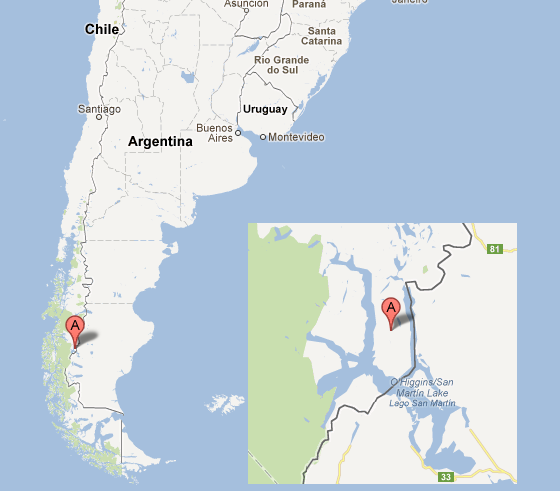
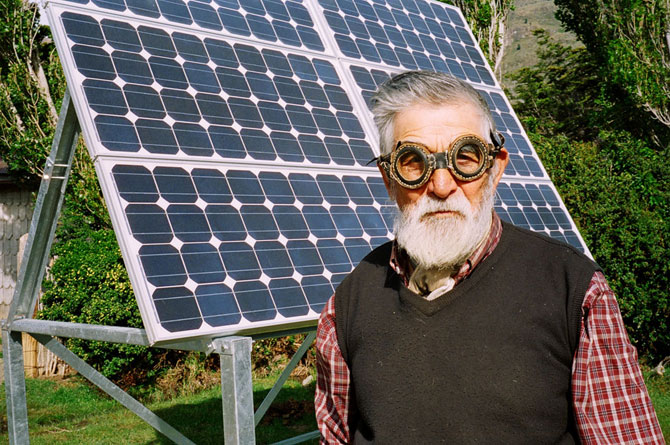
Map La Florida PeninsulaFaustino Barrientos lives alone on the isolated Patagonian peninsula called La Florida near the shores of Lake O’Higgins. He’s been there since 1965 relishing the nearly lost lifestyle of the Chilean gaucho. Faustino has completely removed himself from civilization with the exception of a solar panel to run his radio, a chain saw, and a few other such implements that make a simple life a little easier. “If you spend a year without going out, you see nobody,” he said. And he’s chosen that life.

Vice Media sent a young film crew from New York to make a documentary on Faustino for their show Far Out: Lifestyles of the Remote and Solitary. It took them four days to reach him by plane, pick-up truck, ferry and finally by foot. Faustino had the reputation from family, and villagers from the town he left, of being cantankerous with not much use for people, even as a young man. The young filmmakers were worried. They were going into an isolated wilderness with no possible communication to the outside world to meet a recluse with a bad reputation—unannounced.

Faustino at Lake O'Higgins

Faustino at Lake O’Higgins
Photo: Peter Sutherland

Their fears were set aside after meeting an eighty-one year old man who was quite gracious and robust. He welcomed them. This documentary is Faustino’s story: how he came to live the last forty-six years in self-imposed solitude and the ingenuity it took for him to thrive; and how he’s bearing witness to global warming in a manner up front and personal.

Faustino and his hand-made goggles

Faustino and his hand-made goggles.
Photo: Peter Sutherland

I wondered if the filmmakers would touch on the spiritual fortitude it must take to live such a life. They didn’t—except to cover a story of Faustino’s early vigilante tendencies and the kindness they found instead. They did note that there was much Faustino kept to himself.

Faustino in hut

Photo: Peter Sutherland

The film is thirty-seven minutes. I was touched. You can see the trailer and complete film for free here.

Categories: Film Review, Solitude | Tags: , , , , | Leave a comment

Review: El Andalón (The Healer)

Don Sergio doctoring

Don Sergio Castro attending a patient.
Photo: Director Consuelo Alba & Producer John Speyer

El Andalón is a thirty-minute documentary about the healing work of humanitarian Don Sergio Castro who lives in San Cristóbal de las Casas in Chiapas, Mexico. It opens with a scene of Don Sergio swabbing a patient’s injury, all the while speaking kindly. He has been doing the same thing for nearly fifty years seeing about twenty people a day. His patients are the poor, coming to him from the town and surrounding area; and he makes the rounds to Maya villages where he’s much needed. The documentary contains several stories like this of a woman who had a severe injury to her leg:

I don’t know what kind of magic he has in his hands…but he heals…sometimes we aren’t so welcome in the hospital…(She breaks down in tears.)…I almost lost my leg and thanks to him I was healed…

My friend and colleague Carol Karasik said of Don Sergio: “He’s known as something of a saint here. He works with not even as much as most Americans have in their medicine cabinet.”

Don Sergio doesn’t charge his patients; they pay him with their blessings or tamales. His generosity has often made it difficult to make ends meet for his own family—or to fund the work to which he’s dedicated. Years ago, some patients began giving him their own traditional clothing. Don Sergio discovered that visitors were quite interested in these samples. He hit upon a brilliant idea and opened his own small textile museum, which doubles as a clinic. From that source and the occasional donation he’s somehow been able to keep going.

But his work doesn’t stop with doctoring. Villagers began asking him to help with other matters, including schools for their children where there were none. They had no help from the government. So far Don Sergio is responsible for raising funds to help them build twenty-five schools.

Ccochamocco School

School in the Q’ero village of Ccochamocco
Photo: Freddy Machacca

This clearly brought back my own remembrance of being asked by Q’ero spiritual leaders to help do the same for the high altitude village of Ccochmocco in the Andes of Peru: now operating since March 2010. It wasn’t an easy task.

With the dip in tourism to Mexico, Don Sergio’s ability to fund his work has been severely affected. At one point toward the end of the film he becomes overwhelmed with emotion. With a hand gesturing skyward he sends a prayer up that he finds a way to continue. It was heart-rending to me.

I somehow stumbled upon this documentary and then queried Carol. As a result we are now including an audience with Don Sergio and a visit to his textile museum in our “Entering the Maya Mysteries” program during our time in San Cristóbal. I have asked participants to bring any medical supplies they can as a part of our offering, aside from a donation I’ll make from Kenosis—and look at ongoing ways to support this self-less humanitarian work.

Viewers of the film will also get a glimpse Don Sergio with Don Antonio Martinez, with whom we engage in the Lacandón Maya village of Najá, as well as spiritual leader Chan K’in Viejo who passed in the 1990s. The village of Chamula will look familiar to folks who have traveled with us.

El Andalon

Film Poster
Director: Consuelo Albo
Producer: John Speyer

I want to personally thank director Consuelo Alba and producer John Speyer for bringing to light Don Sergio’s work; and to Culture Unplugged for sponsoring it on their website. You can view their documentary on Culture Unplugged. It’s well worth your time.

Categories: Film Review, Healing, Indigenous Wisdom, Lacandón Maya, Spiritual Travel, Travel Experiences | Tags: , , , , , , , , | 2 Comments

Sculpting a Life

I just completed a three-day workshop at the Mountain Artists Guild with artist Mary Schulte exploring papier mache and concrete sculpture. Sculpture isn’t something I’d done before; I’d never been attracted or even curious. But I met Mary and saw her exquisite papier mache giraffes in June at the “Arte Natura” artists’ reception at the Prescott Center for the Arts Gallery where my own artwork was also exhibited. And something pulled at me; I was intrigued.

Papier Mache Horse

My first attempt at papier mache: a whimsical horse with twigs for legs and straw for mane and tail.

Close-up of horse

Her gentle soul emerged.

That “something” had been running under my skin for a while urging me to move out of the status quo. I long ago learned that when I get a solid internal signal I follow it—even though all the “whys” are unclear. And if the usual excuses of “not enough” time…money…you name it…jump up especially strong then I acknowledge the excuse but set it aside; I’m then certain I’m on the right track. I just follow my initial intuition because…I also learned something else many years ago. The part of me that seeks to maintain the comfort zone gets quite vocal when familiarity is threatened.

In her introduction Mary talked about the types of sculpting. You can carve away like you would with marble or wood. Or you can hand build, adding layer by layer, as in the case of the media we would use. Over the next three days we students—none of us having done anything like it before—engaged in a joint journey of discovery with Mary as our skilled guide.

We students agreed on several things:

  • Undertaking the exploration was exhilarating and fun;
  • There’s focused attention to learning;
  • One medium was easier than the other;
  • Just because one took more learning didn’t mean we’d rule it out;
  • Having a guide who knows the territory saves a ton of angst and wasted time;
  • Even though we did similar things, we each had our own unique signature;
  • By deciding to undertake even this small journey it instilled options and a further sense of freedom.
Concrete Raven

This bird was as feisty as the concrete medium. He became more raven-like as he emerged, grew claws and perched on a wooden branch.

Ultimately, you can look at everything you do for cues as to your own growth. The important thing is to be active. Get out of your comfort zone. Stretch yourself. Otherwise, you relegate yourself to a ho-hum life.

By virtue of its definition, personal growth requires you to carve away what no longer fits or serves you; and to add what does and build upon it.

For me, I learned that my other art capabilities are transferable to an area I hadn’t even considered. And those three days were well spent. Aside from learning a new skill I could add into my body of resources, it did something even more important. It served to open a doorway and leverage evolution—giving a clear announcement to myself that I’m on the move. Permission granted.

***

If you’d like to know more about Mary Schulte’s artwork or when she’ll offer workshops, contact her at vam@cableone.net. I recommend it!

Categories: Arts, Creativity Strategies, Personal Growth, Spiritual Evolution, Visual Arts | Tags: , , , , , , , | Leave a comment

Blog at WordPress.com.