
Book Review

Book Review: The Woman at Otowi Crossing

otowicrossing

By Frank Waters

I discovered The Woman at Otowi Crossing in the late 1990s. It spoke to me in such a way that I wrote the executors of Frank Waters’ estate to get permission to use a paragraph in the flyleaf of my own book Calling Our Spirits Home—and they graciously complied. 

So all these scribbled pages, Jack, are to help you understand that an awakening or Emergence, as the Indians call it, is more than a single momentary experience. It requires a slow painful process of realization and orientation… How many thousands of obscure people like me all the world over are having the same experience right now? And for no apparent reason, like me. Keeping quiet about it, too.

                                                       —From Helen Chalmers’ journal in The Woman at Otowi Crossing

The book by Frank Waters is a fictional account of the real-life Edith Warner, there called Helen Chalmers, who ran a tearoom at Otowi Crossing, near both Los Alamos and San Ildefonso Pueblo, for more than twenty years until the Chile train line shut down. Set during the time of the research and development of the atomic bomb, it creates a juxtaposition between the ancient ways and beliefs of pueblo life, modern science and so-called progress. The secrets of those things kept hidden were in the air, the goings-on at Los Alamos as well as influences from her close relationship with the Pueblo people. They permeated Helen’s days in such a way that it created awakenings in her, what she called Emergences. The Woman at Otowi Crossing is replete with such rich aphorisms as the one below, reflecting, too, Waters’ own journey of consciousness.

 … Perhaps none of us really learn anything by degrees. We just keep absorbing things unconsciously without realizing what they mean. Till suddenly, for no apparent reason, it all comes into focus with a blinding flash… 

Historically, Waters’ book would be of interest, too, weaving in the likes of Neils Bohr, Robert Oppenheimer, local Pueblo people and others who frequented Helen’s tearoom. If you’re like me, then, after you read The Woman at Otowi Crossing, you’ll rush out to get The House at Otowi Bridge by Peggy Pond Church. It could almost be considered a companion, one not to be read without the other. Church’s book is a biography of the legendary Edith Warner, a complex woman who lived simply in an out-of-the-way place in a controversial time, and gained wide respect by those who knew her.
Categories: Book Review, cultural interests, Indigenous Wisdom | Tags: , , , , | Leave a comment

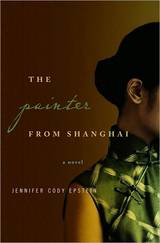
Book Review: The Painter from Shanghai

painter_from_shanghai

By Jennifer Cody Epstein

I’m always attracted by novels with a backdrop of art, controversial times and exotic locales and quickly became engrossed in The Painter from Shanghai. Only at the end did I realize the central character and many of the supporting ones actually lived. The times were dangerous and the daring commitment of those chronicled in the book’s pages is penetrating.

The author has written a fictional account of Pan Yuliang, a Chinese artist often known in her own country as the “Famous Western-Style Woman Painter”—a title she abhorred because it noted her gender. As a young girl in the early 1900s she was sold to a brothel by her uncle. This is the story of her origins and how she managed to leave that life to enter the world of art, something unheard of in those times, to become a well-known international artist and professor. The reader travels with her from China to Paris to Rome and back to China as she maneuvers between the strong pressures of Chinese tradition, dedication to her art and the political, sometimes deadly upheaval of the 1930s and 1940s. The book provides excellent entertainment as a novel. But it also educates about strict Chinese conventions, some of the heart-breaking practices Chinese women had to endure, and the intersection of Communism and Chiang Kai-shek’s Republicans. Above all it’s about the inner life of an artist and hard choices she makes to adhere to her dream.

Available at Amazon and elsewhere.

Categories: Book Review, Visual Arts | Tags: , , , , | Leave a comment

Book Review: Acedia and Me – A Marriage, Monks, and A Writer’s Life

acedia

If you are one of those people who is unrelentingly committed to a path, particularly one that the world may little understand, and yet you have periodically fallen into doubt, there is actually a name for this affliction – much to my relief. Doubt is not really a good word for a state that can reach a level of deep despair and sense of futility. And yet it’s not depression in the clinical sense.

Acedia was included in the “eight bad thoughts” of the desert monks but was later inexplicably dropped when translated into the Catholic Church’s “seven deadly sins.” If only over the years I would have had a word for it, not as a sin but as a thought that can assail a person who has monkish tendencies or artists, advocates and others who probe the edges of convention. Then there could have been a level of comfort and normalcy in the experiences. But instead, the term and understanding of it was dropped into time, to be hidden in little known annals or diaries of people who had the courage to express it.

Kathleen Norris has done many of us a favor by writing a book about acedia, giving many personal examples and historical references. Taken from the book, “… the monk struggling with acedia is dealing with more than bad moods, psychic fluctuations, or moral defeats. It is a question of resolve that arises in the wake of a decisive choice for which the monk has risked his life’a danger to anyone whose work requires great concentration and discipline yet is considered by many to be of little practical value…”

Along with the author’s own writings, a real plus is in the last chapter, a collection forty-odd pages long of quotes, personal experiences from such luminaries as John of the Cross, Emily Dickinson, Petrarch, Dante, Evelyn Waugh and many others. Sometimes it helps to name something and I can sense a future essay of my own percolating. Read a Q&A with the author, plus an excerpt.

You may recognize the author’s name from her other books such as The Cloister Walk and Dakota: A Spiritual Geography. Read this latest book if your path has ever taken you into an unnamed state that may be acedia—or if you anticipate it could.

Available on Amazon and elsewhere.

Categories: Book Review, Personal Growth, Spiritual Evolution | Tags: , , , , , | Leave a comment

Review – Sacred Reciprocity: Courting the Beloved in Everyday Life

The Poetry of Jamie Reaser

The beauty of Jamie Reaser’s poetry causes my heart to thrill, to ache, to still—with each turning of lyrical phrase. In Sacred Reciprocity she is both transparent seeker, sitting in deep communion, and gentle guide, gracefully leading us to those innermost places where the Soul revels.

The Sacred Way of Giving and Receiving

Sacred Reciprocity by Jamie Reaser

Sacred Reciprocity by Jamie Reaser
Newly published by Hiraeth Press

Jamie and I have a mutual connection through Andean mystic Don Américo Yábar where, many years ago, we were both exposed to the life-affirming practice of reciprocity—in a vastly different way than when we think of that word in our culture. The Quechua word ayni has no exact translation but can be understood as a sacred sense of giving and receiving, a balanced energetic exchange. You see, in the Andes, all is related to energy and respect. Ever since I learned of ayni, its my daily intent. I’ve taken it to heart.

So has Jamie; she offers this further distinction in the introduction to her new book: “…Ayni can be established among people, between humans and all other beings, and between all beings and the animate Cosmos…What is given may not be anywhere near as important as how it is given. In ayni, it is the heart that counts.”

Jamie Reaser is a naturalist who has worked around the world as a biologist, environmental educator, eco-psychologist and much more. But the aspect that allows me to know her true nature—and devotion to ayni—is her ability to: sit in silence where she lives in the Blue Ridge Mountains of Virginia; take in the glory she experiences…and transmit it back in such beautifully accurate ways that speak of our common condition. Here is just one sample.

 Dawn Kiss

The Sun,

dressed in dawn robes,

rose with time enough

to kiss the Moon, his beloved,

on full, wanting lips.

Birds,

still distinguishing themselves from

the wings of dreamtime,

looked abashedly at each other,

wondering…

How often had they

failed to seize

a precious passing moment…

A moment that could have

united the transiting heavens.

That was the morning birds

decided to sing.

Jamie will be joining us for our Winter Solstice “Entering the Maya Mysteries” journey to the highlands of Mexico and Guatemala. I’m delighted that she has consented to share her poetry during sacred periods of those travels because—I know—it will add to the deep meaning of that time.

Sacred Reciprocity: Courting the Beloved in Everyday Life is a new title published by Hiraeth Press in August 2012; also available via Amazon. My review of Note to Self, her previous book of poetry, is located here. And be sure to visit her poetry blog Talking Waters.

Categories: Book Review, Meditation, Spiritual Evolution, The Writing Life | Tags: , , , , , , | 3 Comments

Blog at WordPress.com.