Film Review

Film Review: Q’ero Mystics of Peru

Seti Gershberg has produced an important documentary containing key elements for Westerners to fathom the mysticism of the Peruvian Andes: the descendants of the Inka who embody it, their history and traditions. The film is rich with interviews of Q’ero mystics and breathtaking vistas that perfectly enveloped this viewer, taking me back to all the times I sat in circle with these beautiful people. The energy they carry came through the screen.

We are offered teachings from the Q’ero worldview about interconnection, the inherent birthright of prosperity for all—not just a few—and how ayni, or sacred reciprocity, creates flow and balance. The Q’ero people are living examples, incarnating the natural laws that we all must embrace for global transformation. Segments show despacho ceremonies offering gratitude to the Pachamama (Mother Earth) and Apus (mountain spirits), and blessing prayers. How lightning is a message from the Apus signaling an individual’s role and healing methods are disclosed.

Paq’os (shamans) outline initiations and practices for the life of a healer and mystic—how the process happens over years of commitment, often with strong challenges. One young paq’o describes how, in earlier years, he helped gather materials for the despacho. Then at fourteen he assisted in the making, but it wasn’t until he was eighteen that he was deemed ready to do them on his own. I was personally glad to see this distinction included. Hopefully, it conveys to a Western audience that such a path does not happen in a weekend workshop; nor is it a romantic undertaking but one of humility and sacrifice to community.

Juan Núñez del Prado, Joan Parisi Wilcox, Elizabeth Jenkins, Holly Wissler and J.E. Williams share their understanding from an outside perspective as scholars and authors but also as practitioners of Andean Cosmovision.

The Q’ero are a people of dynastic lineage and strength, who only within the past sixty years have broken out of indentured servitude, having maintained their core identity throughout. These words are spoken during interviews:

 Our work is sacred.

We will not forget or lose this knowledge.

 Q’ero Mystics of Peru came at an opportune time, just as I’m preparing to return to Peru to be with Q’ero friends in the village of Ccochamocco for an unprecedented occurrence during The Heart of the Andes. Hopi Elder Harold Joseph from Shungopavi, Second Mesa, Arizona, is accompanying us, as an emissary of his religious leader, to seek prayers for the preservation of Hopi traditions. He says: The Q’ero spiritual leaders are strong in their prayers. So they are.

I personally thank Seti Gershberg for documenting the wisdom of the Q’ero Nation so effectively.

Categories: cultural interests, Film Review, Indigenous Wisdom, Q'ero | Tags: , , , , , | Leave a comment

Film Review: Séraphine

SeraphineTreeofLife

Tree of Life ­­- Séraphine Louis, 1928

Séraphine Louis, also known as Séraphine de Senlis, is the subject of this intense biopic—both inspirational and tragic—of a relatively unknown but brilliant artist who teetered between one reality and another. Her paintings were the product of creative and spiritual rapture, induced by spirits, and her love for nature. She was employed as a housekeeper doing the most menial labor and thought by the people around her to be quite odd and slow. But at night she disappeared into another world and turned out extraordinary works using pigments she made herself from unusual sources.

Her break came when Wilhelm Uhde, German art dealer and critic, saw a painting at his neighbor’s home and was astounded to discover that it had been done by his cleaning lady. At a time when avant garde artists such as Picasso and Rousseau were coming on the scene, Uhde became Séraphine’s sponsor encouraging her and finally including her in a show that he organized of the Sacred Heart Painters. Sadly, his patronage would come to an end with the advent of World War II. Séraphine became increasingly isolated and was finally committed to a hospital for the mentally ill. She passed in 1942.

Few of her paintings survive but some may be viewed here. This is the story of a woman who found deep meaning in life and was unusually resourceful, even in the face of periodic ridicule and little support, save one person who proved to be her angel.

This haunting film was a sleeper when it came out in 2009 but later won seven French Academy Awards. Streaming on Amazon. In French with subtitles. Yolande Moreau stars as Séraphine. Film directed by Martin Provost and co-written with Marc Abdelnour.

Categories: cultural interests, Film Review, Visual Arts | Tags: , , , | Leave a comment

Film Review: Sunrise/Sunset

Dalai Lama

His Holiness the 14th Dalai Lama
Photo courtesy of his official website.

No, this isn’t an Ethan Hawke/Julie Delpy movie. It’s a 2009 documentary about a typical day with His Holiness the 14th Dalai Lama. He allowed Russian filmmaker Vitali Manski and his crew to shadow him around Dharamsala, India, where he lives, from the time he arose at 3 a.m. until retiring for the night. It’s a peek that’s intimate and reassuring. I concluded that, in some ways, this holy man is no different than many of us. He is seen going through his morning hygiene, saying prayers and walking on the treadmill. He likes the BBC. I like the BBC. And yet, his life is not like any of ours. He elects to spend five months away from the world in meditation. Then, the rest of the time, every minute of his waking hours is scheduled: offering teachings, traveling, attending meetings with world leaders. His is a life of contrast.

The film also points out paradoxes. First, he teaches nonviolence as much as Ghandi did. But his living compound has a fence around it; a troop of guards accompany him wherever he goes to ensure his safety. Secondly, he is sought after by heads of state yet has none of the traditional power they would attempt to garner.

Teachings are sprinkled throughout the film. I noticed the same thing that the filmmaker stated in the last part of the film: The Dalai Lama’s words were simple. There was nothing new to me in what he said. But they caused the filmmaker to view the world differently. This reinforces my belief that simple teachings are most useful, true and provide a foundation for living. If we think we need more, or must have complicated practices, then we’re merely distracted and avoiding the spiritual work.

The only thing I found curious in any part of the documentary was the Dalai Lama’s solution to the world’s overpopulation problem: “more nuns, more monks.”

Watch the 72-minute documentary free online courtesy of Culture Unplugged.

Categories: Film Review, Meditation, Spiritual Evolution | Tags: , , , | Leave a comment

Documentary Review – Peru: A League of Their Own

This inspiring documentary short by Rodrigo Vazquez is a true look at Quechua gender roles and the devastating effect of natural disasters in Peru. It tells the story of a young woman named Juana in the village of Churubamba, located in the Cusco region, who took an unprecedented step outside roles traditional for a Quechua woman. She organized a women’s soccer team, which served as a model that spread across a number of the communities. The teams weren’t only about soccer but also served as a forum for the women to talk about their problems and band together to work for the benefit of all their families.

In the village of Kalla Rayan, a young woman named Felicitas gained entry into meetings reserved for men where she was voted as representative, along with the community president, for a special mission. The two were to find their way to Lima and, with no introduction, seek an audience with the next president to seek aid for the devastation wrought on their village by the floods.

It shows what can happen when any of us take a step off the beaten path. In this film, the starting point was one woman who wanted to play soccer, something taken up by some of the women in other communities and became huge; introduced more equality and potentially has saved one village. It reminds us to follow our dreams and trust the path where it leads – even if we can’t see beyond the next footfall.

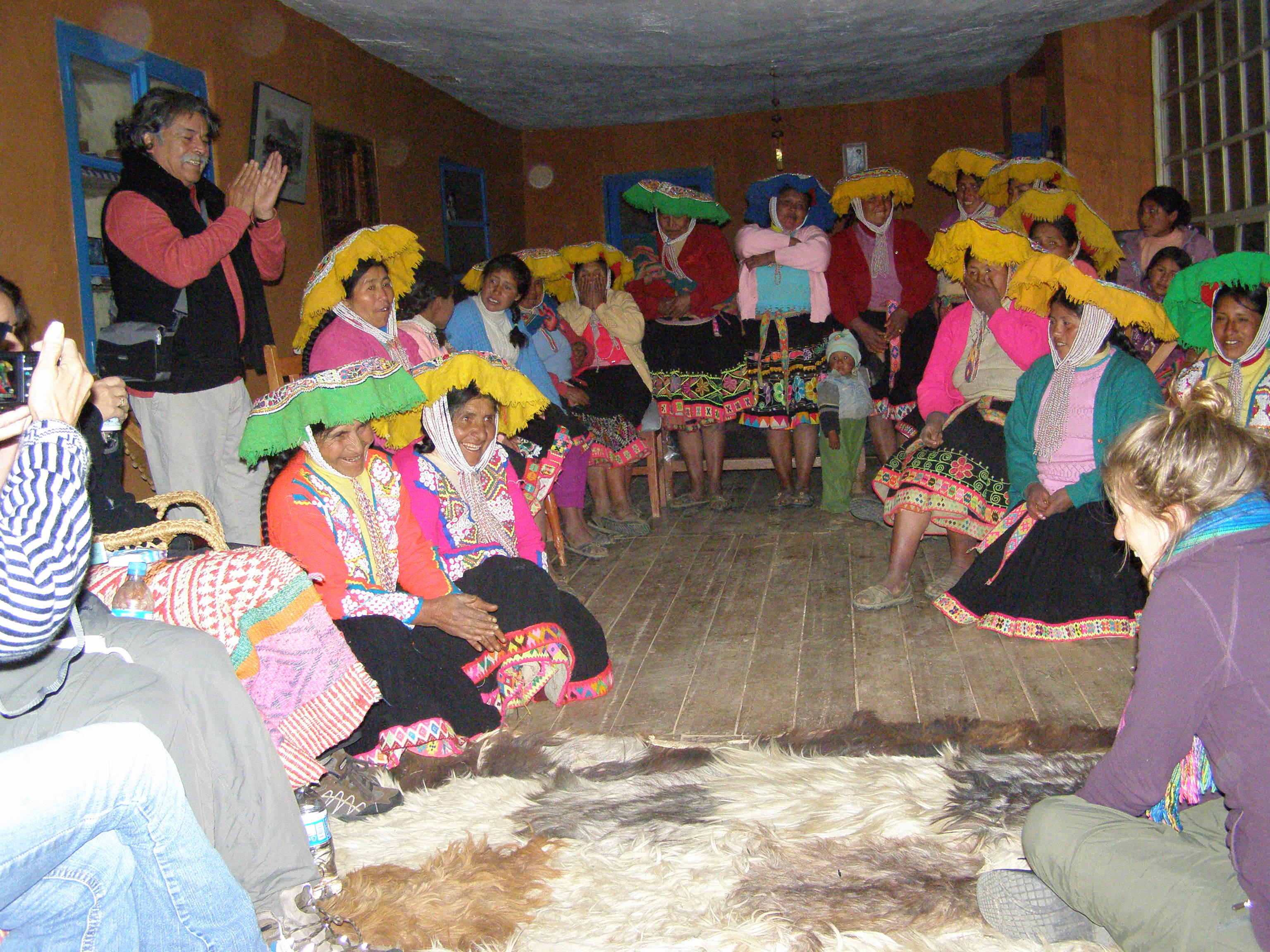
Mollamarka Women Singers

Mollamarka women singers inside Salk’awasi, the ancestral home of Don Americo Yabar.
Photo courtesy of Mark Jericevic.

On another note, the landscape and villages in the film looked so familiar to me that I did a double-take as I watched. I must have traveled through some of the very same areas on my way to Mollamarka for so many years during our Heart of the Andes program.

Film length is 25 minutes. View for free via Karma Tube: Peru: A League of Their Own .

Categories: cultural interests, Film Review, Indigenous Rights, Spiritual Travel | Tags: , , , | Leave a comment

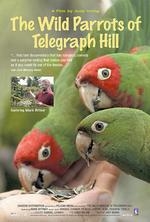
Film Review: The Wild Parrots of Telegraph Hill

The Wild Parrots of Telegraph Hill

Documentary by Judy Irving

 Wild Parrots of Telegraph Hill

Before I watched this documentary I thought it might be an interesting piece on wild parrots in an urban setting. It’s that but much more. Mark Bittner is a homeless man who began feeding the wild parrot flock around Telegraph Hill in San Francisco. Over time he was able to develop a relationship with the birds and cared for those who were injured or sick. He brought them into the small apartment where he was squatting until they were well, giving them names. Through the filmmaker’s lens, we’re able to experience their separate personalities. There’s Mingus, a cherry head, who loves to dance to the blues. And Connor with his quiet regal manner, a blue-crowned parrot in a flock of cherry heads, too many others to name here. I don’t want to give away too much.

At the heart of the story is how Mark found inner peace and his place in the world through service to the parrots. There may be a message for many of us in this poignant and inspiring film.

View short clips on You Tube. Available via Netflix, Amazon and elsewhere.

Categories: Film Review, Personal Growth, Sacred Reciprocity, Spiritual Evolution | Tags: , , | Leave a comment

Film Review: Water

water

Film by Deepa Mehta

This film is set in Varanasi, India during the time of Gandhi’s rise in the 1930s. It is, at once, much like India herself. The cinematography is incredibly beautiful recording the most holy temples, landscape, people and colors while forcing us to acknowledge devastating conditions in which so many of the people live, particularly women. A paradox placed upon the people through their most sacred beliefs. But it does not leave us with such discomfort alone. It also presents hope.

This is the story of eight year-old Chuyia, left suddenly a widow at the death of her many years older husband. As the sacred texts direct, she is sent to live in a house of widows, an ascetic, hair shorn, eating one meal a day, even though she never lived as a wife with her husband. A heart-breaking account of a practice that continues to this day in some areas. Doctrine states that while her husband is alive a woman is half his body, and when he dies she is half his corpse, held in highest esteem and yet treated badly, then living in the most extreme poverty. The hope offered in the film comes through the bond that develops between young Chuyia and some of the widows, the intervention of a stranger and the new teachings of Ghandhi making headway during those times.

The film was so controversial that, during its initial making in 2000, filmmaker Deepa Mehta, cast and crew were driven from Veranasi, their safety threatened by mobs and the set torn down, causing the project to be abandoned for a few years. Four years later, Mehta was able to complete the film in Sri Lanka. It was nominated for an Oscar in 2005.

Rather than be put off by the subject matter, I invite readers to view the film. It has a beautifully haunting quality that will stay with you for a long time. Available in DVD or watch online free. The soundtrack is equally mesmerizing.

Categories: cultural interests, Film Review | Tags: , , , | 1 Comment

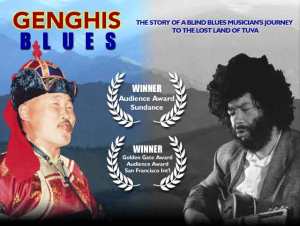
Film Review: Genghis Blues


genghisblues

  Documentary Film by Wadi Rum Productions

If you’ve ever heard Tuva throat singing and been fascinated by it, this is a film to watch. Aside from that, it tells the poignant and truly inspirational story of blind blues musician Paul Pena. In the mid-80s he first heard throat singing via shortwave radio transmitting from Moscow and was enthralled. It took eight long years, but he tracked down the source, found a recording and proceeded to teach himself the unusual harmonics involved in this technique coming from the tiny Republic of Tuva, between Siberia and Mongolia. He also began to teach himself the spoken language.

In 1993 Tuvan throat singers came to the USA on their first tour and Paul attended a concert. There he met Kongar-ol Ondar, revered in Tuva, and broke out in an extemporaneous demonstration of his self-taught throat singing. Kongar-ol was amazed and invited Paul to Tuva for the international symposium. The film follows Paul and his friends as they traveled across the world and made fast friends of the Tuvan people who fondly called him “Earthquake” after the quality of his voice. This was not an easy journey for Paul who had to deal not only with the limitations of blindness, but also poor health. He set it all aside for this adventure and his love of music.

In his day Paul Pena played with many blues greats and wrote the 1970s hit “Jet Airliner” recorded by the Steve Miller Band. The documentary won the Audience Award at Sundance in 1999 and awards at several other film festivals. A CD is also available called “Genghis Blues” that combines Paul’s roots of American blues, Cape Verdian morna music and Tuva throat singing. Sadly, Paul passed in 2005.

DVD available through Netflix and other sources. View promo video here: a story of courage, intent and passion perfect for our times.

Here’s a bonus. You can watch Paul singing “Jet Airliner”  and throat singing on You Tube.

Categories: Creativity Strategies, Film Review, Indigenous Wisdom | Tags: , , | Leave a comment

Review – Faustino’s Patagonian Retreat

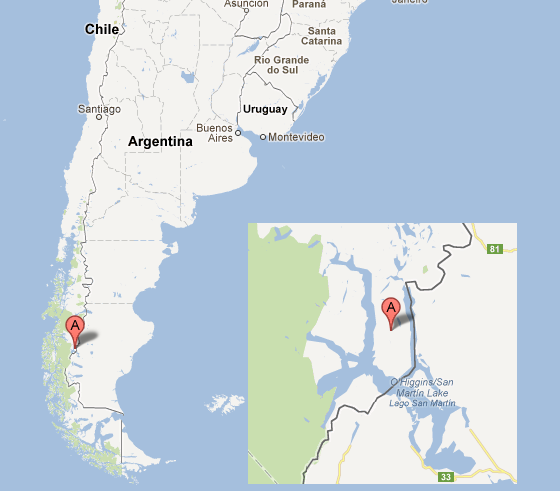
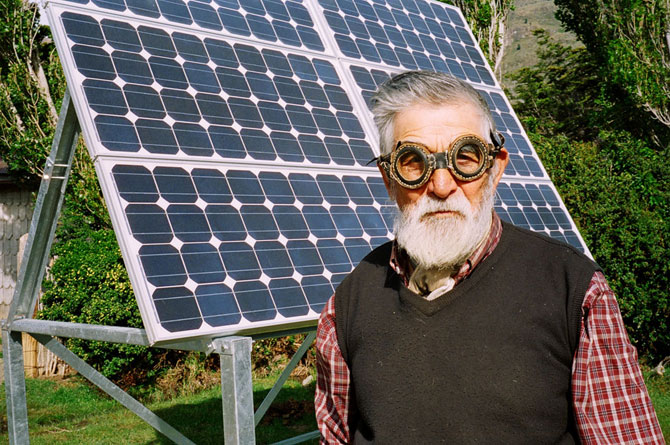
Map La Florida PeninsulaFaustino Barrientos lives alone on the isolated Patagonian peninsula called La Florida near the shores of Lake O’Higgins. He’s been there since 1965 relishing the nearly lost lifestyle of the Chilean gaucho. Faustino has completely removed himself from civilization with the exception of a solar panel to run his radio, a chain saw, and a few other such implements that make a simple life a little easier. “If you spend a year without going out, you see nobody,” he said. And he’s chosen that life.

Vice Media sent a young film crew from New York to make a documentary on Faustino for their show Far Out: Lifestyles of the Remote and Solitary. It took them four days to reach him by plane, pick-up truck, ferry and finally by foot. Faustino had the reputation from family, and villagers from the town he left, of being cantankerous with not much use for people, even as a young man. The young filmmakers were worried. They were going into an isolated wilderness with no possible communication to the outside world to meet a recluse with a bad reputation—unannounced.

Faustino at Lake O'Higgins

Faustino at Lake O’Higgins
Photo: Peter Sutherland

Their fears were set aside after meeting an eighty-one year old man who was quite gracious and robust. He welcomed them. This documentary is Faustino’s story: how he came to live the last forty-six years in self-imposed solitude and the ingenuity it took for him to thrive; and how he’s bearing witness to global warming in a manner up front and personal.

Faustino and his hand-made goggles

Faustino and his hand-made goggles.
Photo: Peter Sutherland

I wondered if the filmmakers would touch on the spiritual fortitude it must take to live such a life. They didn’t—except to cover a story of Faustino’s early vigilante tendencies and the kindness they found instead. They did note that there was much Faustino kept to himself.

Faustino in hut

Photo: Peter Sutherland

The film is thirty-seven minutes. I was touched. You can see the trailer and complete film for free here.

Categories: Film Review, Solitude | Tags: , , , , | Leave a comment

Review: El Andalón (The Healer)

Don Sergio doctoring

Don Sergio Castro attending a patient.
Photo: Director Consuelo Alba & Producer John Speyer

El Andalón is a thirty-minute documentary about the healing work of humanitarian Don Sergio Castro who lives in San Cristóbal de las Casas in Chiapas, Mexico. It opens with a scene of Don Sergio swabbing a patient’s injury, all the while speaking kindly. He has been doing the same thing for nearly fifty years seeing about twenty people a day. His patients are the poor, coming to him from the town and surrounding area; and he makes the rounds to Maya villages where he’s much needed. The documentary contains several stories like this of a woman who had a severe injury to her leg:

I don’t know what kind of magic he has in his hands…but he heals…sometimes we aren’t so welcome in the hospital…(She breaks down in tears.)…I almost lost my leg and thanks to him I was healed…

My friend and colleague Carol Karasik said of Don Sergio: “He’s known as something of a saint here. He works with not even as much as most Americans have in their medicine cabinet.”

Don Sergio doesn’t charge his patients; they pay him with their blessings or tamales. His generosity has often made it difficult to make ends meet for his own family—or to fund the work to which he’s dedicated. Years ago, some patients began giving him their own traditional clothing. Don Sergio discovered that visitors were quite interested in these samples. He hit upon a brilliant idea and opened his own small textile museum, which doubles as a clinic. From that source and the occasional donation he’s somehow been able to keep going.

But his work doesn’t stop with doctoring. Villagers began asking him to help with other matters, including schools for their children where there were none. They had no help from the government. So far Don Sergio is responsible for raising funds to help them build twenty-five schools.

Ccochamocco School

School in the Q’ero village of Ccochamocco
Photo: Freddy Machacca

This clearly brought back my own remembrance of being asked by Q’ero spiritual leaders to help do the same for the high altitude village of Ccochmocco in the Andes of Peru: now operating since March 2010. It wasn’t an easy task.

With the dip in tourism to Mexico, Don Sergio’s ability to fund his work has been severely affected. At one point toward the end of the film he becomes overwhelmed with emotion. With a hand gesturing skyward he sends a prayer up that he finds a way to continue. It was heart-rending to me.

I somehow stumbled upon this documentary and then queried Carol. As a result we are now including an audience with Don Sergio and a visit to his textile museum in our “Entering the Maya Mysteries” program during our time in San Cristóbal. I have asked participants to bring any medical supplies they can as a part of our offering, aside from a donation I’ll make from Kenosis—and look at ongoing ways to support this self-less humanitarian work.

Viewers of the film will also get a glimpse Don Sergio with Don Antonio Martinez, with whom we engage in the Lacandón Maya village of Najá, as well as spiritual leader Chan K’in Viejo who passed in the 1990s. The village of Chamula will look familiar to folks who have traveled with us.

El Andalon

Film Poster
Director: Consuelo Albo
Producer: John Speyer

I want to personally thank director Consuelo Alba and producer John Speyer for bringing to light Don Sergio’s work; and to Culture Unplugged for sponsoring it on their website. You can view their documentary on Culture Unplugged. It’s well worth your time.

Categories: Film Review, Healing, Indigenous Wisdom, Lacandón Maya, Spiritual Travel, Travel Experiences | Tags: , , , , , , , , | 2 Comments

Review: The Spirit Hunters

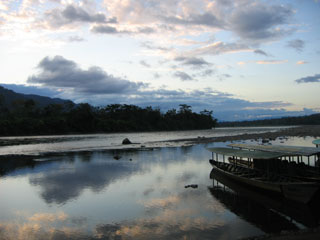
Alto Madre de Dios

Rio Alto Madre de Dios flowing through Manu.
Photo: Oscar Panizo

This 1994 film documents the beliefs, traditions and everyday life of the Matsigenka—The People—an isolated tribe of the Upper Amazon in the Manu region of Peru. The documentary opens with breath-taking scenes of the rainforest and moves into the story of a particular village. It relates the communal focus, hunting practices—and a matrilineal culture, unusual for most parts of the world.

We’re provided a look into exchanges between Glenn Shepard, an American anthropologist then living with the Matsigenka, and elder healer Mariano, who is also a gifted storyteller, an important role since their tradition is completely oral. In a walk through the rainforest, Mariano points out medicinal plants and shares their use. The film is packed full of interesting material on the ritual use of plant spirits: how shamans leave their bodies to gain knowledge and see the future. Even the dogs are given plant medicine to help in a hunt. And it relays warnings on how witches can steal people’s souls. One of my favorite jungle sounds is the primeval roar of the howler monkey. So I was particularly taken when I discovered here that the Matsigenka believe they carry a shaman’s soul.

Pasqualito

Don Pasqualito and his newly made flute.
Photo: Alonso Mendez

Another interesting note was contact the Matsigenka had with the Inca. For me, that piece of information brought back fond memories. I arranged for half my 2009 spiritual travel program in Peru with Don Américo Yábar to be spent in Manu. I invited three Q’ero spiritual leaders to accompany us; the Q’eros being the descendants of Inca priests and holders of that ancient tradition. Since my friends live at very high altitude, going to the jungle took them way out of their element. They were quite excited and it was a delight to watch them, particularly when they found bamboo. They spent much of the time making flutes and testing them out! We didn’t meet any Matsigenka but it was a return trip to the rainforest for these Inca descendants.

But back to “The Spirit Hunters.” Truly, this film is worth your time. It’s a glimpse into an Indigenous people who live a simple life, but it doesn’t romanticize the lifestyle or protect our Western eyes from the perils. More than anything it reveals a rich imprint, a complex belief system that guides their days.

Written and produced by Kim MacQuarrie. Narrated by James Earl Jones. The film is 50 minutes. Watch the complete film on Culture Unplugged. To learn more on the Matsigenka here’s an article by Glenn Shepard: “The People of Manu.”

Categories: Arts, Film Review, Healing, Indigenous Wisdom, Spiritual Travel | Tags: , , , , , , , , | Leave a comment

Blog at WordPress.com.