Posts Tagged With: spiritual travel destinations

Last of the Spirit Keepers – and Gift Offering from Sacred Fire

Announcing Publication of My Article by Sacred Fire Magazine

and Gift Offering for You

For several years I have been sponsoring spiritual travel programs to Chiapas Mexico that include time in the rainforest village of Najá. I’ve been quite honored that Don Antonio Martinez, a Lacandón Maya elder, has been willing not only to meet with us, but to hold the balché ceremony while we’re there. Don Antonio is the last elder still practicing the sacred ways. When he passes it’s likely that these ancient traditions will be gone forever. Over these years I’ve watched the aggressive impact of evangelicals eating away at the Lacandón Maya culture and spiritual traditions, aside from influences from Western culture.

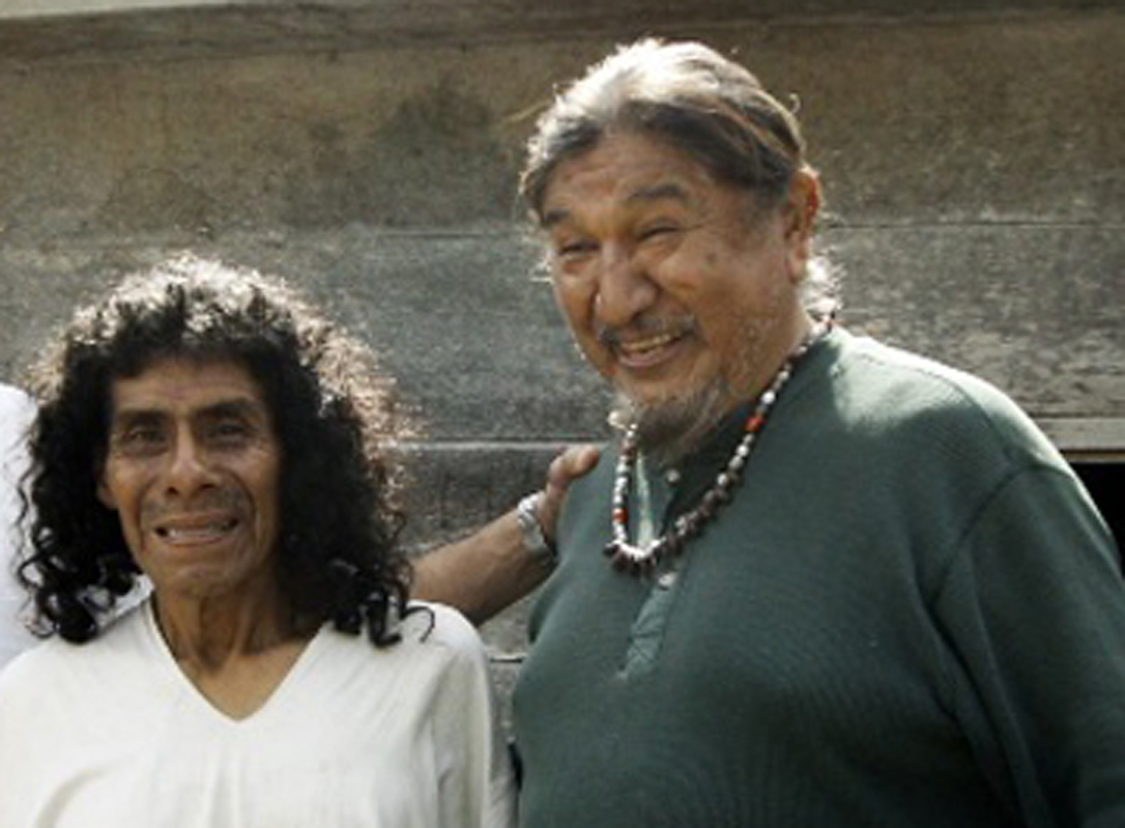
Don Antonio Martinez and Harold Joseph

Lacandón Maya elder Don Antonio Martinez
and Hopi elder Harold Joseph.
Photo credit: Darlene Dunning

Beginning 2009 through Kenosis Spirit Keepers, the nonprofit extension of Kenosis, we’ve been sponsoring Hopi Wisdom Keepers from Shungopavi on these same programs. I’ve written an article highlighting this progressive story of connection between the Hopi and Lacandón Maya and what can happen when relations come together in a beautiful way.

Kenosis Spirit Keepers is a friend and affiliate of Sacred Fire Magazine, published by Sacred Fire Foundation.  Sacred Fire is the only magazine I know of that shares the stories of ceremony, healing and community that bring us all together so we can thrive in these changing times.

Sacred Fire Magazine Issue #16

Fittingly, the article I wrote…

LAST OF THE SPIRIT KEEPERS:
Surrounded by the growing influence of
evangelicals, a Lacandón Maya
Elder tries to keep the godpots burning.

…will be featured in the next issue of Sacred Fire, due out  in early November.

The Magazine would like to gift my readers, colleagues and clients in the US a free copy as a way of introduction. If you would like to know more about Sacred Fire and receive the issue with my article click here.

To receive your gift copy—a $10 value—you can enter your shipping information with this link. Please note that you must submit your order by October 31 to receive your gift copy.

Sharon Brown, the publisher of Sacred Fire, has asked me to tell you that while the gift offer is for US folks at this time, they are working to make a similar offer to those of you outside the US with payment only for shipping. Stay tuned and I hope to make that announcement soon.

Until then…I hope you join me in thanking Sacred Fire for their generosity and important work in service of the planet and global community.

Categories: Healing, Indigenous Wisdom, Lacandón Maya, Sacred Reciprocity, Spiritual Travel | Tags: , , , , | 2 Comments

Sacred Reciprocity – Part II

Excerpted from Navigating Your Lifepath by Carla Woody.

THE NATURE OF TRUE COMMUNITY

In Part I, I wrote about ayni, which can be loosely translated from the Quechua as “sacred reciprocity.” In my estimation, it bears exploring over and over again, as we can dip more deeply into the meanings that rest beneath the surface. Ayni is not merely a concept, something nice to talk about, to the people of the Andes and other Native peoples. It is an actual day-to-day practice so embedded that they don’t even question it.

Carla and Q'ero Waikis

The author greeting Doña Carmina and other Q’ero waikis (friends) before a despacho (blessing) ceremony outside Cusco.
Photo credit: Oakley Gordon

In Western culture we think more in terms of giving and receiving. I give you something. You owe me something in return. In the Andean tradition there’s a much different flavor to giving and receiving. It has to do with the support of the entire community, not just one person.

If one person knows how to do something very well and the other person doesn’t, the one who has the skill automatically shares the teaching. The reciprocity comes to the first person in two ways. First, the teacher is validated for her knowledge base and may also learn more through the teaching. Maybe even more importantly, the entire community benefits because there are now two people with added value instead of just one.

COLLABORATION ONLY WELCOME

In 2004 I heard a radio program on global cultural change called “Andean Harvest” on Worlds of Difference that lent a further distinction to ayni and its influence. The interview took place in one of the mountain villages in Peru and had to do with the potato crop, of which there are a few hundred varieties. The challenge had to do with the farmers growing more of the different kinds of potatoes and getting them to market. To do so would give the opportunity to increase their livelihood. As a part of this undertaking, they were being advised by outside sources.

But the farmers rejected most of the sources’ advice. In the interview one of the elders said, “We will do nothing that would put one of us in competition with the other.” He went on to explain that introducing competitiveness would negatively impact the overall health of the community. What he said gave me pause and a great deal of consideration by contrasting it with my home culture.

THE WORTH OF WHO WE ARE

In Western culture, competition is considered healthy, naturally a part of our capitalistic society. Sports teams compete. Sportsmanship behavior is encouraged. But there are a few other strange, although familiar twists, which get in the way and preclude the practice of true ayni as yet.

The programming of our society says that success means we have to “be somebody.” That translates to a profession: doctor or lawyer but not “merely” a mother or father. If we define our worth and identity through career choice, or lack of thereof, there’s a huge convolution to the psyche; it sends the ego scrambling. The natural follow-on is one of competition, individual gratification, the need to “win” in order to be validated. The behaviors that come of this particular mindset produce not community, but a fractured society generating discordant energy.

Competition introduced into locales such as those in the Andes would create confusion, disrupting their underlying spiritual tradition. People there are known not so much by what they do, but by who they are. Many of the shamans and mystics that I have come across in Peru and elsewhere can determine who we are by seeing our energy field. That tells everything. A light energy field and the intent to evolve are what garner respect, not a livelihood.

Witnessing our own thoughts and actions is a slippery slope at best. The ego has all kinds of rationale to convince us that what we do is for our own good and that of those around us. Coming from the culture we do, unconsciously ingesting what we have, we perform a service to ourselves, and ultimately our communities, by being alert and wiser than the ego mind. The Core Self insists on it. Here are a couple of questions to consider.

– How do you find the level of competition around you?

– How can you make space for and “sponsor” others?

***

Go to Sacred Reciprocity, Part I.

Categories: Indigenous Wisdom, Personal Growth, Sacred Reciprocity, Spiritual Evolution, Spiritual Travel, Travel Experiences | Tags: , , , , , , , | 2 Comments

What Is Renewal? – Part II

In the Part I of What Is Renewal I relayed my experience at a conference back in 2007 put on by the Bali Institute of Global Renewal when a young man asked me…

Do you think it’s time for some traditions to die

so the next thing can come along?

And after my initial shock at his question I recovered enough to answer…

The thought of that happening hurts my very soul.

I don’t remember what else I said and it probably wasn’t as coherent as I’d have liked just because of the powerful emotions washing over me in that moment. But I do know that I thanked him for his question; I said it was personally quite significant to me. He looked perplexed.

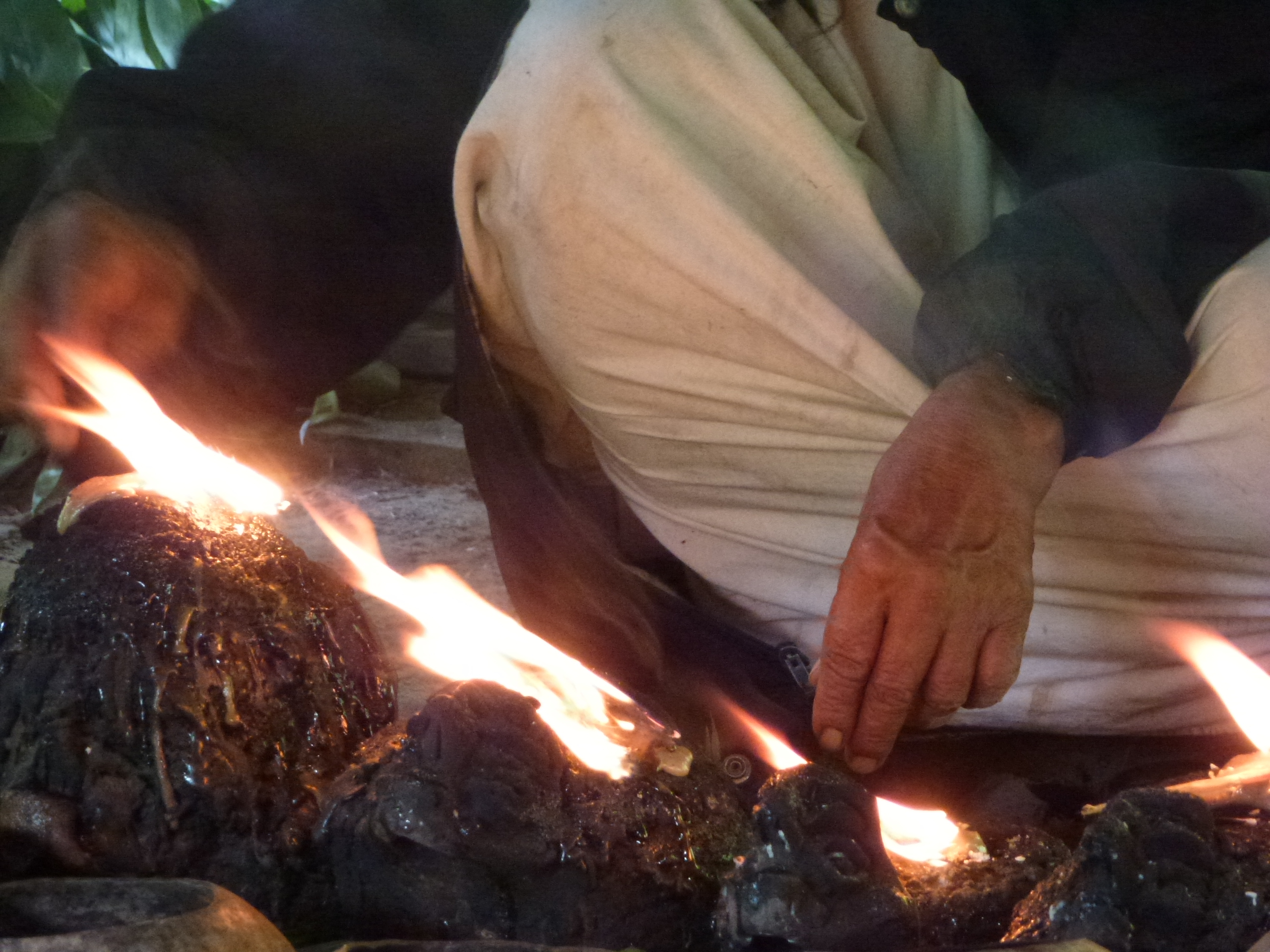
Don Antonio lighting the godpots

Don Antonio Martinez lighting the godpots during the sacred balché ceremony of the Lacandón Maya.
Photo: Carla Woody

WE HAVE A HUNGER

Do I understand about cycles, death and rebirth, seasons? Of course. Transition is the nature of the work I do every day. Is it time for these traditions to return to the ether? No! At least, certainly not yet.

Through my experiences with Native peoples over the years, I’ve learned these things: They are people who touch the earth, live close to it, who understand the nature of connection of all things…energy…sharing in community…a global consciousness. They hold these threads sacred in their now fragile traditions.

If you’re reading this article, then you probably belong to a culture that has largely forgotten these things. And we’re hungry for these aspects that are so rare or fleeting in our present-day societies—especially because the pendulum swing seems stuck toward destruction of these values.

Part of my involvement at the conference was to help facilitate a track called “Language of the Soul.” On the final day of that forum, and as a culmination to our activities and discussions, I guided a despacho ceremony—learned from Q’ero spiritual leaders— with those who had chosen that track, about forty people. To my knowledge only one other person there was familiar with the blessing ritual. But all actively participated: folks from such far-flung places like China, Malaysia, Indonesia, Zimbabwe, Australia, United States and others. Afterwards, they made comments about the effect it had on them, such as feeling moved and the sensation of energy for the first time.

BEARING WITNESS

Hopi Harold Joseph sharing traditions in Don Antonio's godhouse

Hopi elder Harold Joseph (left) sharing traditions in Don Antonio’s godhouse after the balché ceremony.
Photo: Darlene Dunning

I fully believe that if we honor Indigenous traditions such as those I discussed in Part I…if we’re willing to sit in circle…to take part in these deeply held spiritual rituals…then we touch what’s timeless. We’re injected. A transmission takes place that gets integrated into who we are in the world.

And when we hold sacred witness to those who have had the difficult and usually thankless role of holding these filaments—and honor them for the stake they’ve held—a sacred reciprocity occurs. There is a ripple that goes out. When there are enough of us engaged in this way, then perhaps it’s time for some traditions to relinquish themselves. That’s hardly yet though, is it?

Isn’t it ironic that this consideration came to me at a conference whose subject matter was global renewal? Maybe it’s easier to create a careful cocoon, to insulate ourselves, to stick our collective heads in the sand and ignore what’s happening around us. I can’t do it.

My soul won’t let me.

I offer spiritual travel journeys with the premise of supporting Indigenous traditions that are so in danger of decimation through influence from Western culture. Through Kenosis Spirit Keepers, the nonprofit extension of my organization, we sponsor Native Spirit Keepers living in the US so that they may sit in circle and reconnect with Maya, Q’ero and Quechua spiritual leaders and community. Through this intangible process I have witnessed the important effect it has—spiritual beauty and strength.

For Western travelers who accompany me, I view our participation and witnessing as a gift of respect, aside from the transformational aspects it has on us.

And the long-term effects are forever carried in our souls.

***

For those who are moved to support this work in preservation of Native wisdom traditions and well-being of the Maya people, please join us for Entering the Maya Mysteries, January 13-25, 2013. Your participation matters. Also see my post on the humanitarian work of Don Sergio Castro. Grandmother Flordemayo of the International Council of 13 Indigenous Grandmothers will be with us in January blessing our travels with prayers.

Categories: Healing, Indigenous Wisdom, Lacandón Maya, Spiritual Evolution, Spiritual Travel | Tags: , , , , , , | 3 Comments

What Is Renewal? – Part I

(Original article written in 2007 with additions here.)

Recently I had the good fortune to be invited to participate in a conference on global renewal sponsored by the Bali Institute. It was held in Ubud, considered to be the cultural and spiritual center of Bali. This was a significant gathering bringing together people from many countries with at least one thing in common — a vision for a better, kinder world and the strong desire to make it happen now. I’m still digesting all that happened for me. Part of it I will share with you here.

GLOBAL RENEWAL

Balinese temple figure

Balinese temple figure.
Photo: Carla Woody

It was the second day of the conference and I had arrived early to the Bali Classic Centre where it was held. It’s a site too beautiful for words with temples, lush foliage and meandering pathways throughout. I was standing in the open-air pavilion where people tended to gather during breaks, just enjoying my surroundings, when a young man approached me asking if he could speak to me. He indicated he had seen some literature on the programs I’m doing with the Maya in the Chiapas region of Mexico. In particular he was interested in Don Antonio Martinez, the last Spirit Keeper practicing the ancient sacred traditions of the Lacandón Maya. Then he said something I didn’t at all expect.

 Do you think it’s time for some traditions to die

so the next thing can come along?

 Whether his question came out of earnest interest or a flip attitude didn’t really matter. His words hit me like a shock wave that reverberated in hidden, interior places. This was a question I had come to Bali to hear.

FRAGILE TRADITIONS

Don Antonio and Balche Ceremony

Don Antonio Martinez of the Lacandón Maya during the balché ceremony.
Photo: Carla Woody

While I’m fairly sure the effect of the missile wasn’t apparent from the outside, my mind was immediately flooded with images. I replayed a time earlier that year with Don Antonio in the middle of the rainforest village of Najá, in his lone god house, burning copal in two of his god pots, chanting, invoking connection with Hachäkyum, the principal deity of the Lacandón, and another god in honor of our visit. He’d chuckled softly when the copal in one of the pots had at first refused to light saying that god was shy that day.

There was evidence of hundreds of such ceremonies in the burnt residue in his god pots, mounded to overflowing. He needed to retire these god pots and replace them with new ones. When asked why he hadn’t, he said that since the road had cut through the jungle to Najá it brought too much noise for the sacred renewal ritual. I remember remarking to myself how very little disturbance there was in contrast with what we visitors had at home. But still, it was an affront to the gods.*

Q'eros of Peru

Sitting in circle with Q’ero spiritual leaders.
Photo credit: Monty DeLozier

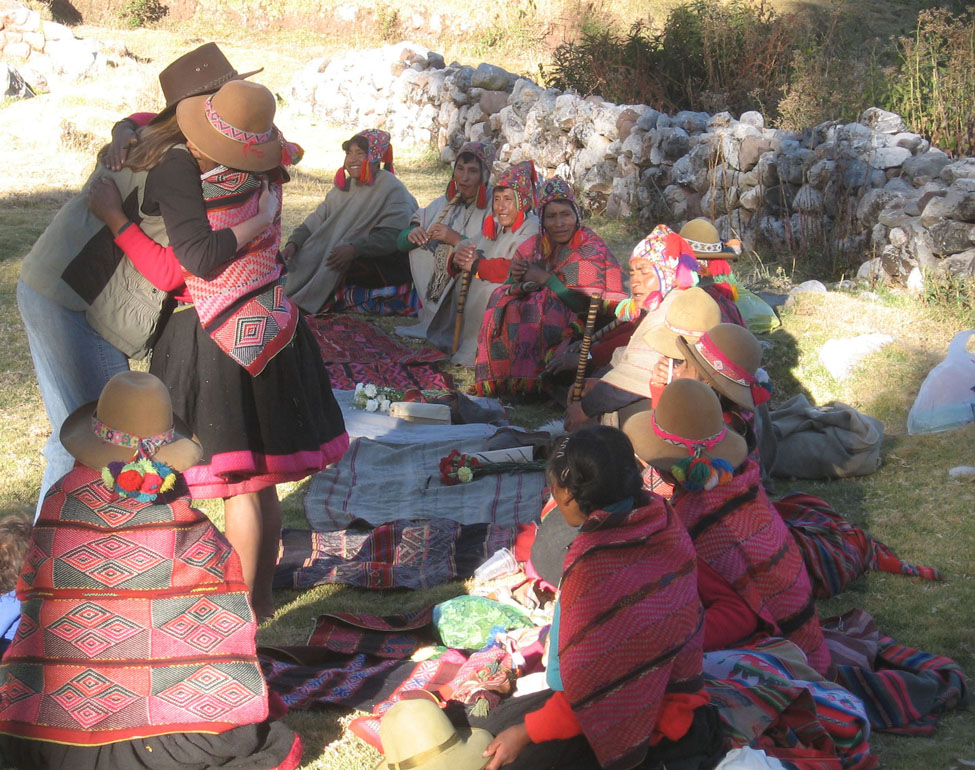
Another image came to me in the next split second, this time in the high mountains of the Andes in Peru, sitting in circle with Q’ero paq’os, or shamans, and other members of the Q’ero Nation, participating in a despacho, or blessing, ceremony. The absolute sense of collectively touching something beyond what is ordinarily presented, my eyes swept the circle of travelers who had come with me; I noted the ceremony’s subtle and sometimes dramatic effect on them.

These experiences are precious and will perhaps soon border on extinction just like in the Lacandón rainforest and the myriad other places where the footprint of modern society has been placed. A road is planned to Q’ero, which, until this time, has remained isolated at 17,000 feet in altitude with traditions pure and intact.

Hopi Spirit Keepers 2007

The author with Hopis Clarence Washington (lft) and David Washington (rt) at Salk’awasi, Mollamarka, Peru.
Photo: Darlene Dunning

Then my mind came to rest on the memory of the Hopi father and son that we sponsored to the Andes that past summer. I recalled the gratitude they expressed frequently, through tears, to be gifted with the opportunity to be in circle with their Quechua brothers and sisters and what it meant to them.

As I absorbed the ultimate meaning of the young man’s question coupled with these recollections, I was surprised to find tears welling up from my heart, through my throat, discovering moisture in my eyes. And in a cracking voice, this is what I said to him.

The thought of that happening hurts my very soul.

***

Go to Part II.

*In an area now thoroughly infiltrated by missionaries and decimated by logging companies, Najá was the last hold-out until Chan K’in Viejo, their powerful Spirit Holder, passed in 1997 at about 105 years old. Don Antonio, his son-in-law, is now the last Spirit Keeper maintaining the traditional beliefs and ceremonies.

If you are called to support preservation of these fragile traditions—and have a life-transforming experience yourself—I invite you to join us for Entering the Maya Mysteries, January 13-25. Among other opportunities to engage with authentic Maya spiritual leaders, Grandmother Flordemayo, a member of the International Council of 13 Indigenous Grandmothers, will travel with us…lending her prayers to our circles.

Categories: Healing, Indigenous Wisdom, Lacandón Maya, Spiritual Evolution, Spiritual Travel, Travel Experiences | Tags: , , , , , , , | 1 Comment

Review: El Andalón (The Healer)

Don Sergio doctoring

Don Sergio Castro attending a patient.
Photo: Director Consuelo Alba & Producer John Speyer

El Andalón is a thirty-minute documentary about the healing work of humanitarian Don Sergio Castro who lives in San Cristóbal de las Casas in Chiapas, Mexico. It opens with a scene of Don Sergio swabbing a patient’s injury, all the while speaking kindly. He has been doing the same thing for nearly fifty years seeing about twenty people a day. His patients are the poor, coming to him from the town and surrounding area; and he makes the rounds to Maya villages where he’s much needed. The documentary contains several stories like this of a woman who had a severe injury to her leg:

I don’t know what kind of magic he has in his hands…but he heals…sometimes we aren’t so welcome in the hospital…(She breaks down in tears.)…I almost lost my leg and thanks to him I was healed…

My friend and colleague Carol Karasik said of Don Sergio: “He’s known as something of a saint here. He works with not even as much as most Americans have in their medicine cabinet.”

Don Sergio doesn’t charge his patients; they pay him with their blessings or tamales. His generosity has often made it difficult to make ends meet for his own family—or to fund the work to which he’s dedicated. Years ago, some patients began giving him their own traditional clothing. Don Sergio discovered that visitors were quite interested in these samples. He hit upon a brilliant idea and opened his own small textile museum, which doubles as a clinic. From that source and the occasional donation he’s somehow been able to keep going.

But his work doesn’t stop with doctoring. Villagers began asking him to help with other matters, including schools for their children where there were none. They had no help from the government. So far Don Sergio is responsible for raising funds to help them build twenty-five schools.

Ccochamocco School

School in the Q’ero village of Ccochamocco
Photo: Freddy Machacca

This clearly brought back my own remembrance of being asked by Q’ero spiritual leaders to help do the same for the high altitude village of Ccochmocco in the Andes of Peru: now operating since March 2010. It wasn’t an easy task.

With the dip in tourism to Mexico, Don Sergio’s ability to fund his work has been severely affected. At one point toward the end of the film he becomes overwhelmed with emotion. With a hand gesturing skyward he sends a prayer up that he finds a way to continue. It was heart-rending to me.

I somehow stumbled upon this documentary and then queried Carol. As a result we are now including an audience with Don Sergio and a visit to his textile museum in our “Entering the Maya Mysteries” program during our time in San Cristóbal. I have asked participants to bring any medical supplies they can as a part of our offering, aside from a donation I’ll make from Kenosis—and look at ongoing ways to support this self-less humanitarian work.

Viewers of the film will also get a glimpse Don Sergio with Don Antonio Martinez, with whom we engage in the Lacandón Maya village of Najá, as well as spiritual leader Chan K’in Viejo who passed in the 1990s. The village of Chamula will look familiar to folks who have traveled with us.

El Andalon

Film Poster
Director: Consuelo Albo
Producer: John Speyer

I want to personally thank director Consuelo Alba and producer John Speyer for bringing to light Don Sergio’s work; and to Culture Unplugged for sponsoring it on their website. You can view their documentary on Culture Unplugged. It’s well worth your time.

Categories: Film Review, Healing, Indigenous Wisdom, Lacandón Maya, Spiritual Travel, Travel Experiences | Tags: , , , , , , , , | 2 Comments

Review: The Spirit Hunters

Alto Madre de Dios

Rio Alto Madre de Dios flowing through Manu.
Photo: Oscar Panizo

This 1994 film documents the beliefs, traditions and everyday life of the Matsigenka—The People—an isolated tribe of the Upper Amazon in the Manu region of Peru. The documentary opens with breath-taking scenes of the rainforest and moves into the story of a particular village. It relates the communal focus, hunting practices—and a matrilineal culture, unusual for most parts of the world.

We’re provided a look into exchanges between Glenn Shepard, an American anthropologist then living with the Matsigenka, and elder healer Mariano, who is also a gifted storyteller, an important role since their tradition is completely oral. In a walk through the rainforest, Mariano points out medicinal plants and shares their use. The film is packed full of interesting material on the ritual use of plant spirits: how shamans leave their bodies to gain knowledge and see the future. Even the dogs are given plant medicine to help in a hunt. And it relays warnings on how witches can steal people’s souls. One of my favorite jungle sounds is the primeval roar of the howler monkey. So I was particularly taken when I discovered here that the Matsigenka believe they carry a shaman’s soul.

Pasqualito

Don Pasqualito and his newly made flute.
Photo: Alonso Mendez

Another interesting note was contact the Matsigenka had with the Inca. For me, that piece of information brought back fond memories. I arranged for half my 2009 spiritual travel program in Peru with Don Américo Yábar to be spent in Manu. I invited three Q’ero spiritual leaders to accompany us; the Q’eros being the descendants of Inca priests and holders of that ancient tradition. Since my friends live at very high altitude, going to the jungle took them way out of their element. They were quite excited and it was a delight to watch them, particularly when they found bamboo. They spent much of the time making flutes and testing them out! We didn’t meet any Matsigenka but it was a return trip to the rainforest for these Inca descendants.

But back to “The Spirit Hunters.” Truly, this film is worth your time. It’s a glimpse into an Indigenous people who live a simple life, but it doesn’t romanticize the lifestyle or protect our Western eyes from the perils. More than anything it reveals a rich imprint, a complex belief system that guides their days.

Written and produced by Kim MacQuarrie. Narrated by James Earl Jones. The film is 50 minutes. Watch the complete film on Culture Unplugged. To learn more on the Matsigenka here’s an article by Glenn Shepard: “The People of Manu.”

Categories: Arts, Film Review, Healing, Indigenous Wisdom, Spiritual Travel | Tags: , , , , , , , , | Leave a comment

Wanderings and Inspiration

This is an excerpt of an article I published in 2006 about what happens when you leave “home” with intent; what can show up to inspire; and a bit about the beauty of the land and people of Chiapas, Mexico.

Lake Najá Photo

Lake Najá
©2011 Carla Woody

If I have an indulgence, it’s travel. On second thought, it’s not an indulgence at all, but one of the significant ways I care for myself. It serves as a gateway to wider experience of the world—and self-discoveries as well. These are intangibles I can bring home, like souvenirs, even if no one else can see them. But they won’t be put away in a drawer or gather dust on a shelf. Instead, they impact who and how I am in the world.

But it’s not just any kind of travel that has this effect. It’s the kind where I choose to step outside time. Having identified specific points in the calendar that the journey will begin and end, with a wide reach in-between, l just let go of any schedules or agendas. So strongly programmed by our culture to have both those things as absolute necessities of life, the residue may linger on for a bit until it clears completely. When the space vacates, it opens a portal toward untold treasures.

Palenque in the Mist

Palenque in the mist
© 2010 Carla Woody

Palenque

Over the years I’ve found myself drawn repeatedly to the Mexican state of Chiapas bordering Guatemala, particularly the Palenque area. The village of Palenque holds no real fascination. Stepping off the bus though, I did feel the familiar sense of anticipation. For as we headed out of town in a taxi toward our destination, climbing a bit in elevation, feeling the balmy air soothing my skin, a part of me sighed, “Ahhhh… home again.”

There was the dirt path alongside the road. Playing over memories of the many different times I traversed there, to and from the ruins, breaking out of the thick, moist rainforest from who knew where, or headed to Mayabel for a cold one in their open-air café, the screams of howler monkeys periodically punctuating the air in early morning or dusk.

The Palenque ruins, and those of Yaxchilán and Bonampak buried in the rainforest, contain a resonance, one captured through history and brought up through time. Unfortunately to me, things have changed and these places aren’t as obscure as they once were, but the vibration endures. Tourists who sprint through won’t experience it though. It takes lingering and opening to what these timeless places have to share. It takes immersion. Only then will they offer up their secrets.

The Lacandón Maya

The Lacandón Maya reside in this region in the depths of the Lacandón Jungle. Their appearance and form of traditional sacred rituals set them apart from the highland Maya. Their creation stories have the familiar ring of what we know from the ancient Maya of that area. For centuries they avoided contact with the outside world, continuing their practices and passing stories down through generations. They weren’t hidden enough. In the last several decades, like an infestation of fleas, missionaries and loggers descended.

Chan K’in Viejo

Chan K'in Viejo

Chan K’in Viejo
©1960 Collin Hanney

The central guardian of the ancient traditions was Chan K’in Viejo, the spirit holder of the Lacandones, living in the small enclave of Najá, a place, difficult to reach, in the heart of the Lacandón Biosphere. As the vast rainforest was whittled away around him, and more of his people were enticed away by Western trappings, he was steadfast in the virtues his tradition brought him. Quietly tending his crops, feeding the god pots with copal, leading the balché ceremonies and telling stories for those who would still listen, he held to the central truth. “The roots of all things are connected. When a tree is cut in the forest, a star falls in the sky.”

By the time he left this world in 1996 he may have sadly marveled there was any light left overhead so open was the view to the heavens! His great concern was also that the Lacandones would have no home and their ancient, esoteric tradition would no longer exist. (To link to a recording of Chan K’in Viejo speaking to his children in 1991, go here. The audio is in Lacandón Maya with transcripts also in Spanish/English.)

Trudi Duby Blom

Gertrude Duby Blom

Gertrude Duby Blom
Date and credit unknown

From the 1950s until her passing in 1993, Gertrude Duby Blom photographed many parts of Lacandón life, thereby documenting people and their traditions, nearly lost to us today. A deep friendship endured. Even today, should any Lacandones venture from their jungle homes to San Cristóbal de las Casas, they have lodging at Na Bolom, the House of the Jaguar. Once the home of Trudi and Frans Blom, it’s now a museum focusing on the life and traditions of the Lacandón Maya.

When my companion and I were in San Cristóbal, we visited Na Bolom, having lingered over the photos and ritual objects. I stood a long time in Trudi Blom’s small bedroom, looking at her personal items, gazing at her clothing still hung in a wardrobe, imagining what it must have been like to live her life.

What inspires me?

People who stand for what they believe, living an un-prescribed life—unless it’s a prescription of their own making. They are fresh and enduring, even if their un-prescribed life is a secret they hold, unknown to the masses, one practiced alone or acknowledged by few.

Then there are the places in this world that have invoked inspiration for many. The collective energy is maintained through the intensity of the ageless offerings and the beauty of the land.

These things are food for the soul discovered through my own wanderings and with those who consent to accompany me.

❖❖❖

To read the complete article go here. To learn more about our upcoming Winter Solstice 2012 and January 2013  Entering the Maya Mysteries program go here.

Categories: Indigenous Wisdom, Lacandón Maya, Personal Growth, Spiritual Travel | Tags: , , , , , , , | Leave a comment

Spiritual Travel: Destination or Process?

Some years ago I had an inquiry from someone who was interested in the Entering the Maya Mysteries program I was sponsoring; specifically he was enticed by a destination on the itinerary. He’d done a search and I was the only one offering the opportunity. “But,” he said. “I’m not so sure about this ‘spiritual travel’ stuff.”

How to explain something so intangible? In one respect, it contains elements of tangibility: sites and interactions. Invisible to the naked eye, perhaps unanticipated by the mind, are myriad ways to be drawn into the deeper journey that define these potentially uncharted waters—without conscious realization in the moment that you’ve taken the plunge. Hence, enter aspects that: may have no words or audible sound, cannot be held in your hands, your eye can’t get a bead on, can seem ordinary but aren’t. Yet it produces something akin to a lightning strike that splits the rough outer covering and creates an opening, a probable pathway — and a tangible result. There appears a fork in the road inviting decision. It’s not the territory for a faint-hearted tourist but the traveler of a different sort.

Offering I

Offering I
Mixed media on Arches 88
©2012 Carla Woody

I personally welcome those unending layers and outcomes, only bits and pieces of the larger picture solidifying long after closure of the initiation. I’ve had the great fortune, maybe even destiny, to create such organic spaces, through many years’ relationship-building and travel with special intent: being alert to those people and places who offer themselves as powerful conduits. These elements being necessary to push the energy—our energy—to catapult us beyond places that have grown familiar.

My brand of spiritual travel is physically comprised of sacred sites, ceremonies and those who keep the rituals and stories. The travelers who show up to participate equally act as catalysts. An entrainment occurs and each one gains what they need to further the collective and their own journey. And we find out what it’s like to be at play in a field of mirrors: coming face-to-face with aspects that call out for healing and simultaneously create beauty. I personally celebrate it all.

The question arises: do you have to travel to experience such initiation? You do. We are creatures of habit who tend to cling to a mindset that is familiar, even if not particularly healthy. You must be willing to move outside the container: to be fearless, to be open, to explore. You must embody courage to create a wider life. That’s travel.

The fast track requires putting the daily life on pause and dropping yourself into an unfamiliar environment to rediscover what you forgot. When people gather with this common intent, magic happens. They give themselves permission to explore parts of themselves they’re not so in touch with. Add exposure to Native peoples who inherit a sense of the sacred as an integral aspect of life—and a landscape of possibility appears.

When that happens it leaves an indelible impression and shifts who you are in the world. I frequently face a challenge finding words to express the profound value of the intangible elements running through the lifework I’ve chosen. I currently live in a culture that values the immediate result while ignoring the process that’s all-important in creating something of deep meaning that endures. My sense is that if we’re able to finally find comfort floating in the abyss, it will produce all that’s ever needed–beyond what we could imagine. But it takes travel. I’ll leave you with this quote from A Million Miles in a Thousand Years by Donald Miller:

And once you live a good story, you get a taste for a kind of meaning in life; and you can’t go back to being normal; you can’t go back to the meaningless scenes stitched together by the forgettable thread of wasted time.

*********************
Author’s note: Those years ago I must have found the right words. I’m happy to report that the man concerned about the “spiritual travel” stuff has since traveled with me twice. And even more importantly, in the process, we’ve become friends.

For information on our upcoming “Entering the Maya Mysteries” programs, go here. For other spiritual travel destinations, go here.

Categories: Indigenous Wisdom, Personal Growth, Spiritual Travel | Tags: , , , , , | 1 Comment

Blog at WordPress.com.