Global Consciousness

One Last Ceremony

Balché Ceremony with Don Antonio Martinez, Nahá. ©2012 Carla Woody

The day I knew would one day come arrived in late January 2024. Since 2007 I’d been bringing small groups to Chiapas, the southernmost Mexican state, for immersion experiences in the sacred ways of the Living Maya. Our time in Nahá, the tiny Lacandón Maya village, a population of less than 200, was always the major high point for me.

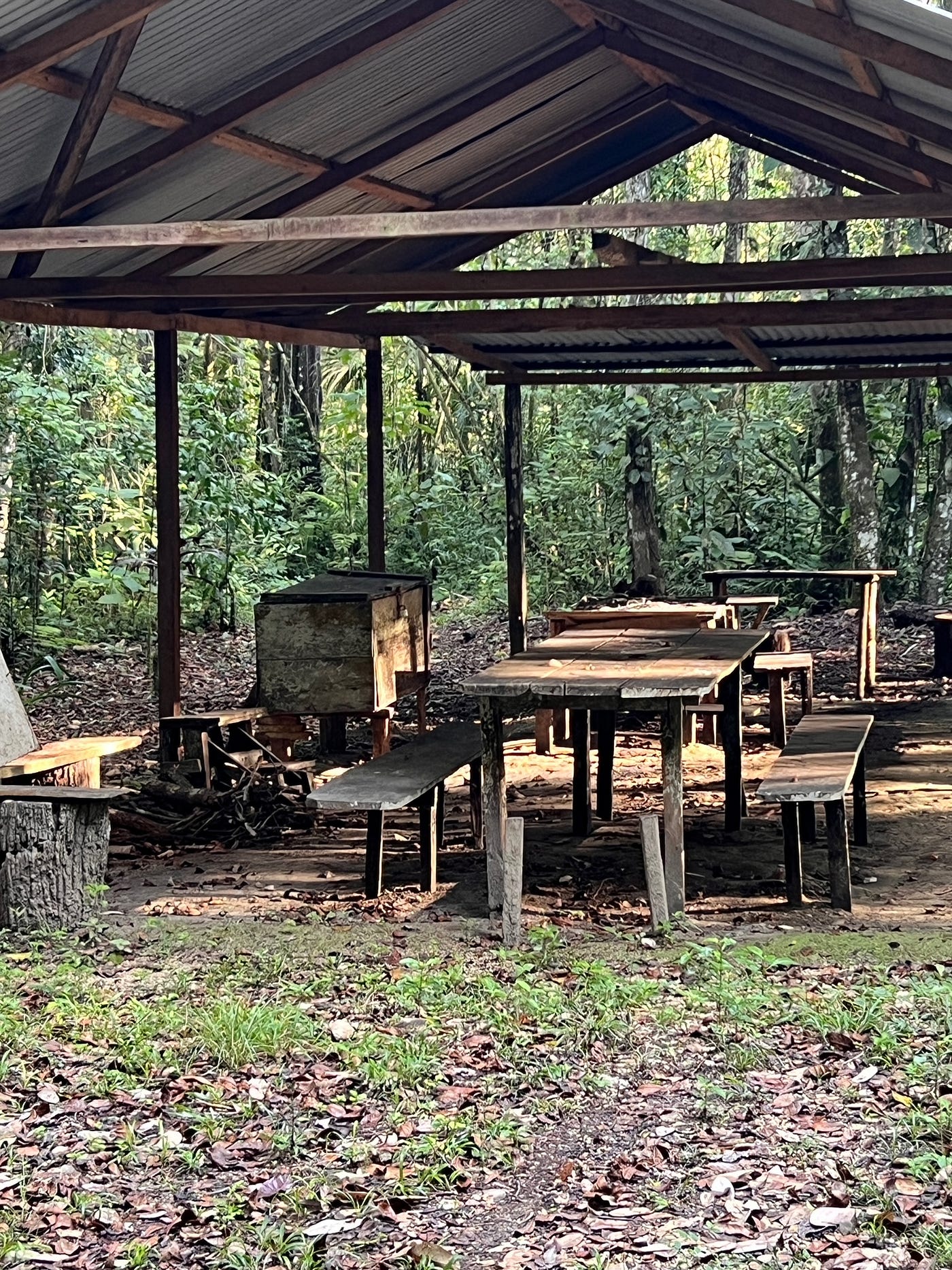
It’s a long bumpy drive through what used to be a thick jungle before loggers appeared in the 1960s. Entering the village, there’s one long dirt road bisecting it. Before any passageway granted access, this was the grass landing strip whereby Trudi and Frans Blom flew in and out since the 1940s. Having befriended the Lancandones, they became advocates for the preservation of their traditions and the rainforest. They’d created a jungle camp, staying there frequently. It still stands. Indeed, it’s impossible not to feel their presence there still. I stayed in their historic camp when the few guest cabins were being restored. Their adopted daughter Doña Beti often came with us. She insisted on cooking our meals over the open fire, feeding us at the camp dining table. I especially imagined Trudi sitting at a place of honor, holding court in her legendary manner. Trudi and Frans passed in 1993 and 1963, respectively, first laid to rest in San Cristóbal de las Casas. In 2011, the Bloms were reburied in the village cemetery, close by their friend and spiritual leader Chan K’in Viejo, at last fulfilling both their long-held wishes. 
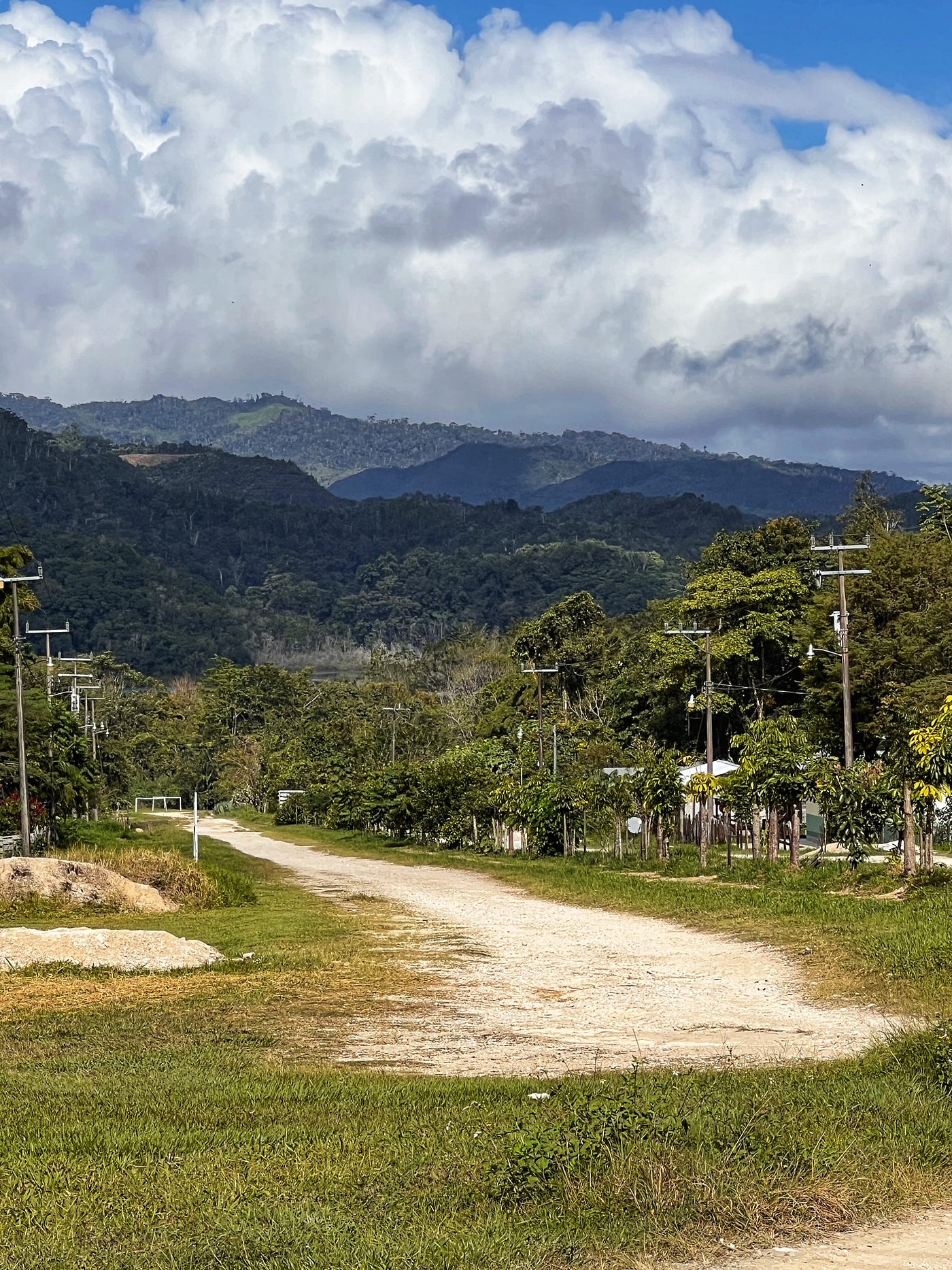
Nahá Road/Landing Strip. ©2024 Carla Woody
The Bloms’ historic jungle camp, Nahá. ©2024 Carla Woody

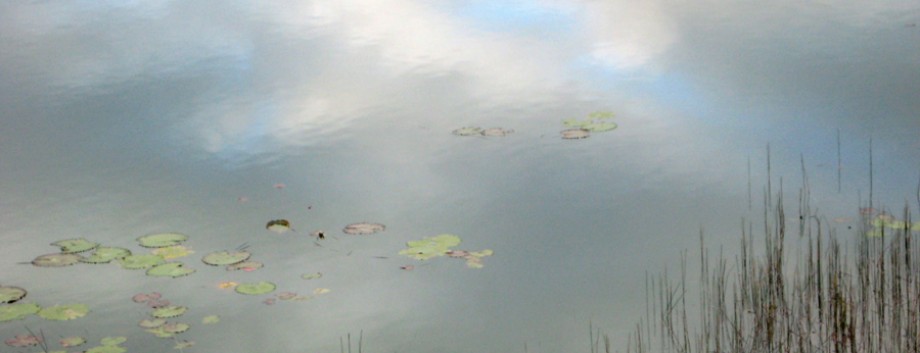
Nahá means the place of water in the Lacandón language. Indeed, the lake has a mystical quality. I draw on memories of mist hanging over the lake, lily pads at the edges. The other side can’t quite be seen. Gliding along in the traditional dugout canoes, it just might be possible to enter another world. I’ve felt the invitation.

Lake Nahá with traditional canoe. ©2009 Carla Woody

My reason for coming to Nahá all these years was to pay respects to Don Antonio, the last holder of their spiritual traditions and Chan K’in Viejo’s son-in-law. This sweet, humble man carried on courageously for decades, fulfilling his sacred traditions despite great duress and interference from evangelicals. In 2012, I wrote The Last Spirit Keeper tracking manipulations from those outside sources and the beautiful connection made in 2009 between Hopi wisdom keeper Harold Joseph and Don Antonio during his time of grief at the sudden loss of his son.

The pandemic had interfered with my annual return until this year. Once arriving in Nahá, it was practice to check in with Don Antonio to say hello and ask about his plans for the balché ceremony.* My friend Eli PaintedCrow and I walked from the lodge on the edge of the village to Don Antonio’s home according to our norm. A young relation greeted us and went to get Don Antonio. I was shocked by the sight of him. He was quite frail and bent. He had trouble walking. He didn’t recognize me. After all these years of appearing ageless, he now seemed not long for this world. Only his long dark hair remained the same. I was saddened by his appearance. I couldn’t imagine he would hold the ceremony or even have the desire. But he asked us to come to his god house with the group the next afternoon.

It was then I learned he was going blind. He kept gazing at me like perhaps he should know me. When he came quite close, he lit up with recognition and began to talk of past times I’d been there. He had a new god house now located just beyond the house. The old god house where I was used to going was about a quarter mile away. He was no longer able to walk to the old one. He had a stick to help maintain his balance and had trouble getting up when seated or kneeling. When people asked me how old he was I’d say probably eighties and then maybe ninety as years were passing. It was sometimes a challenge to keep track, and I wasn’t even sure of his age the first time we met.

When we arrived the next day, he was preparing for the ceremony. He bustled around the interior of his god house readying the god pots. Each one had a face on it, symbolizing one of their thirteen gods. He placed them on an altar made of large palm fronds lying on the ground and put a copal inside each one. He invited us to sit on the logs just inside the perimeter of the god house. Females were not traditionally allowed inside as males were. But he’d always been gracious. This time was no different. The previous day I made sure to let him know we were eleven women, unsure how he’d feel about that. No men were with us. He looked a little taken aback for a moment but assured us we were welcome.

He’d already ladled balché from the old dugout canoe where it fermented into its large terracotta container. Now he made his offering to each god. Dipping a rolled-up young palm frond into balché, he trickled the liquid over the jutting lower lip of each god pot. Sitting down on the log seat in front of the balché vessel, he sighed with satisfaction and offered gourd bowls containing the drink to each of us. The first sip is always a bit of a shock to my taste buds but quickly becomes tastier as the ceremony progresses. I noticed the same response on the women’s faces in the circle.

After a few healthy gulps, Don Antonio was quiet for a few moments. Then he began to speak softly, saying he hadn’t done the ceremony in a long time, how no one came to see him anymore, and his people no longer cared for the gods. It was then his wife, who rarely joined the circle, came from the house, looking in on him, stroking his hair, lightly touching his face. I’ve heard Don Antonio note the lack of interest his people had every time I’d been there, and how in the old days this ceremony healed people. But the gods weren’t showing up so much anymore either. They’d been forsaken. With his wife’s concern for her husband and the love she clearly showed, his lament took on an even more imminent conclusion. I had tears in my throat and a few slipped down my cheeks. I can only imagine what it’s like to be the last one practicing ancient traditions. I can only imagine the loneliness.

Eli PaintedCrow and Don Antonio. ©2024 Carla Woody

But he began to brighten. Eli sat next to him, talking to him in Spanish. I couldn’t hear what she said but guessed she expressed her great interest in their ways. Eli’s presence on our journey was important to me and even more so to her. She’d come to reconnect with her Maya lineage, having suffered that loss when her dear grandfather passed many years ago. Soon Don Antonio was telling stories and singing traditional songs, even one about the merits of drinking balché.

Don Antonio at his god house. ©2024 Carla Woody

After a while, Don Antonio made an announcement. He told us at one hundred years old he would no longer hold the balché ceremony, and the last one would be with us eleven women. He told stories, sang, lit the god pots, and prayed. He blessed us. We drank balché. This may have been a poignant time, but there was joy just as well. I saw it on his face. This gentle soul held steady for what mattered. We all can learn from his example.

After the balché ceremony. ©2024 Carla Woody

That day marked the end of an era. Don Antonio has no apprentice. There’s no one who would carry on the traditions. This fact was confirmed a couple of days later at Palenque when Eli and I visited with some Lacandón women from Chan K’in Viejo’s lineage who had a booth there. I heard that old friends of Don Antonio’s visiting from the US, went to see him the day after we left. He was still happy and they all drank the leftover balché. That news lifted my heart.

The old dugout canoes have been gone over a decade, save the one at Don Antonio’s god house and another sunken in water at the edge of the lake, just one end sticking up. Fiberglass boats took their place. Then the last couple of young men who used to attend the ceremonies slipped away suddenly, too. On a subsequent trip, I saw one who had made vows, in conversation with me, to continue his traditions. But the next time I saw him, he’d been dressed in Western clothing. I learned later he’d converted to evangelism.

Over the last eighteen years, I’ve witnessed the steady disintegration of Lacandón spiritual practices as foreign influences took their place. Of course, it started long before then with roads cut by loggers and decimation of the rainforest and wildlife habitat. Nahá was once a place that had stepped outside time. I feel fortunate to have experienced it that way.


*The balché ceremony, undertaken by the males in the community, is a conduit for blessings, prayers, and a way of honoring. Individual gods are represented through terracotta god pots, with the face of each god and the interior meant for burning copal. Any god pot may be chosen for use during the traditional ceremonies. Don Antonio, as caretaker of the god pots, communes with the gods that hold the world together. And when he feeds the god pots copal, tamales, and balché, he is feeding the gods, the universe, and everything in it. The ceremony and its preparation take many hours.

One Last Ceremony was originally published in the Illumination publication on Medium in March 2024.

Categories: Global Consciousness, Indigenous Wisdom, Lacandón Maya | Tags: , , | 2 Comments

The Legacy of My Grandmothers: Bringing Their Voices to Light

There are long held secrets on both sides of my family. One I’ve known about for a long time but hadn’t readily understood the whole story in context. The other I learned of in October 2023. It’s taken me several months to piece elements together and come to a horrifying conclusion.

I do want to alert you that what I’m about to share may be too graphic for some in painting these terrible narratives. They derive of a time, rising up through poverty and lack of choice. But it could just as well be told in present times and for what else could come if we allow it.

I’m going to disclose these family secrets here. Why now? Why publicly? It’s a time sensitive matter of life and death. I feel a responsibility. These tragic stories need be told and the women involved—my grandmothers—and others like them honored. My 92-year-old mother is urging me to do so. One of the stories is about her mother.

I never knew either of my grandmothers. They were names to me with no attachment. But they’ve come alive as I’ve researched their lives and deaths. I want to say their names and grieve for them, what they went through and the generational trauma living in the family line.


Jewel Nadine Whitley, née Smithart

Sisters BB (left) and Blackie (right), circa 1930.

My maternal grandmother went by her nickname Blackie. She was born in Leesburg, Mississippi in 1912, one of six children. The family had been there for generations doing well for those times. But in 1913 they picked up and fled due to serious encounters and death threats from the Ku Klux Klan because they employed Black people at their businesses, perhaps a story for another time. They landed in east Texas where eventually Blackie met her husband, Carl. They made their life in the still tiny towns of Jacksonville and then Palestine. My mother Sue was born in 1932, an only child. Times were exceedingly hard in those rural communities, more so than elsewhere. There was little to no work. If there was, pay was a pittance. Blackie worked at a laundry. Carl’s work in those early days is unknown. My mother remembers going to bed hungry much of the time. They lived below the poverty line. My mother told me she thought it was normal—everyone living a hand-to-mouth existence. No future.

Imagine worrying through the day, kept up at night with how to make ends meet, what to scrape together to make a meal, which meal(s) to skip that day, how to keep your growing child in clothes. What if something happened and there’s no money to make it right and nonexistent resources? Maybe you know those who are in those kinds of situations or have been there yourself.

As if that wasn’t bad enough, it’s this next part that so twists me up inside. My mother doesn’t know when what I’m going to tell you next occurred. She only found out at all because her favorite aunt BB told her sometime after Blackie passed.

Have you heard those old stories of women aborting their pregnancy with a coat hanger and didn’t think they were real? I know in my heart Blackie only undertook that unspeakable action because she felt family circumstances held no other choice. Step into her life discovering another child was on the way: the desperation, sadness, hopelessness, absolute despair, guilt. This was not an act taken lightly. I can only imagine the courage it took. Where did it happen? How? I have a sense she was alone in the bathroom, no help then or in the aftermath…a secret she long kept to herself until she disclosed it to her sister BB. I stand in her shoes in that time and it tears me up.

Whether her uterus managed to heal or it was permanently destroyed, we don’t know. But at some point, Blackie began to feel unwell, which probably developed over time. However, by age 36 it was clear it was something serious. We don’t know if she went to a doctor at the outset. There was probably no money. Or did she wait until her pain and bleeding was unbearable? At age 38 Blackie was finally diagnosed with uterine cancer.

Did the way the abortion occurred cause the cancer? It is very rare for uterine cancer to appear in one so young. If the disease were to present, most experienced it after age 50. I tend to believe there was a link…the physical and emotional wounding, and stress likely took its toll. My mother told me Blackie was emotionally absent.

When I think about the treatment and its side effects Blackie endured, I shudder. Radium capsules were placed in her uterine cavity. My mother remembers seeing them, a string tail at one end to pull them out. In my mind I saw a teenaged girl-sized tampon-like apparatus. They were unsuccessful. I’m sure it added to her pain by burning her up inside. Blackie suffered another four years, passing at age 42.


Emma Mae Woody, née Heard

Emma, date unknown.

My father Glenn was a motherless child born into the Dustbowl in the Texas panhandle on January 11, 1932 in Dalhart, the youngest of seven children. The only thing we knew about Emma was her death from undisclosed complications of childbirth. Nothing else. My father never even saw his mother’s face. The only photograph that exists—faded sepia—is of Emma walking down a barren dirt road to nowhere. She’s unrecognizable, the image taken from such a distance. It’s undated. In genealogy charts researched for us by a friend, we learned she was born in October in 1887 in Arkansas, no town or county given…and nothing whatsoever available about her family line. We don’t even know who her people were.

My knowledge base changed when my cousin David and his wife came to visit my mother and me in October 2023. David had been extensively researching the Woody family genealogy and brought with him a large laminated family tree. He also said he’d come across Emma’s death certificate and gave me a copy. He noted it was exceptional due to the notes regarding death and attendance were handwritten by the doctor whose signature was indecipherable. The document, now close to 100 years old, is washed out and hard to read. Thankfully, the handwriting is much larger than the type. The first thing that popped out to me in contributing causes was “retained placenta.” What is that? None of us present had heard of this. For the time, I set the family tree and death certificate aside as we returned to visiting.

When I pulled it out again a few weeks later, I first researched “retained placenta”.  

Delivery of the placenta is vital in preventing severe complications from developing. In normal circumstances, the placenta naturally detaches on its own and is delivered from the uterus. However, when the placenta fails to detach and be delivered within 30 minutes after the delivery of the baby, it is referred to as a retained placenta. Sometimes, an entire placenta is retained while other times, only part of a placenta is retained. Both can pose serious risks to the mother. The entire placenta must be delivered.

If it’s not removed in a timely manner, the risks are: serious infection, hemorrhage, internal bleeding, damage to the uterus, sepsis leading to septic shock.

I began to feel queasy. I returned to the death certificate. Under cause the doctor had written “septicemia”—the medical term for blood poisoning. Then I read the doctor’s full statement on contributing causes: Retained placenta. Delivery unattended on account of bad roads.

I understand it was common to have home births at that time, many without physicians or even a midwife. Of course, home births happen today but most have a back-up plan if things go awry with the birth. There was a gap of seven years between my dad and the twins closest in birth. He had four brothers and two sisters. But this tells me my grandfather and all siblings still lived at home then.

Did no one seek help? I looked at the death certificate again. The doctor noted he attended Emma from January 25 until February 18. That’s the day she died at age 45. My father was born January 11! She received NO treatment until 2 weeks after the birth and hung on 37 days before passing. There can be no doubt Emma suffered horribly. I don’t care what the roads were like! I would have gone for help. Wouldn’t you? Two weeks?

I was enraged. Underneath is a deep sadness. I cannot relay this story without crying or getting a catch in my voice and feel my anger arising. I cannot think about this much before I begin to spiral.

All my father’s immediate family have been long gone. I started sending emails out to cousins asking if they’d ever heard any stories from their parents about Emma growing up or if anyone had any photos of her. Nothing. It’s as though she’s a ghost, any trace of her swept away with the exception of that telling death certificate.

I feel like Emma is reaching up from the grave, wanting someone to know that she mattered.

In my mind, what happened was criminal negligence committed by my grandfather James Woody. There’s a small chance I wouldn’t have hopped on this accusation and left it to ignorance. But there’s more. When my dad was a toddler my grandfather farmed him out to a childless couple down the road only too happy to take him in. When my father was age four, the couple asked my grandfather if they could adopt him. It’s quite likely his first family didn’t come see him. My father had no memory of that happening.

When my grandfather showed up at the couple’s house he was loaded for bear. The husband sent my father to hide under the bed. I can imagine the yelling going on outside giving warning. My grandfather killed the husband, beating him about the head. His fists held brass knuckles. Then he took my father back to his birth home. He was never charged. The claim was made that when the husband opened the door, he had a rifle.

My father suffered from the trauma of witnessing that incident his entire life, being motherless, and ongoing abuse by his father. It affected his life and those of us close to him. All of this could possibly have been avoided had Emma received timely adequate care for the retained placenta. Most survive when it’s addressed as required.

My grandfather was 60 when my dad was born. There was a first family also with seven children. Their mother Luiza died at age 40. My cousin and I had a consultation about the dates Luiza gave birth to their last child Margarett, and the perplexing length of time from the birth and then the deaths of mother and child. David said, “From the birth/death date proximity of Margarett, I’m led to assume complications from childbirth led to death of mother and child.  However, I have no factual support on that, only supposition.  It appears possible that both JM Woody’s wives may have died in relation to childbirth.” He could find no death certificates. I’m glad I never knew this grandfather. He died alone in his cabin by his own hand at age 80—two weeks before I was born.

My father passed in April 2022. I would not have told this story prior to his passing, even if I’d known it. He would not have been able to endure it.


One might say that was so long ago, a frequent occurrence. Such things happen. I’m saying, it didn’t have to be that way—ever. It boils down to women’s status. Have times changed? I was aghast with the results I uncovered about maternal mortality rates. Not all those years ago…today.

We’ve been in a maternal healthcare crisis all along—and it’s getting worse by the year. How can we be thought of as one of the richest countries when the US is 55th in the world in maternal mortality—as designated by a 2020 WHO report—way up there with developing countries, the worst of any developed nation? And the CDC documents Women of Color are nearly three times likelier than White women to die during childbirth. We don’t take care of our own.

Women have the right to live safe, empowered lives making decisions that are right for them and their families…and have the support to do so. This is not a political statement. This is reality. We cannot return to the Dark Ages. We must go toward The Light.


Please feel free to share widely. It matters.

Categories: Compassionate Action, Global Consciousness, Women's Rights | Tags: , , , , | 11 Comments

Spiritual Travel to Hopi in March 2023

SPECIAL ANNOUNCEMENT

Join us in Hopi Land, March 16-21, for an immersion experience in the Hopi Way of Life you’re unlikely to find on your own. Once again, I’m honored to sponsor this rare opportunity hosted by Hopi Wisdom Keepers Charlene Joseph, Harold Joseph and others. You’ll be touched in surprising ways as to what really matters, positively affecting your daily life long after you return home.

Spiritual Travel to Hopi: Sacred Guardians of the World
March 16-21, 2023

Registration discount ends December 16.

With Charlene and Harold Joseph, Hopi Wisdom Keepers, and Carla Woody, Spiritual Guide and Author

An Immersion Experience in the Hopi Way of Life.
Co-sponsored by Kenosis and Kenosis Spirit Keepers. A portion of tuition is tax-deductible.

Join us to learn from traditional Hopi Wisdom Keepers in their home villages of Shungopavi and Moenkopi in northern Arizona while they share who they are as First People, the original commitment they made to the Caretaker of that land — and some of the ways they carry out these spiritual responsibilities.

Our journey emphasizes lifeways and places of great spiritual significance handed down by Hopi ancestors, as it has been for thousands of years, still living today on First, Second and Third Mesas of the Hopi Nation. Visiting ancient villages of Old Oraibi, Walpi and hidden petroglyph sites, we explore the traditional Hopi way that holds the world together.

Our journey is timed to potentially attend a day dance. The Katsinas having engaged in ritual in the kivas and danced all night, often emerge during the day to offer blessings to all beings and prayers for fruitfulness.

The group size is limited to maintain respect and the intimate nature. A portion of tuition is tax-deductible to help preserve continuity of Indigenous wisdom traditions through the initiatives of Kenosis Spirit Keepers, the nonprofit extension of Kenosis. When you travel with us you directly help support Indigenous traditions.

For detailed itinerary, tuition, bios and how to register, go here.

Registration discount until December 16. Registration deadline February 27, 2023.

Register now to hold your space! For questions, call 928-778-1058 or email cwoody@kenosis.net.

Categories: Global Consciousness, Hopi, Indigenous Wisdom | Tags: , , , | Leave a comment

Spiritual Travel to Peru: August 21-31, 2022

SPECIAL ANNOUNCEMENT

An Intimate Pilgrimage from the Highlands to the Lowlands
August 21-31, 2022

Miradora Atalaya. Photo: Carla Woody.

Co-sponsored by Kenosis and Kenosis Spirit Keepers.
A portion of tuition tax-deductible. Registration discount until May 23.

I am pleased to announce my 2022 Spiritual Travel Program to Peru, an immersion experience in sacred Indigenous ways of Peru.


Many of you know I recently returned from a personal journey – immersion in the little known Matsigenka way of life and time in deep jungle…profoundly transformational for me. The community has graciously invited me to bring a small group.

– Carla Woody


It is a privilege to sponsor this special program focusing on sacred traditions linking the Q’ero and Quechua peoples of the Andes and the Matsigenka of the jungle. I offer you an intimate opportunity, unlikely to be found on your own — with the intent that we are all transformed and carry the beauty home.

We begin in areas outside Cusco wiith Doña Vilma Pinedo and Q’ero paq’os — traditional Wisdom Keepers and mystics — who usher us into the world of the Andes, an alternate reality of life-affirming choices.

Q’ero Despacho. Photo: Carla Woody.   

Then we transition deep into the rainforest to the pristine, wild surroundings of Matsigenka homelands. We experience how it is to live harmoniously attuned to the environment, creating natural medicines and traditional arts, consuming foods provided by the rainforest, and taking in oral history informing the Matsigenka world view.   

This is a journey of ayni — sacred reciprocity. We sit in ceremony of all these traditions, become an allyu — spiritual community — honoring all that sustains the planet and our own wellbeing. We come together with blessings, prayers and share the daily activities of all pilgrims.

Alicia Rios, Matsigenka curandera. Photo: Carla Woody.

We will be a smaller group than usual with respect to the Matsigenka village capacities. Though small, their hearts are open and wish to receive us in generosity just as our Q’ero friends and Dona Vilma Pinedo do. 

Detailed information including itinerary, tuition, bios, and how to register is on the program page. I’m truly honored to bring you this rare opportunity. 

Register now to hold your space! Registration deadline July 21.
For questions call 928-778-1058 or email info@kenosis.net.

I am privileged to bring you such a special opportunity. Join me and accept my invitation for this Adventure of the Spirit…and know that you are supporting continuation of the invisible, sacred threads that hold the world together.

Categories: Global Consciousness, Indigenous Wisdom, Matsigenka, Q'ero | Tags: , , , , | Leave a comment

Honoring Indigenous Peoples Day

In a time of global movement away from our origins, disintegration of family and disconnection from the natural elements, Spirit Keepers are the true warriors of today. In diminishing pockets throughout the world, in many ways disrespected, they still maintain the invisible threads that connect us to our roots.⁠⁠

Blessings of the Four Directions. ©2013 Carla Woody.

Indigenous wisdom for a better world.

I Hold the Knowledge Inside. ©2015 Carla Woody.

Kenosis Spirit Keepers

We help preserve Indigenous traditions threatened with decimation.⁠⁠

Testimony. ©2013 Carla Woody.

Spirit Keepers are the stewards of our future. The ancient, Indigenous ways instill appreciation for the Mother Earth and all beings. When Spirit Keepers are honored and come together to share their sacred practices, we are all nourished. Our common foundation is strengthened.

Going Home, Shungopavi. ©2014 Carla Woody.

We honor traditional Indigenous spiritual leaders, healers and communities who hold the fragile threads of their sacred ways.

Saved By Fortuity. ©2013 Carla Woody.

We fully believe: If these traditions continue to die, we all lose.

The Choice in Every Moment. ©2021 Carla Woody.

I founded Kenosis Spirit Keepers as the nonprofit extension of Kenosis. I’m pleased to say that we’re now in our 14th year. We continue our work against all odds.


A side note: Although I’ve explored various media in my artwork across decades, the intent of the content remains … those elements most sacred.

Categories: Global Consciousness, Honoring the Earth, Indigenous Rights, Indigenous Wisdom | Tags: , , , | 2 Comments

In Memoriam: Maestro Xavier Quijas Yxayotl

Another star has appeared in the night sky.  Xavier Quijas Yxayotl — composer, master musician, spiritual guide, healer, artist, visionary, resurrector of the ancient ways, life-giver, steward of Mother Earth, friend, lover of life and all beings — has passed. And we have experienced an incredible loss  at his departure.

We can be thankful that he leaves a substantial legacy in the way of ancient Mesoamerican music and instruments. He rescued this rich heritage from annihilation, the colonizers having sought to destroy it. Xavier led the way and others then stood on his shoulders. He’s globally acclaimed. Beyond this enormous accomplishment, there is the man. I’m not sure I’ve ever known a man more gentle, kind, generous and — despite his renown — humble.

Xavier Quijas Yxayotl
Portrait of Xavier Quijas Yxayotl with one of his handmade ancestral flutes. ©2015 Barry Wolf. Used with permission.

I first met Xavier in September 2013 when we, Kenosis Spirit Keepers, invited him to Phoenix to share his music, Huichol/Azteca traditions and ceremony. I was so taken by how, through his music, he led us into other worlds and realms entirely. I grew excited when he mentioned a bit of his life’s history to the point that, a couple of months later, he agreed to relay it to me in detail, allowing me to document it. In 2014, Still Point Arts Quarterly, a literary arts journal, accepted Beyond the Dark as a feature in their Fall 2015 issue.

Over the ensuing years, Xavier lent support of his music and presence to other of our Spirit Keepers Series weekends, and in January 2018 he was our invited guest on the Maya spiritual travel program in the highlands and lowlands of Chiapas, Mexico. It was my honor and privilege to know this compassionate spirit…who grew through a difficult childhood, separated from his ancestral traditions…who heard the calling of his ancestors…maintained his sensitivities throughout…to give his gifts to the world. He remains a role model for all time.

To read Xavier’s soulful life story, Beyond the Dark, in its entirety, go here. You’ll discover how he returned to the Huichol roots denied him as a child, and went on to resurrect ancient instruments lost to time through visitations from his ancestors.

Xavier, your bright light lives on.

Xavier and Apab’yan Tew closing a fire ceremony with ritual music at a Spirit Keepers Series offering in Phoenix in 2017.

Categories: Global Consciousness, Gratitude, Indigenous Wisdom | Tags: , , , , | 2 Comments

Return to the Center

I’ve come late to Linda Hogan’s writing. I’ve now read two of her books – Solar Storms and People of the Whale –  and in the middle of a third – Mean Spirit. I can’t help but know what is apparent. The message they hold is for all time, but especially now when we’re called upon to pay attention and determine how we shall live. We are called upon to be distinctly cognizant that what we do matters.

The common theme has to do with the clash of cultures. One honors the Earth, all ways of life, and practices a sacred sense of reciprocity. The other is intensely focused on accumulation that can’t be satiated and complete disregard of all life…for the benefit of a few. One is life-giving. One is depleting. There’s no subtlety and here no overlap. It’s the Great Divide for purpose: Pay attention. Heal.

The books involve Indigenous characters who experienced separation from traditional ways of living to varying degrees, and those who remain in touch. Through outside western influences, they’ve had their birthright nearly or completely destroyed. Through manipulations, they’ve borne murder, blurring of identity and loss of homeland. Hogan points so well to the insidiousness of these shenanigans that caused people to fall away from their True North over time, almost without noticing.

What I so appreciate about Hogan’s writings is her willingness to dive deeply and excavate struggle, confusion and collapse at the individual and communal level. But equally she leads the search for a way out that also involves struggle and confusion.  But the shift involves direction aimed toward – and does produce – a return.

The Mythic Journey Engaged, Finisterre. ©2015 Carla Woody.

In People of the Whale, certain sentences popped out to me over the course of the novel that, just in these, told the whole story.

They do not feel the spirits that once lived in the fogs and clouds around them. The alive world is unfelt. They feel abandoned...

For every inch of skin, there is memory...

He was waiting for something to open, but it wasn’t the door...

…they are answers to questions not yet even asked...

…he hears the sound of birds and it is as if behind the human world something else is taking place...

There is just a breeze of something living, like the breath of the universe...

Then he sings an old whale song he has never learned...

Tradition had been waiting their return.

It’s of Mythic stature and, of course, this is what we now engage.

Categories: Book Review, Global Consciousness, Honoring the Earth, Indigenous Wisdom, Spiritual Evolution | Tags: , , , , | Leave a comment

In Time With the Deluge

Nearly twenty years ago, I began writing my second book Standing Stark: The Willingness to Engage. It was a time of exhilarating change and deep insights for me, rampant with significant leaps of faith, without any visible safety net, that brought me to where I am today.  I was presented with another fork in the road as there had been others along the way. Who knows where I’d be if I’d remained on the beaten path? While those personal choices dismantled much of my old foundation, they were proactive in constituting another, likely waiting for the right time to emerge.

Here we are now, as a Collective, with something so major thrust upon us, something so new that little can be predicted, safety net unknown or when it may settle down. It’s torn apart our systemic status quo and exposed what was kept under wraps. Upheaval. The measure of response at both an individual and macro level will necessarily bring revolution and evolution, or (my belief) we wouldn’t have been presented with it. Its time was past due.

I’ve had plenty of time to muse about things over these months in ways I wouldn’t have had before, being so much on the move. Being still has always worked its magic on me.

With that, I began to consider the words that came through me all those years ago. They flowed out of me to become the prologue, setting the stage for Standing Stark. Presently, we are in the time of monsoons, the same period I wrote then, with barely a drop of relief, hoping for the rains to come. Yet they’ll come in their own time or not at all. We have no control over the movements of nature. But, as with any time, we do have control over our own responses and sensibilities.

StarkTree

We have heavy rains in Arizona. They normally start in July and go through August. We call the rains monsoons, which may be hard to imagine for those who have not yet experienced the rhythms of the high desert. Sometimes, though, we have a drought year and the rains start later. The tall pines become over-thirsty, beyond being parched. In those times, all of us develop expectancy — trees, plants, animals and humans alike. We are all in it together after all.

But invariably the monsoons come, often with violent storms. Jagged lightning dazzles the sky and thunder cracks so loudly it can bring us up sharply if we’re not attuned. In a primal way, we are all more susceptible during periods of scarcity.

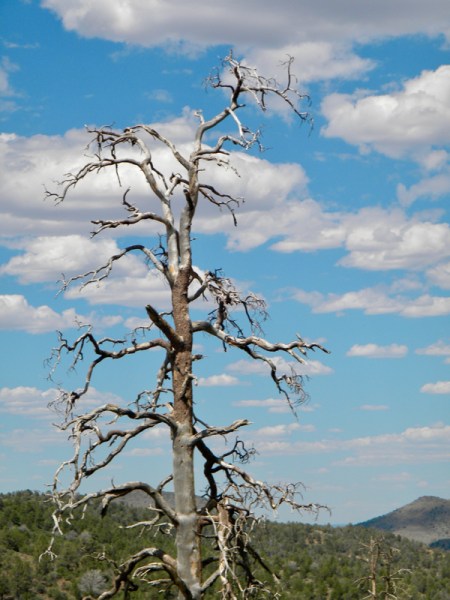
Wandering in the forest later, we can see the aftermath. In a sea of towering ponderosas, or their kin, there are those who stand apart. Not frequently, but infrequently, there will be those who are now shed of their needles, their skins laid open by the snaking of a lightning strike. Standing stark, they appear to be dead. They aren’t. When I go and put my forehead against their trunks, I feel the elemental filaments that have startled another kind of consciousness within them. Still dwelling in their habitat, they are even more alive than before. They draw our attention — our fascination.

The fire that discharged their coverings often may move to some of the surrounding brush and trees, those in close proximity. Sometimes it may travel from a tree to ignite nearly the entire forest. But before that could happen it was first necessary for that tree to be burned of its own covering before the fire that began with that One could affect its brethren…

The lightning strike oftentimes comes suddenly, a bolt unexpected. But there may well be a stirring before the charge and those who have grown the tallest stand most ready to receive…

In order to be ready, we do for ourselves what we know to do as best we can. Yet, there must be no striving. The striving of the material world has no place in this transmission. We need only send our willingness up as a prayer and merely stand waiting. This is for those souls who hold themselves available — to be struck.

— In the time of monsoons

For a few years, prior to a huge personal fork in the road in 1992, I worked as an internal consultant for the US government. (Those who know me find my long stint in civil service hard to believe. Now, so do I.) I was one of several in my small office trained to seed organizational development by focusing on leadership strategies, team building, conflict resolution and the like. The approach most meaningful to me was a holistic one. With intact work teams, we used the Meyer-Briggs Type Indicator or experiential activities that pointed to similar outcomes: the varied styles and capabilities of each individual made a stronger, more creative team. Everyone brings something to the table to contribute. Most of the time, I felt like I was banging my head against a stone wall. It was a challenge to get most of those managers to think beyond protecting their own turf and short-term thinking.

When that happened, we had another trick to pull out of our back pockets: WIIFM (pronounced whiff-um). When wanting them to consider a more holistic, visionary style, we’d guide them to consider, what’s in it for me? Back then I was fresh-faced and hopeful. Now, I see asking that question likely served to entrench rigid individualism rather than open a pathway toward higher values on Maslow’s pyramid and farseeing. It wasn’t long before all came to a head for me. I simply couldn’t do it anymore and cut those ties.

A friend recently said, we’ll all find something to justify our beliefs and actions. Of course, we do. That’s true no matter where you fall in the current deluge that assaults our moral compass or however else you make decisions.

Shortly after leaving disillusionment behind, I was first introduced to traditional Indigenous ways: seventh generation decision-making, sacred reciprocity and actions intent on the well-being of the planet and all beings. This is the world where I choose to dwell, one whose time is long overdue and endangered. In practicing stillness, these are some of the memories and metaphors that have guided my considerations over the last months.

Categories: Contemplative Life, COVID-19, Global Consciousness, Indigenous Wisdom, Sacred Reciprocity | Tags: , , , , | Leave a comment

Make Friends With Whatever Arises

Last week, I had a landscaper deliver and spread much on the few garden beds I have. He’d been out to my place before and is dependable. It’s been a trial over the last several years, finding plants that the wildlife in this outback won’t eat and that can tolerate drought conditions.

It’s certainly been a trial this year in so many ways. Even the flowering plants have largely hidden their color, choosing instead to retain their blooms, leaves frequently curled inward to protect themselves against the raging hot winds.

At dusk, I wandered out to admire what the workers had accomplished. When I rounded the slope alongside my long dirt driveway, I stopped short. I felt a pang in my heart and nearly burst into tears.

103743586_2934181023302070_4461039012575800053_n

Seeking solitude, I moved to this particular spot nearly 20 years ago because I would have a clear view of the San Francisco Peaks nearly 90 miles to the north. They were precious to me, precious to the Indigenous peoples of Northern Arizona.

When I walked this land back then and noticed small mounds dotting the hillside with waxy leaves on branching stems holding quarter-size violet flowers, it cinched my choice. For me, seeing these brilliant points—each flower only lasting for a day—in this sunburned, high desert landscape has been a kiss of beauty I’ve come to cherish. My love affair with these wild four o’clocks, that I’ve never seen elsewhere, has endured.

A few years ago, several of them started volunteering in the lower bed containing only a large juniper and a few shrubs native here, cliff-rose and Apache plume. The four o’clocks made their home around the juniper where little else would grow. I felt blessed and never failed to glance their way when driving down the hill, looking forward to the day they would completely cover the ground.

But now, the four o’clocks were gone.

At first, I thought I was seeing—or not seeing—things. But then I spotted a pile of wilted leaves and branching stems laying on the wild side of my driveway. They held their beauty close to the vest this year, few of the flowers making any appearance whatsoever.

When I showed my landscaper the next day, he said he felt so bad. I could see he did, having mistaken them for weeds. We searched for some to take their place. Most elsewhere had died back in the heat and lack of water, but we finally found a few. I don’t think the transplants are going to take. I’ve been encouraging them in my daily visits but don’t hold out much hope.

A couple of days later, I began to think about my response to the situation, the visceral sadness, the barely held in tears. I knew something was going on with me well beneath the surface.

A few days later, a friend and I were catching up with each other, a rare opportunity for me to be in the physical (safe distancing) presence of another person, these being pandemic days.

We’d just co-facilitated a meeting via videoconferencing in accordance with safety guidelines. She asked me how I’d been faring, and I told her I was personally fine. But I was so concerned about the Indigenous communities I work with. My nonprofit had been fundraising to provide emergency relief for the Hopi and Q’ero villages who had reached out for help—and the fact that I just didn’t have the means to extend assistance to all.

I knew all were suffering in a variety of ways, from isolation to lack of medical care and protective supplies to food insecurities. I was aware that some of the Maya people I work with are also in a bad way. Across the board, there is serious loss of livelihood for any Indigenous community or business dependent on tourism.

A memory surfaced, and I began to tell her of the experience.

“In 2006, my friend Will and I were traveling in Guatemala. There had been some kind of natural disaster, a hurricane or earthquake causing mudslides and washed-out roads. It was impossible to get to Lake Atitlán or surrounding villages for a few months. We went there right after it had opened up again.

The night we arrived, we had dinner there in Panajachel at an open-air restaurant. I ordered fish. But it didn’t taste quite right, like it was old. I picked around on my meal for a while. I noticed two little Maya girls and an even smaller boy sitting on the curb across the street, their eyes glued on us. When Will and I finished our dinner, most of the food remained. The children ran over and asked politely if they could have what we’d left. Of course, they could! We put it all in a series of napkins, and they scurried back to the curb and devoured the food.

It made my heart ache. Clearly, these little ones had been suffering. Up close it was evident. People just don’t realize how on the edge so many live. How can we ignore such a thing? Once you’ve seen it right in front of your face, you can’t ‘unsee’ it. It breaks my heart, and I know for sure that’s happening now in so many places in the world.”

By the time I finished my story, tears were pooling in my eyes, threatening to overflow. My friend was the same. She said, “You’ve made it real, personal.” We went on to talk about the tragedy of George Floyd’s killing and so many others, the same. I could hardly bear it all.

I don’t want to bear it.

For the last several weeks I’d been participating in online teachings with Pir Shabda Kahn, the spiritual director of Sufi Ruhaniat International, reconnecting with practices.

I suddenly remembered he said something I’d known from long ago:

Whatever arises make friends with it.

And in that instant, the discomfort I’d been so valiantly trying to push down—to make invisible—made its presence fully known.

Grief. I was grieving. How could I not be and still be human? How could any of us not be?

I don’t want my grief to be lodged in my body and forever be carrying it. I don’t want my grief to go underground again.

I want it to be fully present. That way, I simply cannot be complacent or allow anyone to be seen as other.

Pir Shabda had talked about the real meaning of justice, bringing things into balance. Peace won’t come from justice alone but transformation. The remedy comes from each of us. Perennial wisdom has to do with the development of compassion. This is our contribution to send into the world.

The Sufi wazifas are the “99 Beautiful Names of God” that, when chanted, seek to call upon the person any sacred attribute that is named and release it globally. In closing our last session, he offered us the phrase “Ya Jabbar” as a strong way to bring things together. Known as the bonesetter, this wazifa is the healer of fractured human existence.

I’ve been placing this sacred phrase on my breath.

***

Make Friends With Whatever Arises was first published in the Elephant Journal on July 6, 2020 and awarded the status of Ecosystem Winner.

Categories: Contemplative Life, Global Consciousness, Healing | Tags: , , , | Leave a comment

An Offering from the Heart

A  couple of months ago, the newly established Museum of Beadwork in Portland, Maine sent a call out for bead artists to participate in a very special project, which would become part of their permanent collection.  It was an invitation to a community undertaking. Artists would create a design of their choice on a six-inch square hard surface. All the squares would be put together in such a way to form a visual quilt.

The potential of such a project caught my attention. Decades ago in a college art class, the instructor assigned students to shoot black and white photos of the urban industrial landscape that were later cut up, pieced together and mounted on a large collective board. It produced an interesting piece of art. I’m quite sure the outcome was intended to probe the depths of a philosophy—because that’s who the instructor was—and open our sensibilities. I wish I remembered what we unearthed, quite unknown to us at the start. At any rate, the memory of that assignment, the process and result, stayed with me all these years and came to mind again after I received the call for bead artists.

I sat with it. I considered participating but nothing as far as design came to me. And frankly, I  work much larger than the criteria allowed, and it felt restricting. But then I thought about haiku and the six-word story. In their brevity, just the framework, much is left open to the reader’s interpretation.  And isn’t that what art is at its best anyway? Something evocative that touches you? Through which you can have an experience?

That still didn’t produce a design of any juice for me. Finally, something did. I focus my writing there frequently, and especially now.


…liminal space, the territory that holds the material and imaginal realms equally…until they come together as one.

—Excerpted from Liminal


In the last month I’ve written of immediacy and the process we’ve collectively undertaken one way or another produced by the pandemic: This Pilgrimage We’re On and Move Slowly Back Into the World.

Of course, I’d also want to commemorate my own process in a piece of artwork! But it’s even more than that. Within a rite of passage, it would become a sacrament. An invocation, an intent to release into the world held lightly by community. It takes on power. With shape, color and symbols, as the piece may speak for me, others may find their own meaning through what is left unexplained. The fashioning of form, the placement of each bead is no less a prayer, the embodiment of spiritual practice set into it, ultimately to be released to those who may feel and see, those who open their sensibilities to be touched in that way.

Carla-OfferingHeart-above-1_low

Offering from the Heart. Bas relief mixed media, 6″x6.” ©2020 Carla Woody.

I finished my Offering from the Heart. Now it’s getting ready to travel across the country to finally find its placement in the community project.

An idea occurred to me after my own piece was completed. This really is a momentous time to make visible what comes from the core. While I usually don’t accept art commissions, I would be glad to do so for anyone wanting to mark their own rite of passage in this way. An intent to move into form, remembrance of a loved one, a blessing to release whatever it is whose time is past. The expression would be yours to formulate and provide me as the well from which to draw. The heart—being the carrier of love and resonance—and the square—as consciousness, Mother Earth, foundation—would remain the common elements. A piece to take its place on your altar, hang on the wall, or include in ceremony. I’d welcome any sacred items, symbols or anything else that would further personalize and would be possible to include within a 6”x6” or 8”x8” format.

See my artist website for detailed images, options and pricing.

Categories: Contemplative Life, Global Consciousness, Healing, Spiritual Evolution, Visual Arts | Tags: , , , , , | 2 Comments

Blog at WordPress.com.