Posts Tagged With: healing

The Legacy of My Grandmothers: Bringing Their Voices to Light

There are long held secrets on both sides of my family. One I’ve known about for a long time but hadn’t readily understood the whole story in context. The other I learned of in October 2023. It’s taken me several months to piece elements together and come to a horrifying conclusion.

I do want to alert you that what I’m about to share may be too graphic for some in painting these terrible narratives. They derive of a time, rising up through poverty and lack of choice. But it could just as well be told in present times and for what else could come if we allow it.

I’m going to disclose these family secrets here. Why now? Why publicly? It’s a time sensitive matter of life and death. I feel a responsibility. These tragic stories need be told and the women involved—my grandmothers—and others like them honored. My 92-year-old mother is urging me to do so. One of the stories is about her mother.

I never knew either of my grandmothers. They were names to me with no attachment. But they’ve come alive as I’ve researched their lives and deaths. I want to say their names and grieve for them, what they went through and the generational trauma living in the family line.


Jewel Nadine Whitley, née Smithart

Sisters BB (left) and Blackie (right), circa 1930.

My maternal grandmother went by her nickname Blackie. She was born in Leesburg, Mississippi in 1912, one of six children. The family had been there for generations doing well for those times. But in 1913 they picked up and fled due to serious encounters and death threats from the Ku Klux Klan because they employed Black people at their businesses, perhaps a story for another time. They landed in east Texas where eventually Blackie met her husband, Carl. They made their life in the still tiny towns of Jacksonville and then Palestine. My mother Sue was born in 1932, an only child. Times were exceedingly hard in those rural communities, more so than elsewhere. There was little to no work. If there was, pay was a pittance. Blackie worked at a laundry. Carl’s work in those early days is unknown. My mother remembers going to bed hungry much of the time. They lived below the poverty line. My mother told me she thought it was normal—everyone living a hand-to-mouth existence. No future.

Imagine worrying through the day, kept up at night with how to make ends meet, what to scrape together to make a meal, which meal(s) to skip that day, how to keep your growing child in clothes. What if something happened and there’s no money to make it right and nonexistent resources? Maybe you know those who are in those kinds of situations or have been there yourself.

As if that wasn’t bad enough, it’s this next part that so twists me up inside. My mother doesn’t know when what I’m going to tell you next occurred. She only found out at all because her favorite aunt BB told her sometime after Blackie passed.

Have you heard those old stories of women aborting their pregnancy with a coat hanger and didn’t think they were real? I know in my heart Blackie only undertook that unspeakable action because she felt family circumstances held no other choice. Step into her life discovering another child was on the way: the desperation, sadness, hopelessness, absolute despair, guilt. This was not an act taken lightly. I can only imagine the courage it took. Where did it happen? How? I have a sense she was alone in the bathroom, no help then or in the aftermath…a secret she long kept to herself until she disclosed it to her sister BB. I stand in her shoes in that time and it tears me up.

Whether her uterus managed to heal or it was permanently destroyed, we don’t know. But at some point, Blackie began to feel unwell, which probably developed over time. However, by age 36 it was clear it was something serious. We don’t know if she went to a doctor at the outset. There was probably no money. Or did she wait until her pain and bleeding was unbearable? At age 38 Blackie was finally diagnosed with uterine cancer.

Did the way the abortion occurred cause the cancer? It is very rare for uterine cancer to appear in one so young. If the disease were to present, most experienced it after age 50. I tend to believe there was a link…the physical and emotional wounding, and stress likely took its toll. My mother told me Blackie was emotionally absent.

When I think about the treatment and its side effects Blackie endured, I shudder. Radium capsules were placed in her uterine cavity. My mother remembers seeing them, a string tail at one end to pull them out. In my mind I saw a teenaged girl-sized tampon-like apparatus. They were unsuccessful. I’m sure it added to her pain by burning her up inside. Blackie suffered another four years, passing at age 42.


Emma Mae Woody, née Heard

Emma, date unknown.

My father Glenn was a motherless child born into the Dustbowl in the Texas panhandle on January 11, 1932 in Dalhart, the youngest of seven children. The only thing we knew about Emma was her death from undisclosed complications of childbirth. Nothing else. My father never even saw his mother’s face. The only photograph that exists—faded sepia—is of Emma walking down a barren dirt road to nowhere. She’s unrecognizable, the image taken from such a distance. It’s undated. In genealogy charts researched for us by a friend, we learned she was born in October in 1887 in Arkansas, no town or county given…and nothing whatsoever available about her family line. We don’t even know who her people were.

My knowledge base changed when my cousin David and his wife came to visit my mother and me in October 2023. David had been extensively researching the Woody family genealogy and brought with him a large laminated family tree. He also said he’d come across Emma’s death certificate and gave me a copy. He noted it was exceptional due to the notes regarding death and attendance were handwritten by the doctor whose signature was indecipherable. The document, now close to 100 years old, is washed out and hard to read. Thankfully, the handwriting is much larger than the type. The first thing that popped out to me in contributing causes was “retained placenta.” What is that? None of us present had heard of this. For the time, I set the family tree and death certificate aside as we returned to visiting.

When I pulled it out again a few weeks later, I first researched “retained placenta”.  

Delivery of the placenta is vital in preventing severe complications from developing. In normal circumstances, the placenta naturally detaches on its own and is delivered from the uterus. However, when the placenta fails to detach and be delivered within 30 minutes after the delivery of the baby, it is referred to as a retained placenta. Sometimes, an entire placenta is retained while other times, only part of a placenta is retained. Both can pose serious risks to the mother. The entire placenta must be delivered.

If it’s not removed in a timely manner, the risks are: serious infection, hemorrhage, internal bleeding, damage to the uterus, sepsis leading to septic shock.

I began to feel queasy. I returned to the death certificate. Under cause the doctor had written “septicemia”—the medical term for blood poisoning. Then I read the doctor’s full statement on contributing causes: Retained placenta. Delivery unattended on account of bad roads.

I understand it was common to have home births at that time, many without physicians or even a midwife. Of course, home births happen today but most have a back-up plan if things go awry with the birth. There was a gap of seven years between my dad and the twins closest in birth. He had four brothers and two sisters. But this tells me my grandfather and all siblings still lived at home then.

Did no one seek help? I looked at the death certificate again. The doctor noted he attended Emma from January 25 until February 18. That’s the day she died at age 45. My father was born January 11! She received NO treatment until 2 weeks after the birth and hung on 37 days before passing. There can be no doubt Emma suffered horribly. I don’t care what the roads were like! I would have gone for help. Wouldn’t you? Two weeks?

I was enraged. Underneath is a deep sadness. I cannot relay this story without crying or getting a catch in my voice and feel my anger arising. I cannot think about this much before I begin to spiral.

All my father’s immediate family have been long gone. I started sending emails out to cousins asking if they’d ever heard any stories from their parents about Emma growing up or if anyone had any photos of her. Nothing. It’s as though she’s a ghost, any trace of her swept away with the exception of that telling death certificate.

I feel like Emma is reaching up from the grave, wanting someone to know that she mattered.

In my mind, what happened was criminal negligence committed by my grandfather James Woody. There’s a small chance I wouldn’t have hopped on this accusation and left it to ignorance. But there’s more. When my dad was a toddler my grandfather farmed him out to a childless couple down the road only too happy to take him in. When my father was age four, the couple asked my grandfather if they could adopt him. It’s quite likely his first family didn’t come see him. My father had no memory of that happening.

When my grandfather showed up at the couple’s house he was loaded for bear. The husband sent my father to hide under the bed. I can imagine the yelling going on outside giving warning. My grandfather killed the husband, beating him about the head. His fists held brass knuckles. Then he took my father back to his birth home. He was never charged. The claim was made that when the husband opened the door, he had a rifle.

My father suffered from the trauma of witnessing that incident his entire life, being motherless, and ongoing abuse by his father. It affected his life and those of us close to him. All of this could possibly have been avoided had Emma received timely adequate care for the retained placenta. Most survive when it’s addressed as required.

My grandfather was 60 when my dad was born. There was a first family also with seven children. Their mother Luiza died at age 40. My cousin and I had a consultation about the dates Luiza gave birth to their last child Margarett, and the perplexing length of time from the birth and then the deaths of mother and child. David said, “From the birth/death date proximity of Margarett, I’m led to assume complications from childbirth led to death of mother and child.  However, I have no factual support on that, only supposition.  It appears possible that both JM Woody’s wives may have died in relation to childbirth.” He could find no death certificates. I’m glad I never knew this grandfather. He died alone in his cabin by his own hand at age 80—two weeks before I was born.

My father passed in April 2022. I would not have told this story prior to his passing, even if I’d known it. He would not have been able to endure it.


One might say that was so long ago, a frequent occurrence. Such things happen. I’m saying, it didn’t have to be that way—ever. It boils down to women’s status. Have times changed? I was aghast with the results I uncovered about maternal mortality rates. Not all those years ago…today.

We’ve been in a maternal healthcare crisis all along—and it’s getting worse by the year. How can we be thought of as one of the richest countries when the US is 55th in the world in maternal mortality—as designated by a 2020 WHO report—way up there with developing countries, the worst of any developed nation? And the CDC documents Women of Color are nearly three times likelier than White women to die during childbirth. We don’t take care of our own.

Women have the right to live safe, empowered lives making decisions that are right for them and their families…and have the support to do so. This is not a political statement. This is reality. We cannot return to the Dark Ages. We must go toward The Light.


Please feel free to share widely. It matters.

Categories: Compassionate Action, Global Consciousness, Women's Rights | Tags: , , , , | 11 Comments

Book Review: On Earth We’re Briefly Gorgeous

Photo by Ansgar Scheffold on Unsplash.

I first heard of Ocean Vuong through Krista Tippett’s podcast On Being. There was so much to absorb, I couldn’t do it in one listen, and repeated it a few days later. Here was a young man, brought to the US from Vietnam at the age of two by his family. His father left them and, as Ocean says, he was raised by women — his mother, grandmother, and an aunt. He suffered the consequences of their PTSD, the inheritance from war, and all were illiterate.

Ocean was the first in his family who learned to read — at age eleven. In 2019, he was awarded the “Genius Grant” by the MacArthur Foundation. Other prestigious poetry and fiction awards preceded that one, beginning in 2014. At age thirty-three, he has racked up serious outside praise few can claim.

But I suspect that, had he not personally gone through heartbreaking trials and tragedies, and somehow digested them, Ocean would not have been able to translate, at the level he has, what it means to be an immigrant merged with a gay coming-of-age story. When I read his novel On Earth We’re Briefly Gorgeous, I listened to the audiobook first. It was narrated by the author. I wanted to take it in through the voice I heard in the interview — compassionate, vulnerable, and distinctly observant — fragility imbued with strength. Then I read it. I wanted to linger over the words of wisdom that emerged from one so young and his accurate criticisms of our culture.

I was also reading Rilke’s The Notebooks of Malte Laurids Brigge at the time, which had the same pull on me Ocean’s did. Both were clearly framed from the authors’ own lives. The only question remained: how little was fiction.

Ocean’s main character is known as Little Dog, the name representing something subhuman and insignificant, an old leftover practice from the village, meant out of love. In this way, it’s hoped he will not stand out and instead will be protected. Every morning his mother reminds him before he ventures out of his home, now in Hartford, “Don’t draw attention to yourself. You’re already Vietnamese.”

Reading that line truly distressed me. It makes a sad but unignorable statement on the resident bias running through American culture. I’m ashamed of it. In an interview, Ocean spoke about first-generation immigrants coming from war or extreme violence who sought to be invisible. Every day opens framed through fear. While he said, the second generation wants to be visible and express their freedom.

Pay attention and notice the compassion and astute understanding set into dialogue in his writing. Little Dog and his grandmother Lan are watching a nature show where a whole herd of buffalo, each following the one immediately in front of them, ultimately leap off a cliff. Lan exclaims, “Why do they die themselves like that?” Little Dog replies, “They don’t mean to, Grandma. They’re just following their family. That’s all. They don’t know it’s a cliff.”

It’s often said that Ocean focuses on violence and tragedy. But he also has the gift of transmuting it into elements of beauty. This, too, is a form of moving beyond mere survivorship. Little Dog and his mother Rose had just come back to their dingy hotel from the Saigon cemetery, having laid Lan’s burial urn to rest. They’d carried it all the way from Hartford. Rose is disoriented. Little Dog says her name.

“Only when I utter the word do I realize that rose is also the past tense of rise. That in calling your name I am also telling you to get up. I say it as if it is the only answer to your question — as if a name is also a sound we can be found in. Where am I? Where am I? You’re Rose, Ma. You have risen.”

I haven’t been so taken by a novel in quite some time. The book was named one of the top ten books of 2019 by the Washington Post and retains a long list of awards. A film adaptation is in the works.


This review first appeared on Medium.

Categories: Book Review, cultural interests, Personal Growth | Tags: , , , , , | Leave a comment

Honoring Indigenous Peoples Day

In a time of global movement away from our origins, disintegration of family and disconnection from the natural elements, Spirit Keepers are the true warriors of today. In diminishing pockets throughout the world, in many ways disrespected, they still maintain the invisible threads that connect us to our roots.⁠⁠

Blessings of the Four Directions. ©2013 Carla Woody.

Indigenous wisdom for a better world.

I Hold the Knowledge Inside. ©2015 Carla Woody.

Kenosis Spirit Keepers

We help preserve Indigenous traditions threatened with decimation.⁠⁠

Testimony. ©2013 Carla Woody.

Spirit Keepers are the stewards of our future. The ancient, Indigenous ways instill appreciation for the Mother Earth and all beings. When Spirit Keepers are honored and come together to share their sacred practices, we are all nourished. Our common foundation is strengthened.

Going Home, Shungopavi. ©2014 Carla Woody.

We honor traditional Indigenous spiritual leaders, healers and communities who hold the fragile threads of their sacred ways.

Saved By Fortuity. ©2013 Carla Woody.

We fully believe: If these traditions continue to die, we all lose.

The Choice in Every Moment. ©2021 Carla Woody.

I founded Kenosis Spirit Keepers as the nonprofit extension of Kenosis. I’m pleased to say that we’re now in our 14th year. We continue our work against all odds.


A side note: Although I’ve explored various media in my artwork across decades, the intent of the content remains … those elements most sacred.

Categories: Global Consciousness, Honoring the Earth, Indigenous Rights, Indigenous Wisdom | Tags: , , , | 2 Comments

Book Review: A Pilgrimage to Eternity

A friend recommended A Pilgrimage to Eternity knowing how much the Camino de Santiago meant to me—my walk and the aftermath, what I learned about myself. I confess I thought I’d be wading through a lot of historical minutiae reading this book. But I was pleasantly surprised, moved and entertained.

Timothy Egan’s mother was a progressive but devout Catholic. After her passing, he decided to make the pilgrimage on the Via Francigena, an ancient route actually older than the  Camino de Santiago by about two hundred years. It begins in Canterbury and ends in Rome. The Via passes through England, France, Switzerland and Italy, a length of 1100 miles.

Egan self-identified as a “lapsed” Catholic. One reason for his undertaking such an incredibly testing journey was the sheer physicality of it. But there were two other reasons. He really wanted to get to the bottom of how early Christianity—whose tenets were love, gender equality, charity and little dogma—transitioned to what it is today. He also wanted to reactivate his own spirituality, and see if he could find those original core precepts in action in the present-day Catholic Church.

This is Egan’s account of his own personal pilgrimage. By his very reasons, it included a fine examination and accounting of where the Catholic Church fell from its early grace. The  Inquisition, murders, sexual abuse, bias and politics are already commonly known.  But this writer fills in the gaps and pinpoints specific immoral deeds, contradictions, greed and subterfuge— often told with wickedly irreverent, biting humor. He doesn’t cut them any slack.

He came into the pilgrimage already carrying his own personal grief and strikes against the Church, which are relayed in the book. One had to do with Father Patrick O’Donnell who lived across the street from his childhood home, back then a 31-year-old priest. Egan’s mother welcomed him, a frequently invited guest. The priest was charismatic and considered a Pied Piper with kids. We know this familiar story. In 2002, a Spokane paper broke the story of dozens of accusations against the priest for sexually abusing boys across his priestly career, and how he’d just been moved by from one parish to another when things got too dicey. When Egan’s grown friend read the news, trauma came flooding back…what he’d kept secret. He subsequently took his own life.

Egan takes the Church to task about their fear of women’s power and sexuality: “Sex got stuck, just like those clerics who were never able to move beyond the boyhood trauma of arousal. The best women—Mary the mother of God, Joan the Maid, and Brigid of Ireland—were [made] virgins. The best men—Augustine, Jerome, and Benedict—renounced sex.”

He goes on to talk about Pope Gregory VII’s edict in the 11th century against clerical marriage. This when nearly half the clerics had wives or mistresses. There’s a lot more on that subject. But you’ve got a taste.

Here’s an accounting of high shenanigans I hadn’t known. When in Geneva, Egan sought out the repository of a special, preserved document issued by the pope—a “passport to paradise” of which who knew how many were sold. The purpose was protection from hell. The cost of the document depended on how many years the buyer wanted to reduce their time in purgatory. They could do so for themselves or a deceased relative. The fee lined the pope’s and clerics’ pockets. Thus were palaces built and feasts laid out…while peasants gave what money they had to the Church and their families went without enough food. The practice came to a halt after Martin Luther made a public exposé of this and a plethora of other instances of vast indulgences and greed by the Catholic Church. So began the advancement of Protestantism.

Along with informing us of the Church’s misdeeds, the author shares his experiences. This one is quite remarkable. He visited the crypt of Saint Lucia Filipini located in Montesiascone Cathedral in the town of Montefiascone, Italy. She died in 1732 at 6o. Her body remains incorruptible. On his visit, Egan looked closely. Her eyes were half open. Shooting a number of photos, he zoomed in and observed “a slow but discernible movement. The eyes are opening wider, to a half oval.” It jolted him with a sense of direct connection to the saint, the body. The next day he returned to the crypt. The eyes were completely closed.

He introduces us to the Abbey of Saint-Maurice along the Great St-Bernard Pass. Yes, the one with the rescue dogs. Perpetual prayer and chanting has endured 24 hours a day, 7 days a week for centuries. These days the monks who perform this duty are known as the Sleepless Ones. A site for contemplatives, there’s a draw for retreat.

Why truly would someone, and particularly the author, want to make such an arduous pilgrimage on the Via? “Wonder is a simple virtue. Like childhood, it’s grounded in innocence, taken for granted until it’s impossible to reclaim. One of the reasons I’m on the VF is to see whether I can maintain my wonder of what could be, while never forgetting what was.”

Now I’m dreaming of doing it myself. Well, maybe a truncated version at least.

A Pilgrimage to Eternity is available wherever books are sold. I checked mine out from our local library.


This book review first appeared in the publication Illumination on Medium.

Categories: Book Review, Contemplative Life, Spiritual Travel, Travel Experiences | Tags: , , , , | Leave a comment

My Dream Last Night

I remembered a dream from last night. This is significant because I typically don’t, if I dream at all. I suppose I must though. It’s common knowledge that we all dream most nights. But in this case, I awoke from it—for a few seconds—and observed to myself, that’s peculiar. It’s unclear if anything happened before or after that short clip, but I promptly went back to sleep. It was a few hours after I got up that I recalled the dream.

It’s in times of heightened awareness that such recollection occurs, and there’s a clear message. The messages come in other ways, too, just as it did a few minutes ago, and I’m compelled to write about it. I was reading Rilke’s The Notebooks of Malte Laurids Brigge when suddenly a passage popped out from the page.

But scarcely a day passes now without such an encounter. Not only in the twilight; it happens at midday in the most crowded streets, that a little man or an old woman is suddenly there, nods to me, shows me something,  and then vanishes, as though all the necessary were now done.

It was upon reading these few lines that my dream last night plucked itself out of the depths and advanced in my memory. I’m guessing it will stick with me as others of importance have remained just beneath the surface, at the ready to be called up in great visual detail, unfolding second by second, loosing the visceral response to be reviewed, reminded or having marked a passage.

Here are a couple of the latter sort from the mid-1980s that I’ve kept close and celebrated over the years.

I see myself scurrying away on a path straight through a thick dark forest. I’m wearing one of those medieval capes with its large hood on my head and carry my cat tightly in my arms. It has a fairy tale look. Suddenly, I hear loud crashing from the right, and I see a huge white stallion running through the trees at breakneck speed headed directly for me. It screeches to a halt a few feet in front of me and begins to leap over and over straight up in the air. I stand there and watch it.

It was a short time after that I began to paint again after a 10-year hiatus.

I’m in an old mansion fallen into disrepair, standing at the bottom of one of those sweeping staircases. When I look up, I realize a third of the steps had fallen away. The staircase doesn’t reach the next story.

That was a repetitive dream that lasted for some years. But finally, it shifted. The staircase reached the next story. When I got to the top of the stairs, there was a wide hall that seemed to stretch endlessly that led to other halls, stairs and unusually interesting rooms. By then I’d begun to make major changes in my life that ultimately brought me to where I am now. This dream took the other one’s place as repetitive. It still visits every several years and is always welcome.

I’ve also had dreams that play a part in admonishing me, but also acknowledge. Its tendrils extending into daylight hours with synchronicities like the one last night. My favorite involved a relationship with the playwright Eugene O’Neill.

So, my dream last night…

I’m associated in this dream, meaning in my body looking out of my own eyes. I reach into my mouth, grasp the incisor at the lower left and pull it out. I hold it up, astounded. I go over to a wall mirror—that magically appears. When I open my mouth rather than a gaping hole where the other one was, strangely, I see another tooth that must have been just behind that one plucked out. It’s already half grown.

That’s it. I can imagine its message but will be alert, engaged and experience its unfolding. I also acknowledge this one isn’t just for me but also the Collective.

Categories: Contemplative Life, Gratitude, Spiritual Evolution, What Warms the Heart | Tags: , , , , | 4 Comments

Spiritual Travel to Mexico and Guatemala

SPECIAL ANNOUNCEMENT

Spiritual Travel to Mexico and Guatemala: Entering the Maya Mysteries
January 11-26, 2020
Early registration discount ends August 21. 

Immersion Experience in Maya Cosmology, Medicine,
Art and Sacred Ways of the Living Maya.

A Spirit Keepers Journey co-sponsored by Kenosis and Kenosis Spirit Keepers.
A portion of tuition tax-deductible to support preservation of Indigenous traditions.

fireceremony

You are invited to step through the threshold…into a true journey of the Spirit.

We are honored to offer a special program focusing on the sacred traditions of Maya peoples. Through the timing of our travels we are fortunate to immerse ourselves in Maya Mysteries showcasing the spiritual strength of the Living Maya connected with their ancient origins. We offer you an intimate opportunity, unlikely to be found on your own, engaging with spiritual leaders and healers who serve their people — with the intent that we are all transformed and carry the beauty home.

61181854_2166993320020848_2750213704480980992_o

We experience the beauty of the land and Maya traditions of the southern Guatemalan highlands plus the highlands and rainforest of Chiapas, Mexico. This is an opportunity for in-depth exposure to a number of Maya peoples and how they are linked through belief and practice.

Join us for ceremonies, curing rituals, ancestral sites and the inherent magic of Maya Land.

Here is just some of what you will enjoy in the southern highlands of Guatemala and Chiapas, Mexico…

– Lake Atitlán provides the magnificent backdrop for Tz’utujil Maya Wisdom Keeper Dolores Ratzan Pablo to guide our entry into the sites and ceremonies of spiritual significance to her people in Santiago Atitlán.

61080834_2166999436686903_5468178702854520832_o

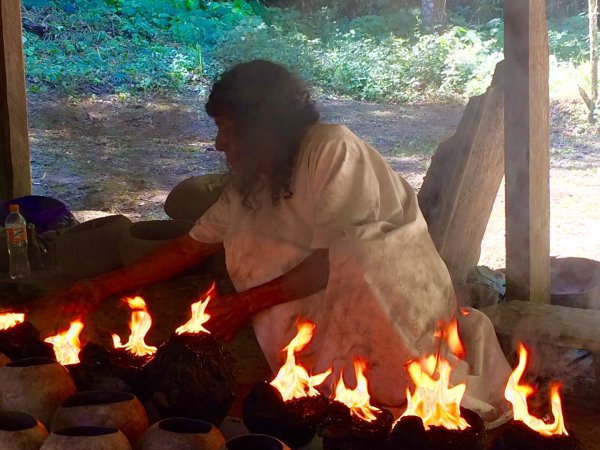
– K’iche’ Maya Daykeeper Tat Apab’yan Tew accompanies us offering sacred ways from his native Guatemala and a fire ceremony connecting with the ancestors.

– In the isolated K’iche’ Maya village of Sij’ja’, where they receive few visitors, we take in the life stories and everyday sacred ways of Elders and local traditional women.

– Tzotzil Maya religious leader Don Xun Calixto holds an audience in his home where we learn of his curing methods and calling.

61270541_2167000790020101_5515815353365561344_o

– Don Antonio Martinez, the last Lacandón Maya elder faithfully practicing his traditions, holds the nearly extinct balché ceremony.

– Take part in the festival of San Sebastian in San Juan Chamula and Zinacantán, and spend time in a Maya church where curanderos conduct healing sessions — and many of our travelers have deeply spiritual experiences.

61315877_2167004546686392_3528282820113858560_o

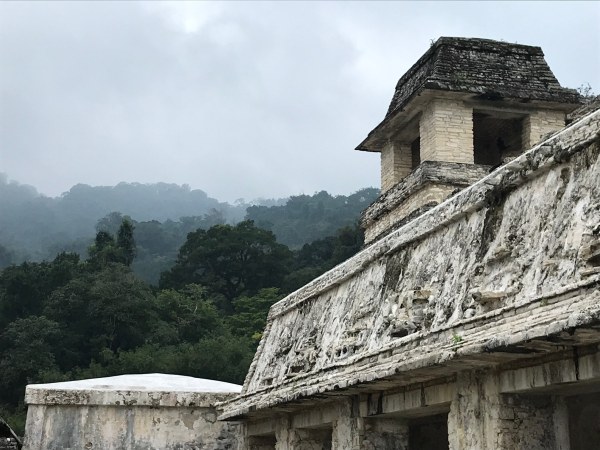
– Encounter the mysteries of Iximche and Palenque.

– Experience the passion of Maya artists as they disclose what inspires them.

Throughout our time together, spiritual mentor Carla Woody shapes your journey for optimal transformation that continues to unfold long after you’ve returned home.

Early registration discount ends August 21.

Group size limited. Register today to hold your place!

Go here for complete registration information, itinerary, bios, past trip photos and travelers’ stories.

For more info call 928-778-1058 or email info@kenosis.net.

Registration deadline: December 10.


Categories: Global Consciousness, Honoring the Earth, Indigenous Wisdom, Maya | Tags: , , , , | Leave a comment

Spiritual Travel to Mexico: Maya Mysteries

SPECIAL ANNOUNCEMENT

Spiritual Travel to Chiapas, Mexico: Entering the Maya Mysteries
January 18-28, 2018

Early registration discount ends August 28.

Immersion Experience in Maya Cosmology, Medicine,
Art and Sacred Ways of the Living Maya.

A Spirit Keepers Journey co-sponsored by Kenosis and Kenosis Spirit Keepers.
Portion of tuition tax-deductible to support preservation of Indigenous traditions.

Don Antonio Martinez

Palenque
You are invited to step through the threshold… into a true journey of the Spirit. We are honored to offer a special program focusing on the sacred traditions of Maya peoples. Through the timing of our travels we are fortunate to immerse ourselves in Maya Mysteries showcasing the spiritual strength of the Living Maya connected with their ancient origins. We offer you an intimate opportunity, unlikely to be found on your own, engaging with spiritual leaders and healers who serve their people — with the intent that we are all transformed and carry the beauty home.

Join us for ceremonies, curing rituals, ancestral sites and the inherent magic of Maya Land.
Here is just some of what you will enjoy from the mountain highlands to the rainforest lowlands of Chiapas:
  • Maya Daykeeper Tat Apab’yan Tew accompanies us offering sacred ways from his native Guatemala and a fire ceremony connecting with the ancestors;
  • Tzotzil Maya religious leader Don Xun Calixto holds an audience in his home where we learn of his curing methods and calling;
  • Don Antonio Martinez, the last Lacandón Maya elder faithfully practicing his traditions, holds the nearly extinct balché ceremony;
  • Receive a private clearing session with Doña Panchita, curandera of Palenque;
  • Take part in the festival of San Sebastian in San Juan Chamula and Zinacantán, and spend time in a Maya church where curanderos conduct healing sessions — and many of our travelers have deeply spiritual experiences;
  • Carol Karasik — poet, writer, Mayanist — shares the mysteries of Palenque;
  • Experience the passion of Maya artists as they disclose what inspires them;
  • Throughout our time spiritual guide Carla Woody shapes your journey for optimal transformation that continues to unfold long after you’ve returned home;
  • And so much more…

Kenosis Spirit KeepersA portion of tuition is tax-deductible through Kenosis Spirit Keepers, the 501(c)3 nonprofit arm of Kenosis. We believe in the sacred sense of reciprocity. Your tuition includes a financial contribution to support the welfare of the Maya people with whom we engage, as well as other Native traditions.

For this year’s Maya program, your donation goes to support:

  • Spirit Keepers Journey supporting a US Native Wisdom Keeper to make connections with Maya relations.
  • Don Sergio Castro’s textile museum and his humanitarian healing work with poor Maya communities.
  • For more information on what we support, please go here
In January 2013 Grandmother Flordemayo, member of the International Council of 13 Indigenous Grandmothers, traveled with us. She was so taken with her experience that she offered to give her impressions in a video.

Early registration discount ends August 28.
Group size limited. Register today to hold your place!
 Go here for complete registration information, itinerary, bios, past trip photos and travelers’ stories. For more info call 928-778-1058 or email info@kenosis.net.
Registration deadline: December 17.
JOIN US FOR THIS ADVENTURE OF THE SPIRIT!

Categories: Global Consciousness, Indigenous Wisdom, Spiritual Travel | Tags: , , , , , | 2 Comments

The Calling to Truth

Any semblance of moisture we received in Northern Arizona has been long gone for months. It’s so hot that airplanes can’t fly two hours to the south. My eyes burn with the dryness, and I squint sharply against the sun. The winds have been so strong the gale seems to penetrate my very being, leaving only the core essentials as it exits. We await reprieve.

In my 2004 book Standing Stark, I wrote of monsoons to frame the spiritual process I would relay.

We have heavy rains in Arizona. They normally start in July and go through August. We call the rains monsoons, which may be hard to imagine for those who have not yet experienced the rhythms of the high desert. Sometimes, though, we have a drought year and the rains start later. The tall pines become over-thirsty, beyond being parched. In those times, all of us develop expectancy—trees, plants, animals and humans alike. We are all in it together after all.

But invariably the monsoons come, often with violent storms. Jagged lightning dazzles the sky and thunder cracks so loudly it can bring us up sharply if we’re not attuned. In a primal way, we are all more susceptible during periods of scarcity.

A threat to collective Spirit is in effect. The tragic loss of lives, the reigning political untruths and senseless decisions that throw working people and the environment under the bus. Those who stand for Truth⎯in all its manifestations⎯can’t help but be affected. What can be done?

A few years ago, an acquaintance told me he respected my activism, and I was startled. I didn’t consider myself so. I actually wanted to flee. To me, activism meant center stage, labeled a radical, fighting the continual fight. It would mean a huge sacrifice on my part. I’m an introvert and can be left exhausted by such engagements if it goes on long enough. But I’ve shifted my perspective.

Wandering in the forest later, we can see the aftermath. In a sea of towering ponderosas, or their kin, there are those who stand apart. Not frequently, but infrequently, there will be those who are now shed of their needles, their skins laid open by the snaking of a lightning strike. Standing stark, they appear to be dead. They aren’t. When I go and put my forehead against their trunks, I feel the elemental filaments that have startled another kind of consciousness within them. Still dwelling in their habitat, they are even more alive than before.

It doesn’t mean taking radical action⎯except to stand against what insults your soul. It doesn’t mean being in the forefront, unless you choose to do so. It does means being actively engaged in what you believe rather than passively going with what you’re given, or assuming you can do nothing to change the tide. Every day there are choices to make. The quality of thoughts you launch into the ether. The words you write and speak. Where you expend your energy. You retain power by educating yourself to spend money only where it supports life-giving, not life-taking. These things do make a difference.

ArtImage-Tree1low

The fire that discharged their coverings often may move to some of the surrounding brush and trees, those in close proximity. Sometimes it may travel from a tree to ignite nearly the entire forest. But before that could happen it was first necessary for that tree to be burned of its own covering before the fire that began with that One could affect its brethren.

But truly it starts with each of us first to dispense with any untruths, any limiting beliefs, that cling to life within ourselves. Doing the work that must be done to release anything that speaks of “I don’t deserve,” “I’m not good enough,” “I’m not capable,” “It’s not possible.” Moving into wholeness⎯your birthright⎯lends strength to all of us.

The lightning strike oftentimes comes suddenly, a bolt unexpected. But there may well be a stirring before the charge and those who have grown the tallest stand most ready to receive.

In order to be ready, we do for ourselves what we know to do as best we can. Yet, there must be no striving. The striving of the material world has no place in this transmission. We need only send our willingness up as a prayer and stand waiting. Those souls who hold themselves available are struck.

I’ve decided I actually am an activist … in my own quiet way. It’s a step-by-step evolutionary process that has brought me to where, sometimes unexpectedly, I find myself today.

Truth matters. The planet matters. We matter. I smell the moisture coming that will drench the lands.

Categories: Global Consciousness, Sacred Reciprocity, Spiritual Evolution | Tags: , , | 3 Comments

Film Review: From the Heart of the World and Aluna

The Kogi of the Sierra Nevada de Santa Marta on the coast of Colombia were not as well known 20-plus years ago as they are now. The documentary From the Heart of the World had received critical acclaim and enjoyed extensive showings in the 1990s.  By the time I wrote a review in 2008 the film had become difficult to find. The DVD was gifted to me from one of my readers. I’m sharing this review again for those who are not familiar with the Kogi or weren’t able to see the film before. I recently discovered that it’s now freely available on You Tube. Its sequel Aluna is available on Netflix.

***

From the Heart of the World

From the Heart of the World: The Elder Brother’s Warning
Documentary Film by Alan Ereira
Produced by the BBC

This compelling documentary filmed in 1990 is about the Kogi of Northern Colombia who call themselves Elder Brother, descendants from the pre-Columbian Tairona. It contains a clear message to Younger Brother ⎯ westerners ⎯ about the havoc we’re collectively creating and how we need to take care of the world. The Kogi live high in the Sierra Nevada de Santa Marta, a microcosm of the world containing a range of climates from glaciers to jungle — and it’s dying.

Elder Brother warns that the underlying network keeping the Earth in place is being torn apart and they want the whole world to listen.

The Great Mother is the mind inside nature… [With your mining] You are taking the Mother’s heart… She is being stripped to pieces… You’re bringing the world to an end. This looting will destroy it… We are not mad at Younger Brother… but you must learn.

The Kogi believe their role to be caretakers of the world.

If we Mamas didn’t do our work, the rain wouldn’t fall from the sky. The crops wouldn’t grow.

They spend much of their time in ritual and prayer. They live sequestered, virtually unreachable, yet knowledge of the state of the world comes to them. How can we not hear their message?

There’s also an amazing similarity to me between the Kogi of Colombia, the Q’ero of Peru and the Lacandón Maya of the Chiapas rainforest of Mexico that echo similar sacred beliefs, teachings of respect and some common experience. All three left their original homes and isolated themselves about four hundred years ago with the coming of the conquistadors. To me, there’s an uncanny resemblance between the traditional clothing and even some facial characteristics of the Lacandones and the Kogi.

In alignment with one version of the Condor and Eagle prophecy, the Kogi speak about Younger Brother being given knowledge of the machine and sent away across the sea from the Heart of the World (where Elder Brother lives). Of course, Younger Brother later returned and infiltrated the Americas. The jungle at the base of the Sierra Nevadas has been destroyed much as the Lacandón rainforest has been decimated.

Elder Brother is separated by altitude as are the Q’ero who have managed to keep their traditions largely intact. However, the Lacandón jungle didn’t prove dense enough to keep others at bay. Hence, their traditions are suffering near extinction.

I want to direct you to the Tairona Heritage Trust which contains history on the Tairona and Kogi. For folks who have worked with the Q’ero, you’ll be interested in the article on the use of coca in South America, also used by the Kogi in ceremonial function and otherwise.

View From the Heart of the World streaming on You Tube.


***

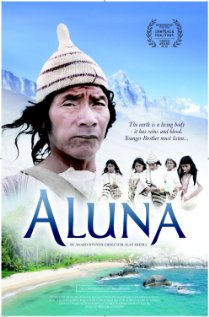
Aluna 

Aluna: Produced and directed by Alan Ereira


Some 20 years after The Heart of the World was released Kogi Mamas initiated contact with their friend Alan Ereira living in the UK. They were worried. Younger Brother hadn’t heeded their warning. The state of the Earth was in ever-increasing danger. They asked their friend to help them put together a film. Speaking about Younger Brother


We are incapable of being changed by being spoken to. They now understand that we learn through our eyes, not our ears.


The film traces the Kogis’ journey to lay 250 miles of golden thread from the mountains to the coast, showing the interconnection of the natural world to the devastating environmental impacts at the hands of Younger Brother. Indeed, in this film they are showing—not telling us. All but a small percentage of the dialogue is in Kogi. There are no subtitles. None is needed for us to understand the clear message.

If you would like more, Alan Ereira generously shares his intimate diary here.

Aluna is available streaming on Netflix.


Categories: Film Review, Global Consciousness, Indigenous Wisdom | Tags: , , | Leave a comment

Video: Jo Berry on Making Peace with the Enemy

On September 28, Kenosis Spirit Keepers and the Quad-City Interfaith Council co-sponsored a talk in Prescott, Arizona by Jo Berry, global peace activist, following the film screening of Beyond Right and Wrong: Stories of Justice and Forgiveness. She is one of those featured.

This video includes Jo’s moving words on the process she has gone through, her reconciliation with Pat Magee, one of the men who planted the IRA bomb that killed her father, and the reflections of the audience. For more background and a link to view the documentary free online, read my review here.

This is about our collective humanity and global consciousness. How can we pull together in the face of the alarming increase of violence and tragedy? View the video and film. You will witness how some courageous people are doing so.

I want to express appreciation to those in the Prescott, Arizona community who showed up and engaged. Also, many thanks to Prescott College, who provided the space, and their Media Center for filming the talk and discussion so we can share it with others. The graphic nature of the subject matter was very difficult to view but inspiring at the same time—showing how people can reach deep inside themselves to find common ground and heal.

Such venues to address the increasing violence in our world are so important, especially in these times, to explore what we as individuals can do to stop it. It’s always been the grassroots that have made a true difference. Not the politicians.

If you are in the Prescott, Arizona area and would like to participate in a free skill-building study group using materials provided with the documentary, email me with your contact information. I will pass it on to the person forming the group.

If you are interested in having a film screening and talk with Jo Berry in your home community, email your contact info and I will forward. Jo travels globally with this message of peacemaking and hope.

Categories: Compassionate Communication, Global Consciousness, Spiritual Evolution | Tags: , , , , , | Leave a comment

Blog at WordPress.com.