Healthy Living

Book Review – Full Moon Feast: Food and the Hunger for Connection

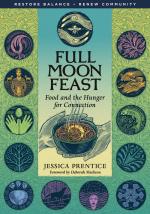
Full Moon Feast

Jessica Prentice is a chef and food activist in the San Francisco Bay area who is an avid proponent for locally grown foods. In other words, she urges us toward tradition. Full Moon Feast is a book about food and more with stories from Indigenous cultures of appreciation for what nourishes. It also tells of challenges and confusion related to relationship with food. Jessica advocates for small farmers who choose to uphold commitment and passion toward their way of life. At the same time, she documents methods of modern food production that have lost their humanity and encourage disconnection from our food sources and each other.

The author calls us back to a more engaged, mindful way of nourishing ourselves by connecting us to what food once held—the circle of life. She grounds the meaning and timing of food selection by our own natural rhythms and the thirteen lunar cycles. This book comforts and takes back to our roots—easily forgotten in a fast food universe. And it’s full of tempting recipes like Salmon Cured with Maple and Juniper, Summer Berries with Lavender Créme Anglaise or Sourdough Cheese Herb Scones. If you allow it, Full Moon Feast will deepen your appreciation for the food in your life and cause you to start searching out locally grown produce as it did me. The book is available through Amazon and bookstores. 

Categories: Book Review, Healing, Healthy Living, Indigenous Wisdom, Sacred Reciprocity | Tags: , , , | Leave a comment

A Primer on Food and Our Collective Vote Toward WellBeing

Food is fundamental to way of life. Quality can be measured through its nutritional make-up. But there’s more. Increasingly, what we eat and how food is produced has become the prophecy of our future—unless we stop it now.

Since the start of the Industrial Age in the 1940s, the push has been to produce more food. The means involved use of more bio-fuels, synthetic fertilizers and focus on monocrops, breeding out diverse strains and heritage crops. In one sense it’s been hugely successful, quite profitable for the corporate giants who engineered the chemical experiment. Supermarket shelves are full of GMO foods like corn, cottonseed, wheat, soya and sugar beets in one form or another. Currently, 88 percent of corn, 93 percent of soybeans and 94 percent of cottonseed grown in the US are GMO.

What is at stake?

 It’s tough on the environment. When monocropping is used instead of traditional crop rotation, it depletes nutrients in the soil, threatening healthy growth. To support production, farmers must use chemical fertilizers and pesticides—liberally. The earth is further depleted; chemicals get into ground waters, or carried by air, resulting in pollution.

The huge agribusinesses like Monsanto, DuPont and Dow want to make sure growers remain dependent, even shackled. Monsanto claims a patent on their seeds; their policy bars seed saving after harvest for use in the next planting, a practice farmers have historically undertaken. Now they are forced to purchase GMO seeds year and after. If a farmer ignores the policy…Monsanto sues. There are currently eight cases before the US Supreme Court. Yet, how can you patent something provided by Mother Earth?

Corn Samples

Corn samples from the Seed Temple preservation project in Estancia, NM.
Photo credit: Carla Woody

An entire American way of life is threatened and will soon be extinct. The US Department of Agriculture shows that the number of family farms in the US has dramatically dropped from 6.8 million in 1935 to merely 2 million in 2012, while food production continues to rise through the corporate agri farms. It’s just no longer economically sustainable for small farms to operate. Quite soon the family-run farms will go the same way of mom and pop restaurants, grocery stores and bookstores, overwhelmed by corporations. Farm Aid statistics show about 330 farmers give up each week.

But also consider the health risks. The American Academy of Environmental Medicine (AAEM) indicates that several animal studies show GM foods pose such serious health risks as infertility, immune issues, and changes in the gastrointestinal system and other major organs. Indeed, when squirrels and mice are given the choice between GMO and non-GMO foods, they won’t touch the former, which says it all.

Aside from all the concerning statistics and studies, the focus on food as commodity merely reflects the mindset that humans themselves are considered for their economic value. In the corporate workplace, the push to produce, astronomical work hours and competition serve to further disconnect people from each other and any spiritual grounding. Food is something eaten in a hurry from a packaged container or fast food wrapper. There is little to no connection with the very elements that serve to give us life.

We vote every day by where we shop, what we buy and choose to put in our bodies. We have the power to make a difference toward collective health and well-being.

***

Sources:

Etc Group. “The Great Mexican Maize Massacre.” November 15, 2012.

Mark Sherman. “Supreme Court to Hear Monsanto Seed Dispute.” Huffington Post, October 5, 2012.

Barbara H. Peterson. “Monsantopoly – A game pitting farmer against farmer that only Monsanto can win!” Farm Wars, August 3, 2011.

Institute for Responsible Technology. “GMO Dangers.”

Michael Snyder. “The Family Farm Is Being Systematically Wiped Out of Existence in America.” The Economic Collapse Blog, April 26, 2012.

Tom Philpott. “Could Prop. 37 Kill Monsanto’s GM Seeds?” Mother Jones, October 10, 2012.

Categories: Healthy Living | Tags: , | 1 Comment

How to Make Your Characters Come to Life

Gallery shot

Patiently waiting for life.
Photo credit: Carla Woody

One of the biggest challenges fiction writers have is to breathe life into the characters of their stories, to make them believable. This is particularly true if your book is character-driven. You want readers to connect with the story and those in it, to love or hate them. A reader of my latest book Portals to the Vision Serpent wrote to say how she couldn’t stand Sybilla, who features prominently in the novel—until she really understood her. Then she had great empathy. Even if the book is plot-driven, you want the characters’ actions to make some level of sense from their standpoint. 

We all have a specialized, individual template that we live by. Here’s a quick review on how that happens. Your brain codes experiences you have. The original coding usually takes place early in life. The coding becomes your perceptions, which translates to the beliefs you have about yourself, others, the world in general, and what’s possible. This template also becomes the filter through which you experience your life. You develop strategies for thinking and living that further reinforce the original beliefs—those that support and those that get in your way. When something significant happens to disrupt the old beliefs, things can shift dramatically.

Your characters are no different. Here’s a way to uncover their templates by “stepping into” different perspectives.

  1. From your “self” position as the writer, note how you experience different characters: the nonverbal signals, the way they speak, your own response to them.
  1. Now taking each character at a time, imagine you can slide right into their body, look out of their eyes, become them—rather than witnessing them—and answer these questions: What is their family of origin like? Based on what they unconsciously ingested then, how do they experience their own identity, who they are? Note the trickle down effect: What beliefs were generated? What about capabilities? Resulting actions? How they experience their environment? This way you can really get inside the hearts and minds of the characters.
  1. Then step back. By being a detached observer you get additional valuable information. Given what you discovered about your individual characters, now you can really get a bead on important dynamics between the major players and incorporate them into your writing.
Antigua bells

Antigua bells.
Photo credit: Carla Woody

By using a method like this, you also invite your reader to tag along through your writing, to undergo the same discovery and identify with different characters playing out the human condition, no different than the rest of us. We are all who we are based upon where we’ve been. But when something of great enough significance interjects itself triggering a change in one character…it also affects the others in close proximity. That’s how things get shaken up; the story becomes so much more interesting; the characters can grow in various ways.

Of course, you can use what I’ve written here as a guideline to explore aspects of your own life, not just writing. This is a brief primer toward self-discovery and relationship dynamics that I use with clients as a springboard for transformation. I’ve adapted the content of this post from my mentoring program Navigating Your Lifepath, which guides folks on how to live through their deeply held values—and thrive.

What are ways you can imagine exploring perspectives would be useful to you? Let me know your ideas or experiences in the comments below.

Categories: Compassionate Communication, Creativity Strategies, Healing, Healthy Living, NLP, The Writing Life | Tags: , , , , , , | Leave a comment

Worthy of What Really Matters

I particularly wanted to post this note on Independence Day, our national celebration, as a call for remembrance. The Prescott, Arizona area—my home community—has been devastated by loss. A week ago the Granite Mountain Hotshots successfully contained the Doce Fire without loss to human or domestic animal lives or homes. Just a few days later on Sunday, June 30, nineteen firefighters from this elite team lost their own lives fighting the Yarnell Hill Fire. There are no words to express the horror and deep sadness that I feel, and that collectively runs through this spot on the map. No pat sentiments about God’s plan work in these cases where such things happen. And I recognize that they do occur all over the world.

Prescott firefighters

Remembering our fallen Prescott firefighters.
Photo credit: Les Stukenberg/The Daily Courier.

 I am so heartened to see how the community has pulled together to support the evacuees from Yarnell, many whom have lost their homes,  and to raise funds for the families of these courageous firefighters.

candlelight vigil

Candlelight vigil on July 2.
Photo credit: Les Stukenberg/The Daily Courier.

When Andrew Johnson-Schmit, a well-known community arts organizer here, posted this note on his Facebook page, I had to share it  on mine as I believe the same: I am going to remember tonight the next time I despair about this community getting its act together. When I wonder if we really all just can’t get along. When I am tempted to think the trolls in the comment section of Dcourier.com are really indicative of Everybody’s Hometown. Our Hotshots didn’t stop to squabble about whose houses they were going to save, if they’d lived there long enough to qualify as local, if they spoke English well enough, if they voted for the right party’s views, they defended our community and died standing in the way of devastation, between the fire and their neighbors. We can be a community worthy of that kind of sacrifice. I know we can.

 The news today says that the Yarnell Hill Fire is now 45% contained, up from 8%, after covering 8400 acres and loss of 129 homes.

These fires and the resulting tragedy put memories of an anxiety-ridden time fully back in my face, as well as the gratitude that came of it. In 2002 I lived up in Ponderosa Park, a forested community just outside Prescott where the Indian Fire started at a campground on the other end of the road. I’d been staying in the tiny guest cottage of a friend with my three cats while my present home was being built, all things but those I deemed most important in storage.

I was in my Prescott office when I received a call from a long-time participant in my groups telling me about the fire racing toward the cottage. I fairly flew toward home—but the police wouldn’t let me past the roadblock. All I could think about was getting my cats out. We’d been through so much together, I couldn’t stand the thought of losing them that way. Then I remembered that my friend Marilyn Markham Petrich likely knew the back roads through the forest to get me there. She never hesitated. This whole event had a profound effect on me to the point that I wrote about it in my 2004 book Standing Stark.

 …Returning along the same road, we came to a high point. I turned and looked back to see a ridge of flames leaping into the air and billowing smoke filling the sky. Watching the news after getting to her house, we saw that, blessedly for the residents of the little area where I stayed, the strong winds had chanced to shift in the opposite direction. Those homes were saved, but the forest and another housing area closer to town were not so fortunate…Then a miracle happened. The winds that had been wildly spreading the fire died down. In the next days we had some rain. Not a lot, but enough to slow things down. Within a few days the fire was contained, just blocks from the downtown area. 

…That first night as I was settling down to sleep in my new temporary quarters at Marilyn’s home, with the cats plastered to my side, I was extraordinarily grateful that I was not one of those who suffered a personal loss. I also felt soundly blessed that I had such a friend who was willing to rush madly with me into a potentially dangerous situation without any reservations. Everyone should be so fortunate.

But I was also aware that the entire town had shared in a deep soul-searching as to what really matters. Indeed, stories filled the newspaper and conversations for weeks. Handmade signs in shop fronts and driveways were evident proclaiming gratitude to the Hotshots who had risked their lives to help us. That was before people seemed to forget the tragedy and returned to their normal lives.

However, I was left again with a real understanding of how transient everything is, how what we think permanent isn’t…

This time let’s not forget what is truly precious.

To echo what Andrew said: We can keep in our hearts what really matters. We can be worthy of the sacrifices others make for us. We can pass on the same support to others. I know we can.

*****

I’d love to hear your thoughts on what really matters and how you keep it in the forefront. Please comment below.

Categories: Gratitude, Healthy Living, Sacred Reciprocity | Tags: , , , | 4 Comments

Book Review: Exit Strategy

Exit Strategy

Exit Strategy:

Leaving this Life with Grace and Gratitude

by Kelsey Collins

I spend a lot of time in cultures where elders are valued, ancestors are alive, and death is celebrated as part of life. In my own culture, none of those things are true. Instead, they are aspects that we attempt to tuck away, out of sight. We turn away from being reminded that we, too, will one day face what we’ve been socialized to deny.

Kelsey Collins has written an important book for any of us. This book faces the areas I mention—head on. With humor and honesty, she documents the intimate journey she took with long-time friend Bee Landis. This is a celebration of zaniness in a human form called Bee, her spiritual clarity and real-ness as she makes sense of life while her own comes to a close—something we can all aspire to. What’s equally important is how Bee’s down-to-earth, blatantly frank wisdom leads the author to consider the very questions she counsels others to undertake. There’s a transparency here that’s refreshing. In an era when self-help mentors direct us to declare what we want, to dare to name it, there’s an area I’ve heard none address—until now.

How do you want to go? What’s your exit strategy?

 The book is available through Amazon. To learn more of Kelsey Collins’ work with elders and hospice go here.

Categories: Book Review, Compassionate Communication, Healthy Living, Spiritual Evolution | Tags: , , | Leave a comment

The Juxtaposition

I live in a sparsely populated area, except by rabbits, coyotes, snakes and the occasional hawk or raven. I found it by setting intent and following my sense of direction across preserved land clearly marked with a “no trespassing” sign.

What I discovered was the pristine place that I’ve come to consider my sanctuary. There are a few houses up on hills at a distance behind me. Other than that, there are just lots of good-sized junipers, rocks and some piñons surrounding me. I have a clear view of the San Francisco Peaks and Bill Williams Mountain around ninety miles to the north. The sunrise and sunset on these mountains are the first and last things that bless my day. But the stars have their say, too. Without the interference of electric lights, galaxies seem to display themselves across the night sky and regularly take my breath away.

San Francisco Peaks

San Francisco Peaks

I’ve invested words in these few sentences for you to get a sense of the setting. It’s a place conducive to contemplation, and I’ve sought to include only those things in my living space that will support it. Simple, peaceful living against a beautifully stark backdrop where I face myself every day—and move to go beyond that.

You may think by living in a remote area you can hide out. The truth is that—at least for me—it’s next to impossible to hide. Paradox continually comes to my notice, unbidden.

It was late afternoon. I had been doing “finish” work still left over from building my home. Mindless things. Thoughts drifted in periodically. But I was fairly successful staying present with my paintbrush. Several hours working with my hands brought me a sense of satisfaction at the end of the day and a desire to kick back.

I have a penchant for dramatic films but instead chose a comedy from Netflix. I sat in a particular chair specifically because I could watch the movie but also have a full view of the Peaks heading toward dusk.

I relaxed, feet on the table, sipping a glass of wine. The slapstick humor wasn’t holding my attention. My eyes kept drifting over to the scene outside. The hills were turning the honeyed golden-pink hue they often turned. The ravens were beginning to speak about the coming night.

But the movie seemed to pick up a bit and brought my notice back just as the actors entered a bar scene. The music was raucous. The posturing game was taken to extreme, creating a sense of the plastic that was supposed to be funny. Instead, the filmmakers threw me an unintended question.

My vision suddenly played a trick on me and juxtaposed two separate images, as though I was holding the bar scene in one eye and the landscape in the other…at the same time. That event itself was rather strange and fleeting, but my response to it was more interesting to me and has lasted. It was as though I was hit soundly over the head with intense contrast and told to pay heed.

The rowdy, brittle bar scene next to nature’s beauty was so bizarre that it created a “does not compute” reaction in me. Once that cleared, a question surfaced: What is real?

The bar scene wasn’t real. People weren’t presenting their real faces. There was much standing in the way.

Sage in bloom.

Sage in bloom.

What about the other scene? It’s about as real as it can get, at least for me. I don’t have to see through anything to see the hill over there. I don’t think the tree is concerned about what I think about it. There may be properties of nature I’m not always able to understand and certainly can’t predict, but I find it to be unstintingly honest.

It seems to me that if we want that level of honesty in our own lives we can dare to ask for it. So, what is real?

This moment: That’s real.

The sensation on my palm as I pet my cat’s fur: That’s real.

Little Bit

Little Bit

My breath moving in and out of my body: That’s real.

That thought I had this morning? That comes from some old event in the past and doesn’t exist now. No. That’s not real.

That worry? It hasn’t happened. No. That’s not real.

What about the words I write here? They’re real—in my reality—for what I seek to communicate.

What’s real for you?

**************

Excerpted from Navigating Your Lifepath.

See more musings on the forest for the trees on the Daily Prompt.
Categories: Healthy Living, Meditation, Spiritual Evolution | Tags: , , , | 13 Comments

Lifepath Design [Special Offer] – Why take the long way home?

Lifepath Design Special: Your Personal Intensive
Spring Limited Time Offer

I would rather be a superb meteor, ever atom of me in magnificent glow,

than a sleepy and permanent planet.     — Jack London

Fulfillment

Fulfillment
Photo: Carla Woody

 Spring is the perfect time to come to life—completely. There are those of you who have been itching to accelerate a breakthrough, and I want to do my part to support that process. As a gift to subscribers and Facebook friends, I’m offering a private retreat day at a deep discount. (Your intensive may also be divided into two sessions.) I have space in my calendar to engage with seven people over the next couple of months in this way. If you’re interested, get in touch: info@kenosis.net.

Such an intensive won’t be to everyone’s taste.

Cloudburst

Cloudburst
Photo: Carla Woody

But it will be a perfect match if:

✯ You are hovering at a threshold and want to move through it;

✯ You seek to sort through options and dissolve confusion;

✯ You aim to bring a deeply held dream to ground and create clarity;

✯ You desire to engage your spiritual values, your highest priorities and kickstart a fully expressive lifepath;

✯ You are ready to invest in yourself and move beyond stagnation.

It’s my passion to mentor people through a process I went through myself and refined over twenty years to make it readily accessible to others. That’s why I’m making a special discounted offer of $897 ($1497 value) for seven people. Your personal intensive may be taken in person, via phone or Skype. This invitation is good until May 8 and must be taken by July 12.

Here’s an extra bonus: If you decide you need additional guidance, you can apply the retreat cost against Navigating Your Lifepath, my six month mentoring program. You can also read more about my own journey.

Why take the long way home? A well calculated shortcut is ever so much better.

If you fit the criteria above, I’d love to hear from you: info@kenosis.net. Be sure to act now! Lifepath Design Intensives are something I rarely offer due to other commitments. If you’re ready to work, then let’s do it, and it would be my honor.

Categories: Healing, Healthy Living, NLP, Personal Growth, Spiritual Evolution | Tags: , , , , , , | 1 Comment

Respite


I take daily respite in the morning. It’s my habit to arise quite early, usually before the sun is up, and sit cross-legged facing the east, to the hills just across the way, above the preserved land below my home. Then I go into meditation. I no longer use any technique as I did years ago. Going into meditation became automatic. The energy and stillness just arrive. When the sun comes up over the hills I know it immediately, not only from the strong light that plays against my eyelids, but also because the sun’s vibration is palpable, adding to what I was already experiencing on my own.

For more than thirty years, I’ve started my day this way, in different homes through time but essentially the same process. The fruits of this ritual are potent. It sets the tone for my day; it’s a benefit to my health; insights and guidance are offered: something explained, inspiration given, direction that becomes evident. But most importantly perhaps is the feeling of Presence, a sense of the sacred.

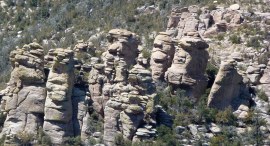
Hoodoos

Hoodoos, Mt. Lemmon

I have another respite that I’ve come, over the past few years, to treasure equally, with the same benefits. It’s turned into a habit as well. Every several weeks, five women convene at a home to share a meal and deep communication. I am one of them. We come from different walks of life, life stages and range of experiences and talents. Not all of us even knew the others when we began to gather. Yet we are a homogenous group in that we all seek the same thing: a safe haven where we can let our hair down, talk about tough nuggets we encounter, explore new ideas and celebrate each other. I think I can speak for all of those involved in saying: We’ve become significant to each other, a family of choice.

Santa Catalinas

Santa Catalinas

Salad Nicoise

Salad Nicoise with seared ahi with thanks to our gourmet chef who has mastered champagne camping.

Two years ago, we added an annual camping trip. I have to laugh because we have different ideas of what camping is and the activities involved. But we came to consensus, and this days-long respite has become paramount, too. Last year we camped in the Manti-La Sal National Forest in southeastern Utah. Two weeks ago we were in the Catalinas north of Tucson. We were early this year, and those of us in tents, rather than the camper, froze some nights. Indeed, when I got up at 5 a.m. there was frost blanketing the outside of my tent. But the sun came up. The coffee was hot and the conversation warm. As normal, we undertook our individual pursuits—reading, napping, hiking in quiet places and birdwatching, writing, one-on-one time—and gathering as a group for meals or when we felt like it for deep conversation. It’s fully free and easy.

It was to this group I entrusted the initial reading of my forthcoming novel Portals to the Vision Serpent, to test the flow and story. Any author will understand what it is to let others view their work at that early stage. I knew I could let them hold my fragile newborn, and they would make it dear and be honest. I made changes based on their feedback.

 So, I also knew that I could test an idea I have for the next novel with them. I’ve been mulling it over for the past few years, bits and pieces coming to me over time. It’s fairly complex and pushes the boundaries of a religious doctrine. Right before our camping trip somehow I stumbled upon an actual person who may serve as the inspiration for the main character. It finally seemed time to share, even though the framework wasn’t fully formed. I was grateful I had their full attention.  After listening to my somewhat disjointed dissertation, they agreed the idea had sturdy legs. Now I’m further inspired.

I’ll end here by relating what I’ve learned to be true:

       Daily respite enriches life and is a necessity to mine;

       Gathering regularly with intended community encourages risk-taking, provides comfort and is a sacred respite in itself;

       Even though I live in a wilderness area where silence prevails, leaving home and work for retreat invites further Presence into my life.

This post is dedicated to my Moon Sistars.

Categories: Compassionate Communication, Healthy Living, Meditation, Sacred Reciprocity, Solitude, Spiritual Evolution, Spiritual Travel, The Writing Life | Tags: , , , | 2 Comments

Playing with Uncertainty

Do you remember what it was like to be a young child when everything was new? Being awestruck by all that you saw, heard and felt? Did you pick things up and examine them closely, put them in your mouth? Play—no holds barred? Sing at the top of your lungs just to hear what your voice sounded like?

Mollamarka Girl

Mollamarka Girl
©2003 Carla Woody

As the years unfold, most people become more and more comfortable with certainty—and forget to have the fresh perspective of a child. In fact, the older we are, the more afraid we are likely to be of uncertainty and even become stuck when something unforeseen happens. Paralysis occurs when we are fans of control.

But when spiritual evolution sends a calling card, if we acknowledge the invitation and accept, what we’re asking of ourselves is to let go. At that point, we find ourselves at a threshold, an urging at our back to move through it. Perhaps little may be seen in that beyond place, maybe nothing. Yet embracing the unknown is how we learn and grow.

Metaprograms and Change

 From NLP, metaprograms define how we individually sort information and guide our thought process. Metaprograms predict our behaviors. Note that metaprograms often differ depending on context—relationship, work, etc.—and are a complex mix but easily determined through language patterns. All metaprograms are useful in some context and can be shifted if the orientation is causing an issue.

I’m going to zero in on a couple of metaprograms that I find have a lot to do with how we deal with change—and good to know if we’re contemplating transition. Below is a very brief summary that discusses the outer limits of a range. Most people have some mixture of both.

Toward/Away from: People with a “toward” orientation have their eyes locked on a goal—and go for it. They have blinders on and anticipate the pleasure of having what they want. Those with an “away from” orientation are focused on what they don’t want and avoiding pain. When asked what they want…they often have no idea.

Options/Procedures: People with an “options” mind set are excited by alternatives and possibilities. They love to explore and may do so endlessly. Those with a “procedures” orientation tend to think in black and white terms and love doing things step-by-step to completion. If the procedure is interrupted, they usually grind to a halt.

The Trapeze of Spiritual Travel

It’s natural for all of us to settle into a lifestyle over time and incur aspects of life that become familiar, whether they truly serve us or not. When we choose to “Enter the Forest” beyond the threshold, it involves uncertainty—stepping outside the environment that we’re used to—where we know what to expect, at least most of the time, of ourselves and others. It’s predictable. Those who will have the most emotional difficulty when faced with upheaval will be folks with paired, outer limit “away from” and “procedures” metaprograms.  On the other side, those with paired, radical “toward” and “options” metaprograms may love the journey but have a challenge coming to a place of right fit and new-found foundation.

Danaan Parry’s parable “The Trapeze” really speaks to the balance between control and letting go in order to catch the next swing of the trapeze.

“The Trapeze” video on You Tube.

 There’s also the need to invoke early childhood qualities we may have forgotten: curiosity, appreciation, courage and finally, discernment to determine what truly tastes and feels good. That way we discover what further nurtures us.

The process can be a truly mystical one if we allow it. We will be delivered to the other side, indeed, transformed on the way. And in the midst of letting go we can play with uncertainty—as an ally. We can trust in an age-old process, one learned well by high wire artists and children.

 This is a form of spiritual travel.

***

 Drawn from Navigating Your Lifepath, the six-month mentoring program.

Categories: Healing, Healthy Living, Personal Growth, Spiritual Evolution, Spiritual Travel | Tags: , , , , , , | Leave a comment

Speaking Truth

I’ve been reviewing some of my archived newsletter content and came across this paragraph I included in my old “Metaphors for Life” column back in 2009. This one bears repeating. Knowing the truth, or backstory, instead of taking something at face value is always a good idea before opening your mouth to speak, particularly when doing so could inadvertently create damage when none is deserved.

The Media Mantra on Coca

Despacho Photo

Despacho, or prayer offering, containing coca leaves.
Photo credit: Peter Coppola.

Several weeks ago while driving into town I was listening to NPR. A BBC correspondent who had been in Bolivia was being interviewed about the political situation there. During the course of the program, he made a side comment that he’d had a problem with altitude sickness. Then in a sneering tone said something to the effect, “You know what they did for it? Brought me coca tea. You know what they use that for!”

The reporter had absolutely no idea what he was talking about, but merely passed on propaganda. If he had bothered to find out what coca is really about, he’d have discovered it’s largely the spiritual and nutritional mainstay of the Quechua culture. Coca in its natural form is not a drug. Nor do they use it as such, but instead in sacred ceremonies and as a food source. The black market for coca, for purposes of processing into cocaine, is only sustained through demand from the USA and Europe. Take care of the issue at home and the black market trade virtually disappears.

By making the statement he did, especially on NPR, the reporter helped spread an assumption that the Quechua people who chew coca must be addicts. Out of ignorance, people often pick up a carefully manufactured mantra meant to further a misguided cause, parrot the message and create more damage.

Categories: Compassionate Communication, cultural interests, Healthy Living, Indigenous Wisdom, Spiritual Travel | Tags: , , , | 1 Comment

Blog at WordPress.com.