Indigenous Wisdom

Book Review: Spirit Matters by Matthew Pallamary


Spirit Matters

Matthew Pallamary has written an uncensored memoir of his journey through the violent jungle of his origins to the deep interior of his heart and mind—finally delivering him to the Amazon rainforest of Peru and the person he is today. Spirit Matters shows us graphic realities most haven’t seen: dangerous inner city streets, the struggles to leave them behind, and a form of spirituality alternative to mainstream Western culture.

Matt is a respected San Diego writer and workshop leader at writing conferences. Initially known for his horror stories, he became interested in shamanism and Indigenous cultures, producing a book—Land Without Evil—which was recently adapted to stage. Research led him toward experiential understanding of natural substances used for centuries in religious rituals in South America and elsewhere.

Years ago, Matt and I crossed paths in Palenque, Mexico and became friends. I knew he had a rough start; he referred to himself as a Boston street fighter raised in an Irish Catholic ghetto. But I had no idea until I read this memoir; it’s a miracle he made it out alive. Such life experiences instill deep-seated limitations in the mind about what’s acceptable, possible, one’s own worth—or if anything or anyone is safe. The expected path is predictive and short. But Matt had something else operating as well: knowledge that a deeper life was available for him. The honesty in which he describes his internal conflicts, which kept him in a two-steps-forward three-steps-back shuffle for years, is poignant and real.

In this memoir, he also documents academic research on the use of visionary plants in Indigenous cultures, alluding to their use in early Christianity as well but secreted. His experiential research drew him to Mexico and then repeatedly to the Peruvian rainforest where he engaged in intensive ayahuasca ceremonies, over several days at a time, with a shaman initiated to lead them … not a spiritual journey for the faint-hearted. Ayahuasca is known to usher the traveler through a threshold to truth. The truth may be an experience of the Divine, or just as easily a slide into the Dark Night of the Soul. Either way, an instrument of transformation, as he says below.*

 …I saw it in the jungle of the landscapes of my visions, the truth was that the darkness ultimately lived inside me. Ayahuasca had the ability to find and exploit my deepest fears, bringing terror in direct proportion to the depth of the particular fear it tapped into, constituting part of an amazing process of self discovery…

This is a beautiful story of one truly intrepid man, a Warrior of the Spirit if I ever knew one, who found his way out of a dark jungle, when so many of his friends and family did not. Matt Pallamary is someone to be respected for his gritty honesty and intent toward Spirit, aside from his capabilities as a writer. Spirit Matters informs us while providing inspiration.

Available in print, e-book and audiobook through Amazon. Spirit Matters was a Best Books Award Finalist for USA Book News.

****

*Ayahuasca is being used in the treatment of drug addiction—its success rate now documented in a clinical study in Canada. Go to MAPS to learn more and download a copy of the study.


Categories: Book Review, cultural interests, Healing, Indigenous Wisdom, Spiritual Evolution | Tags: , , , , , | 1 Comment

Unexpected Developments

Have you ever had a sense that something is bubbling beneath the surface? That you don’t know what it is…but something is getting ready to give birth…to step forward…to unfold? If you focus on it, you recognize there’s an energy building. It’s palpable. And then when it does present itself, you’re taken with the depth of feeling, realizing it’s come through you? If you’re reading my words here, then you’re likely one of those who has experienced this process consciously, perhaps in a variety of forms, and recognized the gift. If you look back in time, you could identify what kickstarted the process.

I’ve defined spiritual travel as any time you step outside the usual parameters you set for yourself to experience something that’s out of your norm—whether you choose it with intent or unseen forces push you. Either way it’s about growth. In Spiritual Travel: Destination or Process? I wrote about it this way:

 …Invisible to the naked eye…are myriad ways to be drawn into the deeper journey that define these potentially uncharted waters…enter aspects that: may have no words or audible sound, cannot be held in your hands, your eye can’t get a bead on, can seem ordinary but aren’t. Yet it produces something akin to a lightning strike that splits the rough outer covering and creates an opening, a probable pathway—and a tangible result. There appears a fork in the road inviting decision…

Breakthrough

Breakthrough
©2001 Carla Woody

On March 10, I returned from Hopi and my first spiritual travel program there, only made possible recently—with much gratitude to Hopi Spirit Keeper friends. From opening to closing circle, there was something greater than any there carrying us all. It felt as though another door had opened, some kind of emphasis marking out the great importance of honoring sacred Indigenous ways—now. If I ever had a doubt about the lifework I’ve chosen it was blown out of the water. Such a thing is bigger than any small-minded worry I’ve ever had. Intent gave evidence throughout our time there and unfolds yet in its effect.

An unanticipated gift stood out particularly: permission from Hopi religious leader Lee Wayne Lomayestewa for entry to Prophecy Rock. Such a privilege is not usually granted to outsiders. We all felt the honor, and I’d invited people to sit in meditation and open to whatever was there for them.

One of the travelers had been on a spiritual journey, involving extensive physical travel as well, since major life transitions in 2012. She indicated to me that, while what follows is deeply personal, it’s universal and gave permission to share. Relationship had become foremost in her awareness and the unexpected time at Prophecy Rock became her personal connections in prophecy. Climbing high, up beyond her comfort zone, to find her meditation spot, three figurative “drawings” forged by nature, on weathered rock, spoke to her: “…of prophecy, unity and stages of living and dying…” She said she could form few words to describe the experience, but “…words and song came forth. The experience is etched in my being.” I heard her song floating on the breeze. I tend to think it entered us all.

Since returning home, the group has communicated what continues to unfold for them. There has been talk about clarity and shifts in perception. Deborah Downs of Sedona, Arizona had to get her fingers in the dirt, along with a creative project that came unbidden. Liz Anderson from Prescott said, “…I have been to the Hopi reservation many times, but I have never had the privilege of seeing the petroglyphs or meeting so many fascinating Hopi people…There is a certain quality of the energy on the mesas that gives one the experience of being on truly sacred ground. I had forgotten how powerful this experience can be until this trip…”

Janet Harvey of Asheville, North Carolina said poetry began to pour through her and shared several. Piki Bread, the expressive poem below strikes me as a message about the beauty of simple actions that sustain us over time. They create meaning in life. She mentioned that the physical shape of the lines as they’re shown seemed significant. I told her it reminded me of the backboards worn in some ceremonies by Hopi dancers.

Piki Bread

For my part, I’ve noticed another level of ease appearing in my writing. It comes out as though waiting for me to take the initiative. With my artwork, an uncontrived process began shortly before our time on Hopi and has amplified since.

Testimony

Testimony
Mixed media on gold leafed canvas
©2014 Carla Woody

In the morning I began to sit in meditation near my easel, a different part of my home than habit for my daily ritual. And placement of images, color and symbolism, have been relayed to me during this time in a way I can’t describe except by sharing what I’ve recently produced. These pieces have taken on depth of meaning introduced from somewhere other than me. I don’t claim ownership.

But perhaps the greatest gift came inadvertently from the Hopi Spirit Keepers themselves and expressed directly to me by the group in our closing circle. My Hopi friends opened their hearts, gave us their trust and spoke unequivocally of the real dangers acting against continuity of their sacred traditions. It was poignant.

This is a time to listen and integrate from those who, on a daily basis through their prayers and actions, hold the sacred threads that weave our deeper values. There are many voices to be heard, not just one. Hearing them lends respect and supports continuance. We who hold sacred witness become better for it. It affects us, too. Certainly it eschews any hint of commercialism but is rather something of deeper service. Somehow I have been graced with holding such a precious container. The group reinforced what I already knew but drove the point home succinctly in a way I couldn’t set their message aside.* The work continues.

************

*Any of us experience doubt, particularly when we’re called to something. It’s only because we’re called that something steps forward to test intent. When internal conflict is resolved, you step through a threshold.

Note: By participating in our spiritual travel programs you support the ongoing existence of Indigenous wisdom traditions in danger of decimation.

Spiritual Travel to Peru, Oct 24-Nov 2, 2014: I have been invited to the Q’ero village of Ccochamocco, a real honor and rare opportunity. Tuitions help support: sponsorship of Hopi Elder Harold Joseph on this journey seeking prayers for his people from Q’ero relations; the new Q’ero Ancestral Culture Center and natural medicine clinic; and Grandmother Flordemayo’s seed saving program.

Spiritual Travel to Mexico, Jan 19-29, 2015: Tuitions help support sponsorship of David Mowa, Hopi medicine man, to share traditions with Maya relations; and the humanitarian healing work of Don Sergio Castro in Chiapas, Mexico. This program in final planning and will be uploaded here shortly.

If you’re interested in my artwork entitled Testimony or others, go here. Twenty percent of profits go to support Native traditions through Kenosis Spirit Keepers, the nonprofit arm of Kenosis.


Categories: Gratitude, Healing, Hopi, Indigenous Wisdom, Spiritual Evolution, Spiritual Travel, Travel Experiences | Tags: , , , , , | Leave a comment

Music Review: Mayan Ancestral Music by Xavier Quijas Yxayotl

xavierqy

Kenosis Spirit Keepers was privileged to sponsor Xavier Quijas Yxayotl in September 2013 for our Spirit Keepers Series held in Phoenix. Xavier is a composer, ritual musician, artist, healer and more. A gentle man of Huichol/Azteca lineage, I’m not sure I’ve met such a multi-talented person who practices his many arts with such humility.

His music carried me beyond this world to another realm entirely. Those nights I slept more soundly than I had in months. Every unique sound—raindrops, wind, birds—are made through instruments he made with his own hands, not environmental recordings. I was able to witness the vast array of clay flutes, whistles and other percussion instruments that comprised his compositions, all adorned with symbolic art.

He first learned to play the flute through his Huichol grandfather as a child, and shortly after began to make his own instruments. But there’s more. In the 1970s, he was called to resurrect ancestral ceremonial instruments destroyed and outlawed during colonial times. Many people are making such instruments now. But back then? No one. How does someone do so when no one else has—and all but a little documentation was obliterated?

I said to Xavier, “Did the calling and ways to make the instruments come to you in dreams and visions?” He confirmed what I sensed. Such things often occur in Indigenous traditions whether to ritual musicians, weavers, midwives, healers, those who hold prayers in varying ways. He also told me, “When I am playing my music, I can often feel my ancestors there standing next to me.”

Xavier has been nominated several times for the Native American Music Award, played at the Nobel Peace Ceremony in Rome, featured on PBS and countless other accolades. For the movie Apocalypto, Mel Gibson contacted him to make the historic instruments used in the movie. Due to union rules, Xavier couldn’t appear in the movie, but he taught the actor-musicians how to play the instruments he made.

We are fortunate that Xavier has a number of CDs available, aside from from Mayan Ancestral Music. You can go to CD Baby to play sample tracks and purchase. Also available on iTunes.

***********

Our next Spirit Keepers Series program will feature Laura Alonzo de Franklin, curandera (healer/spiritual guide) of Mexhica/Aztec lineage. Mark you calendar for September 26-27, 2014 and join us in Phoenix. Check back for more information soon.


Categories: cultural interests, Healing, Indigenous Wisdom, Music Review | Tags: , , , , | 2 Comments

Following Energy: The Key to Your Navigational System

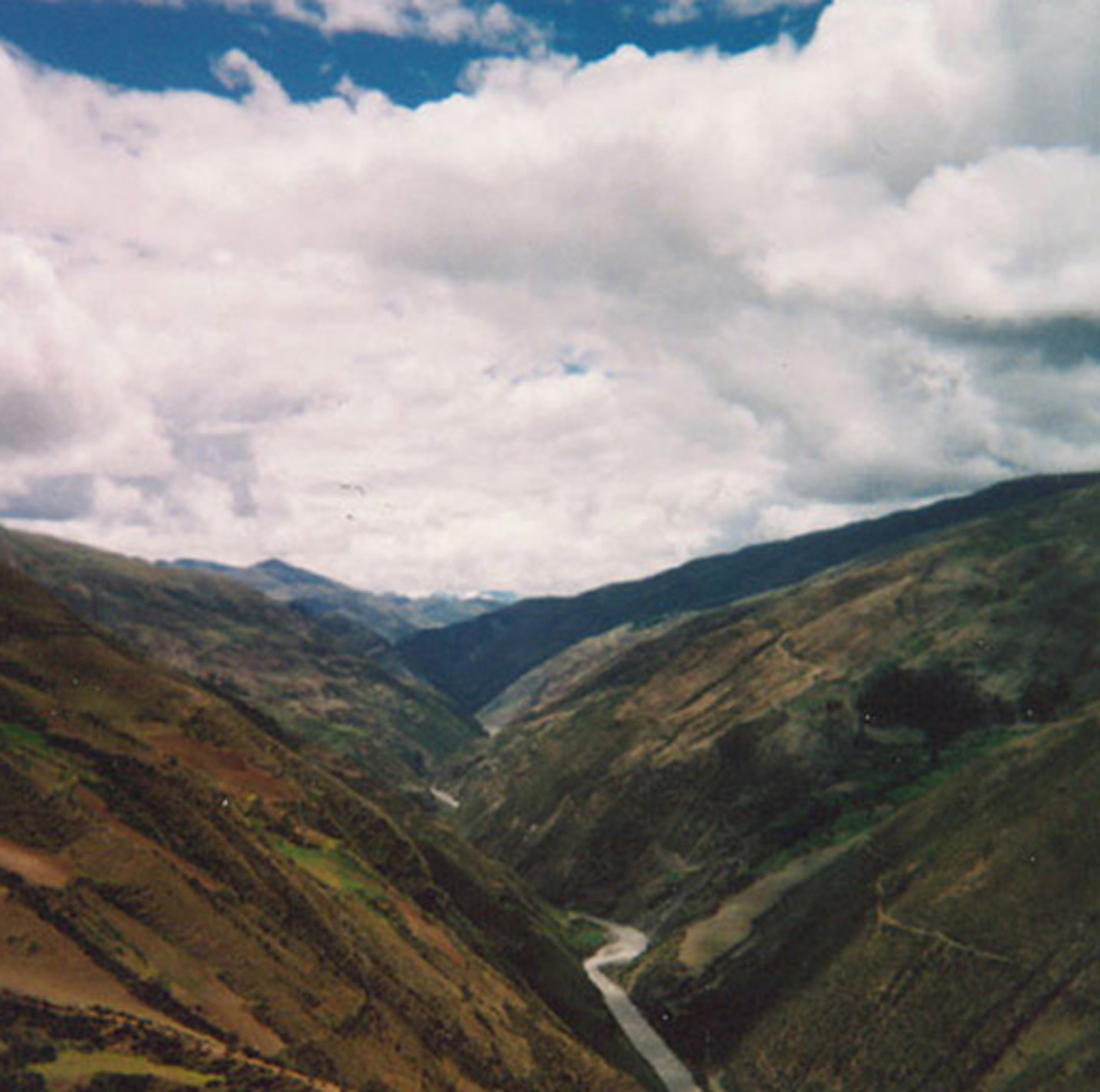
Rio Paucartambo

Rio Paucartambo
Cusco Region, Peru
©1996 Carla Woody

Several years ago, my friend Hilary Bee, a professional intuitive and spiritual teacher in the UK, told me that I have a strong inner navigational system guiding me. Over time, I’ve learned to trust it implicitly—even when the next step is obscured from my vision.

I call this navigational system intent, and it produces a high frequency of energy. I recognize completely when it’s communicating a path I am to take, choices to make. I’ve learned to recognize the energetic language. Equally, I’ve come to know over time when I’m straying from the path, or it’s time for an evolutionary change. A totally different level of energy accompanies that alert—and a nagging feeling something isn’t right. Of course, taking that fork in the road may initially produce chaos until order—and realignment—produces a deeper order.

I offer you this poem by C. P. Cavafy and then a caveat.

Ordinary people know what’s happening now,

the gods know future things

because they alone are totally enlightened.

Of what’s to come the wise perceive

things about to happen.

Sometimes during moments of intense study

their hearing’s troubled: the hidden sound

of things approaching reaches them,

and they listen reverently, while in the street outside

the people hear nothing whatsoever.*

 While I agree with Cavafy in that the majority of people may be completely unaware, or at least ignore signals, you have an opportunity always to live according to the wisdom of the gods. It’s a fine-tuning process but completely available to you. It requires that you pay attention and then the courage to deviate from any beaten path, sometimes to follow what you can’t readily see.

Here’s a rather dramatic example from my own life. Several years ago, I sponsored two back-to-back programs in Peru. During just one spiritual travel journey the energy is always strong from ceremonies, resident energy in sacred sites and more. With an additional one under my belt and little break between, the veil between the worlds had grown quite thin for me.

After the last group left for home, I was sitting in an Internet café in Cusco. It was the time of Inti Raymi, the festival of the sun, which transforms this usually placid former Incan Empire capital into masses of revelers, huge numbers coming from other locations. I knew that many pickpockets came from Lima to take advantage of the tourists during this time. Consequently, I took precautions. I carefully sat on my coat with my passport and money secured in an inside zipped pocket while I focused on email neglected for several days.

I had been at it for some time with people at computers on either side of me coming and going without any real attention on my part. But then I sensed something, noticing only the color green in my peripheral vision, and went back to my emails. Then again, slight movement out of the corner of my eye. A loud internal voice—not mine—said, Look down! I followed suit. My coat was hanging open, the inner pocket unzipped with passport and money gone!

Literally with no thought in my mind and seeing nothing to go after, I was out of my seat in a split second and onto the street thronged with thousands. Instead of raising a cry with no information to relay, something caused me to turn immediately into the small travel agency next to the Internet café. My hands had a life of their own, clamping onto the arms of two men standing just inside the agency, waiting in line. In a loud authoritative voice I stated, “My money and my passport! My money and my passport!”

They faced me then with shock on their faces as I continued to make the same demand. Both struggled in my grasp; my hands had become pincers of steel. Travel agents and other customers began to turn and get up from seats. The two men managed to turn me toward the entrance in their efforts to be free. One finally managed to duck out the door saying something to the other one, who slipped out of his jacket, leaving it in my hands.

Dropping it, I started to go after the pair but heard a woman’s voice saying, “Are these yours?” She held my passport, money pouch and the green jacket. I thanked her, as well as the others who had risen to aid me. Then I returned calmly to the café and resumed my correspondence.

That night I had a dream: Someone gifted me with a puma.**

As we entrain with a higher vibrational frequency, light energy doesn’t allow us to doubt or contract in fear. It is supreme and grounded. It has peripheral vision. Salk’a—as they call undomesticated energy in the Andes—induces clarity without thought, compassionate detachment and the warrior’s action. This is a state of being we can maintain.

I have a personal tradition. Either during winter or in the first days of spring I seek to remind myself of this Salk’a journey and store further inspiration for the long haul. I want to offer my tradition to you: Watch another of Cavafy’s poems, Ithaca, beautifully set to the music of Vangelis and the resonance of Sean Connery’s voice. This one I fully ascribe to.

********

“Poem by C.P. Cavafy, Collected Poems. Translated by Edmund Keeley and Philip Sherrard. Edited by George Savidis. Revised Edition. Princeton University Press, 1992.

**Known as puma in Peru, we also know this sleek animal as jaguar, cougar or mountain lion. In the Indigenous Andes, it represents how to effectively navigate the Kaypacha, or Middle World, the one we walk in our everyday life.

Categories: Energy Healing, Healthy Living, Indigenous Wisdom, Spiritual Evolution, Spiritual Travel | Tags: , , , , | 2 Comments

Book Review: Indigenous Message on Water

Indigenous Message on Water

In 2012 a call went out from the coalition of Indigenous leaders of the Indigenous World Forum on Water and Peace (IWFWP) to Native elders, writers, artists, activists—Knowledge Keepers—for poetry, art, chants and prayers on Water, expressions from their own traditions. Over the next several months, submissions poured in, pure harvest from tribes all over the world. The You Tube video below beautifully illustrates the intent to pull together an anthology on this life-giving element that would be called Indigenous Message on Water—and why its needed.

By January last year the editors had begun the process to ready contributions for publication. From June through August 2013 an Indiegogo campaign was opened to pull enough funds together to publish the book, in print and e-book formats, and send copies back to the authors to seed their communities and elsewhere with this important message we all need to hear and hold. They were able to raise $5,000 of their $10,000 goal. I was so glad I was able to support this valuable treatise, even in a small way, having received my copy a few weeks ago.

I am deeply touched by the words and art that leap off the pages from the contributors: Chamoru, Pinay and Maori peoples from the Pacific; Sakhe from Russia; Cree, Tsalagi, Cherokee, Yoeme, Anishinaabe, Lakota, Lipan Apache, Metis, and Gitxan from North America; K’iche’, Kaqchikel, and Q’anjob’al from Guatemala; Maya and Nahuatl from Mexico; Wayuu, Palenque and Kuna from the Caribbean; Uitoto, Okaina and Tikuna from Amazonia; and Kichua, Yanakuna and Mapuche-Huilliche from the Andes.

Spiritual connection and gratitude to Water are ever present in the anthology. It may be used to open community discussions, raise awareness, and as an offering. At the beginning of the book, Juan Sánchez, one of the editors, advises that the passages are meant to be read aloud to the Water; words have the capacity to heal. Grandmother Mona Polacca suggests, “…Once you read them, you may find that you can never escape them, or you may find yourself resisting the narratives in this collection, not wanting to deal with the reality they describe; perhaps it reminds us of our own vulnerability…”

Grief for scarcity, strife and loss of life over water rights is also prevalent in these pages. Forest without Destiny by Judith Santoprieto of Mexico is an example, dedicated to the Indigenous people of Bagua in northern Peru who were senselessly murdered by special forces police during a 2009 protest about natural resources rights.

A crackling is heard in the surroundings

of a forest without destiny,

the first sign of the great uproar;

outside, the bullets:

the rainy season yet to come…

***

We can be reminded to embody the teachings offered.

 Water was our first medicine.

—Gideon MacKay, late Cree Elder, Canada

 ***

We’re called to cup Water

carry it carefully   cradle

within bare hands or ladle

wood to pour resplendence

from ama who makes us

human,  holds us here in

memory brings us back

into ourselves each time

we enter dipping seven

times until we become

who we need to be.

—Allison Hedge Coke, Huron/Cherokee/Cree/Metis, USA

 ***

My oldest brother was 115 years old and died because of his age, not because of illness and this longevity was due to the fact that he used to pray to Water. The Water sang to him. For him, Water was both male and female and, as he practiced meditation, Water rewarded him with a long life.

—Lorenzo Aillapán Cayuleo, (Bird Man), Mapuche Nation, Chile

***

The e-book version is available to treasure and consult. You may go here to download for the minimal cost of $7.00. When you do, you’ll know you are serving Water. The proceeds go to support the gathering of Indigenous leaders, over 60 organizations and other like-intended folks for the Indigenous World Forum on Water and Peace 2014 held September 9-13 in New York that collaboratively seeks to resolve issues for the benefit of all peoples.  Read a 2009 collective statement from the United Nations Permanent Forum on Indigenous Issues about the need for the IWFWP. New information will be posted soon on the IWFWP blog. Go here to subscribe for updates.

Categories: Book Review, Compassionate Communication, Gratitude, Healing, Healthy Living, Indigenous Rights, Indigenous Wisdom | Tags: , , , , , , | Leave a comment

Holy Intent, Invisible Threads

This season is a holy time for many peoples in the world. While multitudes participate fully in—what has become—frenzied materialism, others take a pause or at least strike a balance.

Hopi Ceremonial Calendar by Filmer Kewanyama

Hopi Ceremonial Calendar
by Filmer Kewanyama

Hopi artist friend Filmer Kewanyama says this about December: “The earth’s crust is very fragile. For us, we are supposed to be quiet and reflect on who we are. It is a time for us to be quiet and listen.” This is when storytelling takes place, passing on oral history to the next generation, and the Soyal Ceremony occurs in the kiva, looking to the coming year with great spiritual focus. It’s when the men fashion prayers feathers. Traditionally when Hopi Spirit Keepers have accompanied my groups to Mayalands, they’ve given prayer feathers to those of us holding the center of the journey. The paho, or prayer feather, we each receive is from the roadrunner and meant to protect us as we travel and enter the new year. I wear mine throughout the journey and, upon return home, place each one in a special vessel I keep on my altar.*

This season has become a quiet time for me in the sense that I step back from external activity, a way to remember my own roots, an instilled period of reflection and solitude. And explicitly because there is such space and time for exposure, it’s become heightened with insights, dreams and creative surges for me. Messages come through from the Infinite and that still point inside is given voice.

In that spirit, I’m sharing a dream here that I had early Christmas morning.  I was sponsoring an event, and the person who was to present didn’t show. I knew I needed to step in with an impromptu talk. The audience was getting restless. I thought to speak about the work I believe in: preserving the sanctity of Native traditions to inform the next generations, to bring us back to those core elements that hold the world together. But the words wouldn’t come. How do you express something whose meaning runs so deeply that it can only be felt, that words wouldn’t do justice?

I floundered. Anxiety was showing its face. Just as some of the audience started to collect their coats and leave, Native and non-Native people began to materialize out of the ether to stand on either side of me. Some I knew; others I didn’t. In turn they related the effect, tangible and intangible, that our projects and journeys had on them personally, the importance of continuity toward spiritual grounding, hope, or a wound tended that would otherwise have gone unhealed.

Acknowledge My Relations

Acknowledge My Relations
by Filmer Kewanyama

I came fully awake, feeling resolve to continue holding the vision, even when it seems like few others do, roadblocks appear, or I don’t personally see the ultimate outcome of the intent. For me, these are aspects of true faith realized in this sacred season.

Typically, I don’t remember my dreams. When I do, I know it’s from that invisible realm that retains more wisdom than I do on a daily basis. I would be lying if I said I don’t falter, feel like giving up many times and throwing in the towel. It’s a human condition, especially so when any of us hold a vision that runs counter to the mainstream world, and progress is defying gravity uphill. This is what I sense happens in the kiva: restoring of faith, strengthening of purpose.

True advancements come not from the mainstream but from a collective retaining the holy vision, with understanding how invisible threads may be woven.

That was the prayer feather of my dream Christmas morning that protected me from loss of faith. With renewed intent, I share it here as my own offering—for the circle of life—to guide the next year.

***

Kenosis Spirit Keepers is the nonprofit arm of Kenosis. To learn more about our work, please go here. Your end-of-year donation is tax-deductible and strengthens our mission to preserve Indigenous wisdom for a better world.

The words and artwork of Filmer Kewanyama are used with his full permission. To view a collection of his expressive artwork, go here.

*Most years Entering the Maya Mysteries spiritual travel journeys occur in January.

Categories: cultural interests, Healing, Hopi, Sacred Reciprocity | Tags: , , , , | 5 Comments

Interview with Dianna “Snow Eagle” Henry, Seed Saver

Flordemayo documenting seeds.

Grandmother Flordemayo documenting seeds.
Photo credit: The Path

Grandmother Flordemayo had twice mentioned Dianna “Snow Eagle” Henry to me during my visits to the Seed Temple in Estancia, New Mexico. Each time she lamented, “You just missed her! She was here helping but went back home.”  Home turned out to be Arkansas. When Flordemayo began to establish the Seed Temple, which Kenosis Spirit Keepers helps support, she called Dianna to consult her expertise regarding seed preservation. Dianna has gone back and forth providing service ever since.

The last time I was there, Flordemayo put a book in my hands. Dianna’s coffee table book Whispering Ancestors: The Wisdom of Corn is an illustrated treasure trove of information on Native varieties, some lost to time and then resurrected. In certain ways it takes you back in time by identifying which Native Tribes carried different strains, planting instructions—and hints at the esoteric, ancestral knowledge in the Seed Collective. I was intrigued.

Native Seeds

Native seeds.
Photo Credit: Wisdom of Corn.

Dianna consented to an interview for The Lifepath Dialogues. Below you’ll find the audio recording uploaded to You Tube. She graciously shares how the seed-saving path opened to her, rather unexpectedly as passions sometimes do, and the ways that spiritual knowledge from seeds began to come. One of the many things I appreciate about Dianna is her willingness to follow a path that’s unknown but fueled by intent. She shares it all.

Kenosis Spirit Keepers is pleased to sponsor Grandmother Flordemayo, Dianna Henry and Greg Schoen for events in Phoenix on January 31-February 1, 2014. Greg is also a respected seed saver with many years’ experience and will take us “down the rabbit hole” into the mysticism of seeds. You can read his article about Rainbow Corn in Mother Earth News here.

This Friday night talk and Saturday experiential workshop will directly benefit the Seed Temple’s preservation work. You’re invited to join us and know that—as you are receiving the teachings—you’re also benefiting the wider work of global consciousness.

(Note: The benefit dates mentioned in the recorded interview were changed so that Grandmother Flordemayo could also personally participate, offer her knowledge and prayers.)

Categories: cultural interests, Healthy Living, Indigenous Wisdom, Interview, Sacred Reciprocity, Spiritual Evolution | Tags: , , , , , | Leave a comment

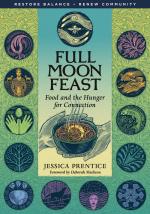
Book Review – Full Moon Feast: Food and the Hunger for Connection

Full Moon Feast

Jessica Prentice is a chef and food activist in the San Francisco Bay area who is an avid proponent for locally grown foods. In other words, she urges us toward tradition. Full Moon Feast is a book about food and more with stories from Indigenous cultures of appreciation for what nourishes. It also tells of challenges and confusion related to relationship with food. Jessica advocates for small farmers who choose to uphold commitment and passion toward their way of life. At the same time, she documents methods of modern food production that have lost their humanity and encourage disconnection from our food sources and each other.

The author calls us back to a more engaged, mindful way of nourishing ourselves by connecting us to what food once held—the circle of life. She grounds the meaning and timing of food selection by our own natural rhythms and the thirteen lunar cycles. This book comforts and takes back to our roots—easily forgotten in a fast food universe. And it’s full of tempting recipes like Salmon Cured with Maple and Juniper, Summer Berries with Lavender Créme Anglaise or Sourdough Cheese Herb Scones. If you allow it, Full Moon Feast will deepen your appreciation for the food in your life and cause you to start searching out locally grown produce as it did me. The book is available through Amazon and bookstores. 

Categories: Book Review, Healing, Healthy Living, Indigenous Wisdom, Sacred Reciprocity | Tags: , , , | Leave a comment

When Hopi Spirits Come to Life: Home Dance at Moenkopi

In July 2009 I was invited by Harold and Char Joseph to Home Dance, the first one in the Hopi village of Moenkopi in 50 years—a very historic event. It’s during this July dance ritual that the Katsina spirits are ushered back to the San Francisco Peaks, the mountain range north of Flagstaff, Arizona, where they live until their return to Hopi in February of each year.*

A friend and I arrived at Moenkopi village outside Tuba City just before dawn. Harold was already leaving home. Moenkopi being Char’s home village, Harold acted as a helper. Normally Harold would have been at Second Mesa’s Shungopavi, already a long time in the kiva, a subterranean chamber reserved for religious rituals, engaged in ceremony in his home village. But this time being quite special he was lending a hand the way relatives do.

The previous night we’d ventured down to the plaza with other family members, carrying chairs, staking out a place in one of several rows already formed. The dirt plaza was long and narrow, enclosed by the original stone homes dating back to the 1870s. I felt like I’d stepped back to another era.

Going Home Shungopavi

Going Home Shungopavi
Oil on canvas
depicting Home Dance.
©2011 Carla Woody

That early morning we sat at the edge of the village with others who had gathered, high on the bluff overlooking the lush cornfields below, a sharp contrast to the red rock cliffs surrounding them. I only discovered later that we actually perched on a kiva. An elder came and asked everyone to move. He slid the wood covering over to reveal its secret and climbed down.

We waited, slightly chilled by the light wind. Glancing around me, some of the people were in special dress, the women in beautiful shawls, and a few young girls wore the traditional hairstyle with fluted buns over each ear. There was a low buzz of conversation and greetings. Everyone waited patiently for the sunlight to hit the cornfields below. A number of pick-up trucks were parked to the side of the fields. In my mind, I converted them to horses. A sound was on the breeze that led me into another time and dimension.

At first it was faint but then it grew, rising up as though from the bowels of the earth. A chant that rose and fell, coming from an area of trees near the field. Those around me went quiet in anticipation, eyes glued, fingers pointing. And finally when the light hit the field just so, Katsinam emerged from the copse forming a single line as they began the slow walk up to the village, carrying cornstalks. It seemed like the line had no end. Finally, all Katsinam came into full view from the woods. They numbered 130, give or take.

As we shifted to our seats at the far end of the plaza, Katsinam poured in one-by-one, forming an ellipsis, continuing the chant, making the small repetitive movements that created the dance, virtually right in front of us. The sound of bells and rattles, strapped to each knee, accompanied each step and joined the drone of their voices. Even though sun now heated the air, I got chicken skin.

They gave cornstalks, a symbol of prosperity, to those watching and gifts of fruit and piki, a paper-thin rolled tortilla made from blue corn. The dancing continued. Then it was time for the first round to end. And the Kachinam left the plaza to be sequestered again. They performed at great sacrifice, foregoing food and water in the blistering sun until much later in the day.

But it was now time for the rest of the village to eat. We returned to the Joseph home and feasted on hominy stew and drank strong coffee. When the phone rang, I’d hear them tell the person on the other end, “Come eat!” One of the family members told me, “This is the Hopi way!” Indeed it was. As people poured through the door, they were directed to grab a plate and ladle a good helping.

The Katsinam were to dance eight times that day. Between dances families and friends gathered at homes, many from out of town it being such a special time. Each time food was shared. We were encouraged to nap in the heat of the day—which I did, in a room full of people that felt like family to me even though it was my first time meeting some of them.

How was it that this was the first Home Dance in Moenkopi in 50 years? Many Hopi people have fallen away from the traditions, and the necessary initiations haven’t occurred to support the ceremonies. Shungopavi is the only village that keeps the complete cycle of religious ceremonies unbroken, the elders staunch.

A strong older woman instigated the 2009 Home Dance. Her son was marrying. She wanted to show off the wedding robes of her son’s bride as part of the ritual. Other brides would be able to do the same. Through her commitment the village re-engaged, others coming from elsewhere to support the ceremony, accounting for the large number of Katsinam, a profound example of what determination can do—and for good cause. Traditions take us back to where we began. For my part, an appreciative outsider greatly stirred by the experience, I hope the Home Dance continues in Moenkopi. At this writing, it’s recurred once. That was in 2011.

***
*A Katsina is a spirit being of the Pueblo Tribes, an invisible natural force that can be called upon to bestow protection and wellbeing for the village. Katsinam is the plural form. In the Hopi tradition there are approximately 400 different Katsinam, each one different and having a separate purpose. For days prior to religious dances, initiated males enter the kiva and undertake long rituals. When they emerge from the kiva to dance, they are no longer who they were when they entered. Instead, they are the embodiment of these powerful spirit beings, dancing in human form, on the earth.
***
I will sponsor Spiritual Travel to Hopi: Sacred Guardians of the World during March 6-9, 2014. This is a rare chance to experience Hopi Spirit Keepers in their homes, hear the ancient stories, visit sacred sites, learn about medicine ways and attend the Night Dances, all that weaves the very identity of the Hopi people as guardians of the world. Only recently is it now possible to be invited to such an experience. It’s only through relationships I’ve developed over a number of years that this program has been born. Join us for this adventure of the spirit! Early registration discount ends November 6. A portion of tuition is tax-deductible to support Kenosis Spirit Keepers’ projects preserving Native traditions.
Categories: cultural interests, Hopi, Indigenous Wisdom, Sacred Reciprocity, Spiritual Travel, Travel Experiences | Tags: , , , , , , , | Leave a comment

Book Review: The Last Report on the Miracles at Little No Horse

The Last Report on the Miracles

In The Last Report on the Miracles at Little No Horse, Louise Erdrich has written a book that transports the reader not only to another time, but also to a field where all could dwell with increased respect and understanding.

Agnes is the main character, an inventive person of strong character who found a way to deal with living in a time when women had few choices—the early 1900s. Timing, opportunity and a desire to leave her old situation behind allowed her to step into the identity of Father Damien Modeste, a priest who was expected shortly at a remote Ojibwe reservation in North Dakota called Little No Horse. The narrative takes us over nearly a century of what it was like to have a foot planted in both worldsa woman living as a manministering in one culture yet not intruding with another, developing roots and living with a sporadic fear of one day being found out. Would everything Father Damien built in his beloved community, all trust and love given to him, be discarded if Agnes was discovered?

The telling of this chronicle comes about through the investigation of one Sister Leopolda who is up for sainthood. When the church’s emissary comes to interview Father Damien, we have the opportunity to witness a life well lived, intricately woven and deeply connected to community. Not the life of Sister Leopolda but that of Father Damien.

Equally important is the telling of the Obijwe traditions, the sometimes funny and bizarre antics of medicine man Nanapush and the difficulties often endured. Peppered throughout are enormous gems of wisdom. A couple of examples are shown here.

…even careful plans cannot accommodate or foresee all the tricks of creation…

…We see the seasons pass, the moons fatten and go dark, infants grow to old men, but this is not time. We see the water strike against the shore and with each wave we say a moment has passed, but this is not time. Inside, we feel our strength go from a baby’s weakness to a youth’s strength to a man’s endurance to the weakness of a baby again, but this is not time, either, nor are your whiteman’s clocks and bells, nor the sun rising and the sun going down. These things are not time… (Nanapush)

It’s also punctuated with Father Damien’s frequent, unanswered notes to the Pope such as this one.

Pope!

Perhaps we are no more than spores on the breath of God, perhaps our life is just one exhalation. One breath. If God pauses just a moment to ruminate before taking in a new breath, we see. In that calm cessation, we see. All I’ve ever wanted to do is see.

Don’t bother with a reply.

Modeste

The characters in this novel are so rich and their stories so resonant, there’s a part of me that secretly hopes the writings are based on fact. They have an underlying inherent truth. Life is indeed layers of complexity, with all its attendant emotions. Here it’s delivered to us through Agnes and Father Damien, their voices intermingled. This book is much more than entertainment, and it’s one of my all-time favorites.

Available on Amazon and retail bookstores.

Categories: Book Review, cultural interests, Indigenous Rights, Indigenous Wisdom | Tags: , , , , | Leave a comment

Blog at WordPress.com.