Posts Tagged With: Indigenous traditions

One Last Ceremony

Balché Ceremony with Don Antonio Martinez, Nahá. ©2012 Carla Woody

The day I knew would one day come arrived in late January 2024. Since 2007 I’d been bringing small groups to Chiapas, the southernmost Mexican state, for immersion experiences in the sacred ways of the Living Maya. Our time in Nahá, the tiny Lacandón Maya village, a population of less than 200, was always the major high point for me.

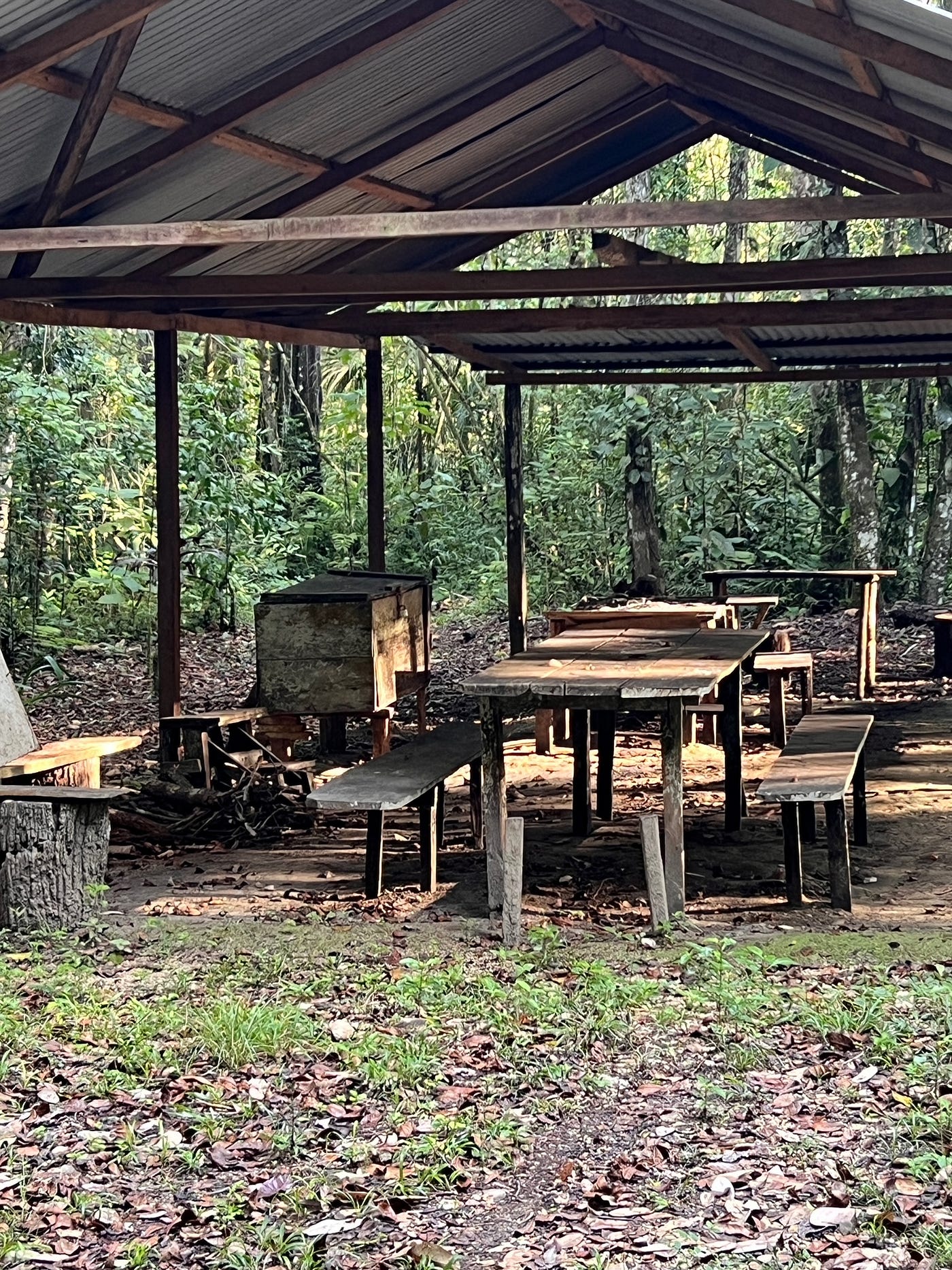
It’s a long bumpy drive through what used to be a thick jungle before loggers appeared in the 1960s. Entering the village, there’s one long dirt road bisecting it. Before any passageway granted access, this was the grass landing strip whereby Trudi and Frans Blom flew in and out since the 1940s. Having befriended the Lancandones, they became advocates for the preservation of their traditions and the rainforest. They’d created a jungle camp, staying there frequently. It still stands. Indeed, it’s impossible not to feel their presence there still. I stayed in their historic camp when the few guest cabins were being restored. Their adopted daughter Doña Beti often came with us. She insisted on cooking our meals over the open fire, feeding us at the camp dining table. I especially imagined Trudi sitting at a place of honor, holding court in her legendary manner. Trudi and Frans passed in 1993 and 1963, respectively, first laid to rest in San Cristóbal de las Casas. In 2011, the Bloms were reburied in the village cemetery, close by their friend and spiritual leader Chan K’in Viejo, at last fulfilling both their long-held wishes. 
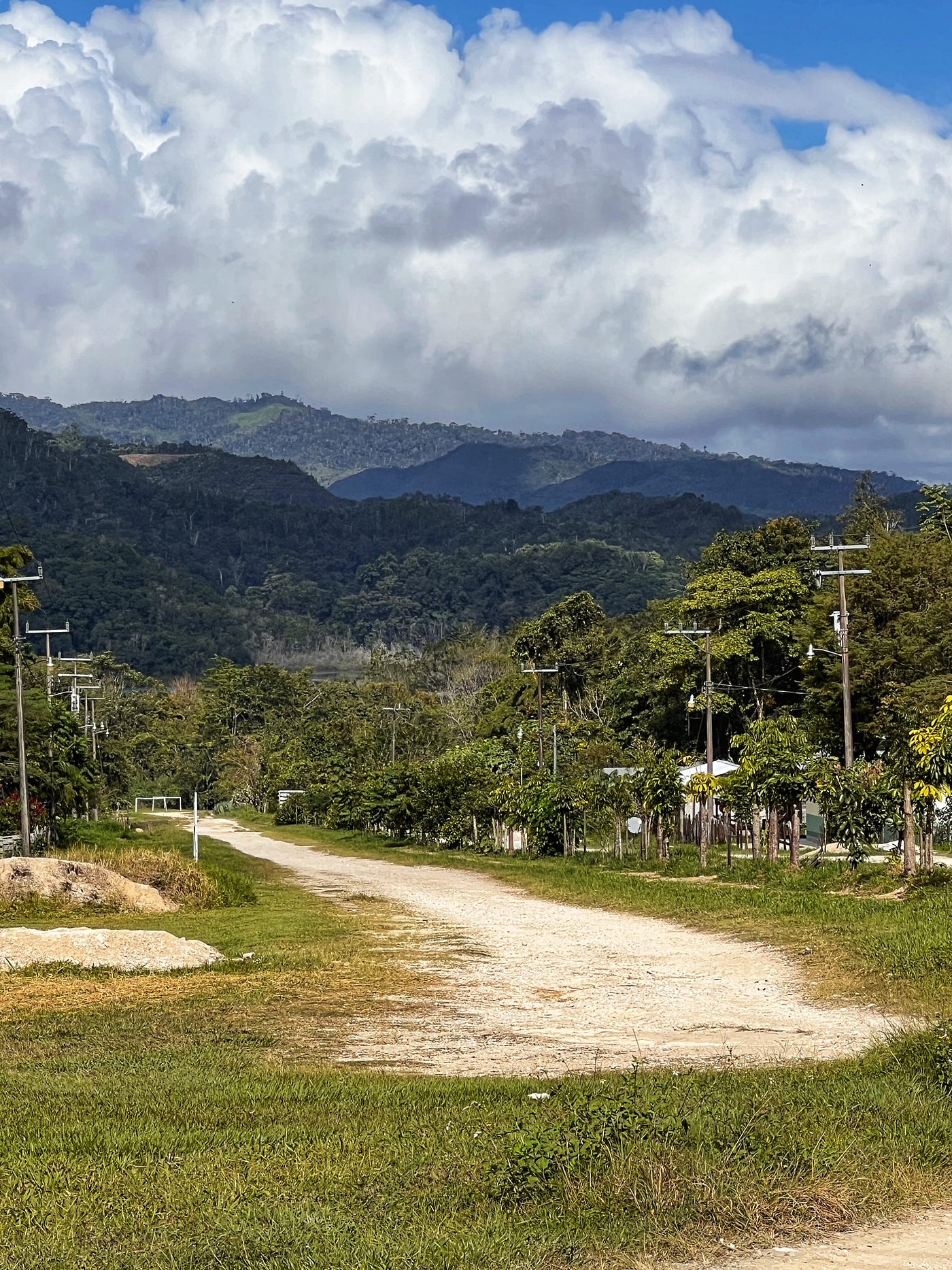
Nahá Road/Landing Strip. ©2024 Carla Woody
The Bloms’ historic jungle camp, Nahá. ©2024 Carla Woody

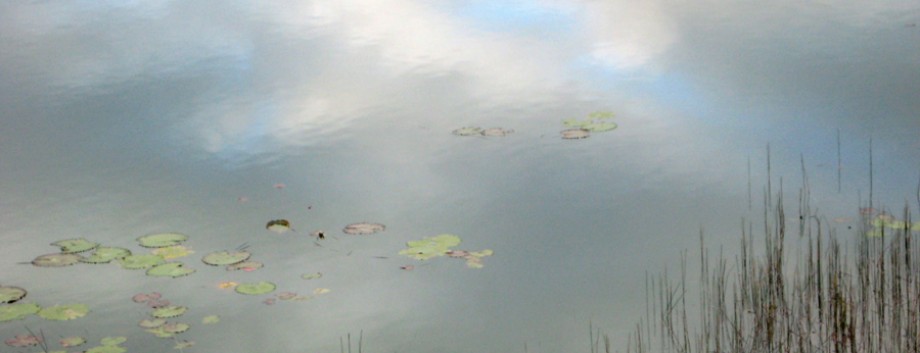
Nahá means the place of water in the Lacandón language. Indeed, the lake has a mystical quality. I draw on memories of mist hanging over the lake, lily pads at the edges. The other side can’t quite be seen. Gliding along in the traditional dugout canoes, it just might be possible to enter another world. I’ve felt the invitation.

Lake Nahá with traditional canoe. ©2009 Carla Woody

My reason for coming to Nahá all these years was to pay respects to Don Antonio, the last holder of their spiritual traditions and Chan K’in Viejo’s son-in-law. This sweet, humble man carried on courageously for decades, fulfilling his sacred traditions despite great duress and interference from evangelicals. In 2012, I wrote The Last Spirit Keeper tracking manipulations from those outside sources and the beautiful connection made in 2009 between Hopi wisdom keeper Harold Joseph and Don Antonio during his time of grief at the sudden loss of his son.

The pandemic had interfered with my annual return until this year. Once arriving in Nahá, it was practice to check in with Don Antonio to say hello and ask about his plans for the balché ceremony.* My friend Eli PaintedCrow and I walked from the lodge on the edge of the village to Don Antonio’s home according to our norm. A young relation greeted us and went to get Don Antonio. I was shocked by the sight of him. He was quite frail and bent. He had trouble walking. He didn’t recognize me. After all these years of appearing ageless, he now seemed not long for this world. Only his long dark hair remained the same. I was saddened by his appearance. I couldn’t imagine he would hold the ceremony or even have the desire. But he asked us to come to his god house with the group the next afternoon.

It was then I learned he was going blind. He kept gazing at me like perhaps he should know me. When he came quite close, he lit up with recognition and began to talk of past times I’d been there. He had a new god house now located just beyond the house. The old god house where I was used to going was about a quarter mile away. He was no longer able to walk to the old one. He had a stick to help maintain his balance and had trouble getting up when seated or kneeling. When people asked me how old he was I’d say probably eighties and then maybe ninety as years were passing. It was sometimes a challenge to keep track, and I wasn’t even sure of his age the first time we met.

When we arrived the next day, he was preparing for the ceremony. He bustled around the interior of his god house readying the god pots. Each one had a face on it, symbolizing one of their thirteen gods. He placed them on an altar made of large palm fronds lying on the ground and put a copal inside each one. He invited us to sit on the logs just inside the perimeter of the god house. Females were not traditionally allowed inside as males were. But he’d always been gracious. This time was no different. The previous day I made sure to let him know we were eleven women, unsure how he’d feel about that. No men were with us. He looked a little taken aback for a moment but assured us we were welcome.

He’d already ladled balché from the old dugout canoe where it fermented into its large terracotta container. Now he made his offering to each god. Dipping a rolled-up young palm frond into balché, he trickled the liquid over the jutting lower lip of each god pot. Sitting down on the log seat in front of the balché vessel, he sighed with satisfaction and offered gourd bowls containing the drink to each of us. The first sip is always a bit of a shock to my taste buds but quickly becomes tastier as the ceremony progresses. I noticed the same response on the women’s faces in the circle.

After a few healthy gulps, Don Antonio was quiet for a few moments. Then he began to speak softly, saying he hadn’t done the ceremony in a long time, how no one came to see him anymore, and his people no longer cared for the gods. It was then his wife, who rarely joined the circle, came from the house, looking in on him, stroking his hair, lightly touching his face. I’ve heard Don Antonio note the lack of interest his people had every time I’d been there, and how in the old days this ceremony healed people. But the gods weren’t showing up so much anymore either. They’d been forsaken. With his wife’s concern for her husband and the love she clearly showed, his lament took on an even more imminent conclusion. I had tears in my throat and a few slipped down my cheeks. I can only imagine what it’s like to be the last one practicing ancient traditions. I can only imagine the loneliness.

Eli PaintedCrow and Don Antonio. ©2024 Carla Woody

But he began to brighten. Eli sat next to him, talking to him in Spanish. I couldn’t hear what she said but guessed she expressed her great interest in their ways. Eli’s presence on our journey was important to me and even more so to her. She’d come to reconnect with her Maya lineage, having suffered that loss when her dear grandfather passed many years ago. Soon Don Antonio was telling stories and singing traditional songs, even one about the merits of drinking balché.

Don Antonio at his god house. ©2024 Carla Woody

After a while, Don Antonio made an announcement. He told us at one hundred years old he would no longer hold the balché ceremony, and the last one would be with us eleven women. He told stories, sang, lit the god pots, and prayed. He blessed us. We drank balché. This may have been a poignant time, but there was joy just as well. I saw it on his face. This gentle soul held steady for what mattered. We all can learn from his example.

After the balché ceremony. ©2024 Carla Woody

That day marked the end of an era. Don Antonio has no apprentice. There’s no one who would carry on the traditions. This fact was confirmed a couple of days later at Palenque when Eli and I visited with some Lacandón women from Chan K’in Viejo’s lineage who had a booth there. I heard that old friends of Don Antonio’s visiting from the US, went to see him the day after we left. He was still happy and they all drank the leftover balché. That news lifted my heart.

The old dugout canoes have been gone over a decade, save the one at Don Antonio’s god house and another sunken in water at the edge of the lake, just one end sticking up. Fiberglass boats took their place. Then the last couple of young men who used to attend the ceremonies slipped away suddenly, too. On a subsequent trip, I saw one who had made vows, in conversation with me, to continue his traditions. But the next time I saw him, he’d been dressed in Western clothing. I learned later he’d converted to evangelism.

Over the last eighteen years, I’ve witnessed the steady disintegration of Lacandón spiritual practices as foreign influences took their place. Of course, it started long before then with roads cut by loggers and decimation of the rainforest and wildlife habitat. Nahá was once a place that had stepped outside time. I feel fortunate to have experienced it that way.


*The balché ceremony, undertaken by the males in the community, is a conduit for blessings, prayers, and a way of honoring. Individual gods are represented through terracotta god pots, with the face of each god and the interior meant for burning copal. Any god pot may be chosen for use during the traditional ceremonies. Don Antonio, as caretaker of the god pots, communes with the gods that hold the world together. And when he feeds the god pots copal, tamales, and balché, he is feeding the gods, the universe, and everything in it. The ceremony and its preparation take many hours.

One Last Ceremony was originally published in the Illumination publication on Medium in March 2024.

Categories: Global Consciousness, Indigenous Wisdom, Lacandón Maya | Tags: , , | 2 Comments

Spiritual Travel to Hopi in March 2023

SPECIAL ANNOUNCEMENT

Join us in Hopi Land, March 16-21, for an immersion experience in the Hopi Way of Life you’re unlikely to find on your own. Once again, I’m honored to sponsor this rare opportunity hosted by Hopi Wisdom Keepers Charlene Joseph, Harold Joseph and others. You’ll be touched in surprising ways as to what really matters, positively affecting your daily life long after you return home.

Spiritual Travel to Hopi: Sacred Guardians of the World
March 16-21, 2023

Registration discount ends December 16.

With Charlene and Harold Joseph, Hopi Wisdom Keepers, and Carla Woody, Spiritual Guide and Author

An Immersion Experience in the Hopi Way of Life.
Co-sponsored by Kenosis and Kenosis Spirit Keepers. A portion of tuition is tax-deductible.

Join us to learn from traditional Hopi Wisdom Keepers in their home villages of Shungopavi and Moenkopi in northern Arizona while they share who they are as First People, the original commitment they made to the Caretaker of that land — and some of the ways they carry out these spiritual responsibilities.

Our journey emphasizes lifeways and places of great spiritual significance handed down by Hopi ancestors, as it has been for thousands of years, still living today on First, Second and Third Mesas of the Hopi Nation. Visiting ancient villages of Old Oraibi, Walpi and hidden petroglyph sites, we explore the traditional Hopi way that holds the world together.

Our journey is timed to potentially attend a day dance. The Katsinas having engaged in ritual in the kivas and danced all night, often emerge during the day to offer blessings to all beings and prayers for fruitfulness.

The group size is limited to maintain respect and the intimate nature. A portion of tuition is tax-deductible to help preserve continuity of Indigenous wisdom traditions through the initiatives of Kenosis Spirit Keepers, the nonprofit extension of Kenosis. When you travel with us you directly help support Indigenous traditions.

For detailed itinerary, tuition, bios and how to register, go here.

Registration discount until December 16. Registration deadline February 27, 2023.

Register now to hold your space! For questions, call 928-778-1058 or email cwoody@kenosis.net.

Categories: Global Consciousness, Hopi, Indigenous Wisdom | Tags: , , , | Leave a comment

Film Review: The Crocodile Hunters of Ethiopia

Joey L. is a fine art photographer and documentary film director from Canada based in Brooklyn. He can frequently be found in remote places the outside world knows nothing of, and seems equally at ease working with celebrities and corporate brands.

His work with tribal peoples and ethnic groups is what intrigues me. Joey says he tends to go back to the same places. In doing so, he’s able to get a deeper and deeper sense of the people, their lifeways and environment—a real connection. I understand this because I’ve done the same over nearly 30 years. You create relationships that wouldn’t happen with the quick dash that satisfies the mainstream tourist. You see and experience things you couldn’t have imagined. Doors open. You are invited in.

Another thing happens that, for me, is heartbreaking to witness. Over time, invariably there’s loss of tradition. In his new documentary The Crocodile Hunters of Ethiopia, Joey talks about the hard life and difficult circumstances many Indigenous peoples endure. You can’t blame them for wanting an easier life. I’ve wrestled with these same thoughts. Would that their sacred practices and lifeways be maintained and, at the same time, they’re lifted out of poverty.

Joey has been working on a book about Ethiopian cultural history for 12 years. Some Ethiopian tribes have maintained their traditions over centuries. The Dassanach tribe is one. Some of the things he photographed 12 years ago are gone, lost to climate change and modernization. His mission is underscored with a sense of urgency.

His obsession started as an 18-year-old when he first went to a Dassanach village. During his visit, there was a tragic occurrence. A child was eaten by a crocodile, which are a ready danger in the region. They can grow 4 times as big as a human and retain gargantuan strength. They’re man eaters. Joey heard rumors of a nomadic caste called Dies whose specialty is killing crocodiles—not with guns but in the old way…with handmade harpoons. For years, he wanted to photograph them. But they are few and elusive. To complicate matters, croc hunting only occurs for a limited time during the rainy season.

Finally, the time was now. He was afraid if he waited longer the crocodile hunters would be a thing of the past. The film covers the search, preparation, tribulations, all the way through the complete hunt, which takes place at night. Joey and his team are among the few outsiders ever to see the hunt. Now you can, too.

This documentary merges uncommon, extraordinary footage of landscapes, tribal peoples, ceremonial blessings, along with what it means to be a working photographer and the importance of respect. Joey talks about the roles passion, curiosity, persistence and risk play relative to his photography. He shows you what happens behind the scenes. But also, what drives him to dedicate his life to pursuing the unusual and cultural truth. He has been in demand since he was a teenager with commissions from celebrities and brands. His work takes him into war zones, remote villages, dense jungles, urban areas, and commercial shoots. Joey L. is a rare breed.


I began following Joey L. a few years ago. I’m particularly taken with the Mentawai collection and his ongoing portrait series of Holy Men. To view more documentaries on the Dassanach and the lower Oma Valley see People of the Delta with accompanying shorts.

Categories: cultural interests, Film Review, Indigenous Wisdom | Tags: , , | Leave a comment

The Nature of Werifesteria

The closer I got to the departure date the louder the demands became—if you can relate kinesthetic response to pitch. I do. It started with a niggling feeling at the back of my skull that progressed to sensations of instability in my solar plexus, which I can only describe as shifting sands. It finally felt as though the world was falling away. The accompanying pitch was relative, increasingly louder in my head until I couldn’t ignore it. I found myself taken aback…as it was meant to do.

This I know…

Alchemy can be defined as elements recombined to create new forms. When beliefs are re-formed, arising out of what was, rebirthing takes place.

Resistance is necessary as a form of progression. In order to resist, the mind has to consider something new. Otherwise, resistance wouldn’t happen. Imagining something new begins to create substance. The greater the level of resistance, the more potentially profound the new creation may be—and out of the comfort zone. The more rigid we are in our own thinking, the more inertia we will experience against moving forward.

To create, we must push through the membrane that separates what we’ve preserved as real from the newly imagined reality…

Excerpt from Navigating Your Lifepath, Section IV: Transforming the Dragon

I also knew, and had many times experienced, the closer to profound movement we are, the stronger the impulse to go unconscious at the threshold and allow the status quo to pull us back. If we give in to backward movement, we remain tethered…contained.

Recognize that hesitation, feeling torn, or paralyzed are a natural part of the evolutionary process. Even external blocks can strangely present themselves, colluding with the internal part attempting to hold us back. It’s necessary to acknowledge any level of fear. Honor that part. Check in with intent, and then allow its resident purity to guide you.

But I was curious. I’m usually one of the first in my circle of friends and acquaintances to venture zealously into parts unknown. What made this time somehow different for me?

Oropendola nests, Madre de Dios. ©2021 Carla Woody.

In late 2020, I received a formal invitation to visit the Matsigenka village of Shipetiari to bring a spiritual travel group to their home located in a remote, pristine rainforest area, the buffer zone to Manu National Park and Biosphere Preserve. This particular Matsigenka community is one of the remaining few who live most traditionally. I considered this an incredible honor. They’ve had few travelers and none like the spiritual travel groups I sponsor.

Of course, the pandemic intervened. At that time, there was no vaccine. The Matsigenka, being so isolated, had no exposure or immunity. Finally, fully vaccinated, boosted, September flight set and COVID rapid test taken a day ahead, I set off for my personal journey to Shipetiari where I would meet the villagers and their jungle home for the first time.

I noticed that, once I turned my attention toward travels and thoughts informed by the larger intent of the time ahead, any objections by that part who’d raised them become quieter until they dissipated altogether.

It occurred to me the pandemic itself had generated my internal objections. Not because I was fearful of infection but for another reason. Like most all of us, my usual world came to a halt. In all that continued expanse of time, I reflected strongly on those aspects most important to me, sorting through how I would live into the future.

At a certain point, I began to wonder when or if I would be able to transition back into the world with my new realizations. I noticed a hint of complacency, lethargy really. Or was it the work of actually wading back into “life” after a long period of contemplation?  

Recently, I came across a definition of the fundamental natures of Shiva—the drive being equilibrium—and Shakti—drawn to the “stuff of the world” and change. To illustrate, there was an image of Shiva deep in meditation with Shakti attempting to bring him into the dance. I don’t claim to be a knowledgeable student of Hinduism, but in that moment the teaching reached out and grabbed me…two sides of the same coin. Elements familiar to me inserted themselves in a deeper way.


I had barely arrived in Cusco a few hours when I went to meet with Jack Wheeler. That’s when I learned we would be leaving early next morning for the jungle, barely breaking daylight. Jack is the founder of Xapiri Ground, based in Cusco. We met a few years ago. I discovered our nonprofits had similar missions toward preservation of Indigenous traditions. His work rests specifically with ethnic groups of the Peruvian Amazon. Xapiri Ground is working with the Matsigenka to document their cosmology, held and passed on through traditional songs and storytelling…now becoming lost.

The Storytelling Project was one reason Jack and I were going then. We, Kenosis Spirit Keepers, are helping to support that undertaking.The other was for me to respond to the invitation I’d originally received, begin to develop relationships and make arrangements to return with a small group of travelers respectful of the spiritual landscape and open to learning.

The next morning as I waited for Jack to collect me, I noticed my pervading sense of expectancy for what this journey may hold, what intent may open wide. None of it imaginable really at this juncture, and I never choose to put a box around such things. I had traveled these roads from Cusco to the rainforest many times up to a point. But how useful is it to consider every new time to be divergent from the last time, experiencing all with fresh eyes, attentive ears and otherwise open? Then finally there came the point of departure from what was familiar to me, the last leg of waters and jungle to our geographic destination.

It was clear to me we’d set out on a pilgrimage. Metaphors would arise and accompany us. But I may not consciously make their acquaintance until after the fact. It’s often like that for me. It’s how I save myself so my intellect doesn’t get involved and spoil it all.

Macaw, Madre de Dios. ©2021 Carla Woody

The Matsigenka were welcoming. Over the week we spent hours visiting with people happy to engage us with the way they live, in concert with their jungle home, plants, animals and each other. They did so, not by telling us, but by being what comes naturally to them. In their way, all is sacred and there’s no separation between them and the ground underfoot, the trees towering above or the birds or monkeys that fly through the trees…the waterways, frogs, insects and other inhabitants. To be otherwise is not within their reality. I have been with other Indigenous communities who live close to land. Somehow, this was different in a way I don’t quite have the words to express but will begin to write of it soon. They’ve left a mark on me and so has the jungle. There being no way to separate what is integral.

This is the story I want to tell now. One afternoon I decided to stay behind. We’d had an eventful morning, and I just wanted to be still. No matter where we went, the jungle was ever-present. My small bungalow was elevated a few feet with one side open, tall trees and dense foliage began maybe fifteen feet in front of where I sat on the stoop. No one else was around and the village was a twenty minute walk by trail.

I just sat. Not too much flitted through my mind. I did realize how completely relaxed my body felt, how deeply and long I slept each night. Those thoughts vacated and I sat. I watched. Training my eyes up toward the canopy, I saw two macaws fly by. A woodpecker landed on a high branch. Movement at the edge of the brush and a huge lizard slipped by. I listened to the calls of birds, some melodious, others somewhat harsh. Insects made a continuous chorus.

Then I began to feel. Energy. Everywhere. The more I opened that channel, the more there was. So much life. So very much vibration. It seemed to me the world fell away—or I fell into it. I was permeated.

I was in a state of wonderment through the last bit of our stay, all the way back to Cusco and carried all the way home. Something had happened, and I had no words for it. Only now after three months can I begin to speak of it with any coherence.

There’s a sacred Vibration, the constant that holds existence. And there are places where everything readily resonates with that frequency, each expressing it in their own way.

Now I’m left wondering if that resonance is what I sensed in the Matsigenka people, the land and all that inhabit it…

Sacred tree. Toniroko, detail. ©2021 Carla Woody

Words are often inadequate to convey an experience or feeling of great depth. The language just doesn’t exist until someone invents it, and it gains use as part of the vernacular. Such is the case with werifesteria, “to wander longingly in the forest in search of the Mystery.”

Once its meaning is learned there must be instant relief for those attuned to it. If the word is in use then there must be others traveling along that pathway as well. The forest can take whatever form you choose to give it—inner or outer landscape, seen or unseen. It’s not linear or logical for sure. By its very nature werifesteria attracts the strong intent it delivers ahead. We need only hold rapt attention, gathering cues that unfold the deeper path.

I must be a werifesterian. It feeds my soul for what may be revealed.

***

For more information on our August 21-31, 2022 spiritual travel program to Peru, go here.

Categories: Honoring the Earth, Indigenous Wisdom, Matsigenka | Tags: , , , | 2 Comments

Spiritual Travel to Peru: August 21-31, 2022

SPECIAL ANNOUNCEMENT

An Intimate Pilgrimage from the Highlands to the Lowlands
August 21-31, 2022

Miradora Atalaya. Photo: Carla Woody.

Co-sponsored by Kenosis and Kenosis Spirit Keepers.
A portion of tuition tax-deductible. Registration discount until May 23.

I am pleased to announce my 2022 Spiritual Travel Program to Peru, an immersion experience in sacred Indigenous ways of Peru.


Many of you know I recently returned from a personal journey – immersion in the little known Matsigenka way of life and time in deep jungle…profoundly transformational for me. The community has graciously invited me to bring a small group.

– Carla Woody


It is a privilege to sponsor this special program focusing on sacred traditions linking the Q’ero and Quechua peoples of the Andes and the Matsigenka of the jungle. I offer you an intimate opportunity, unlikely to be found on your own — with the intent that we are all transformed and carry the beauty home.

We begin in areas outside Cusco wiith Doña Vilma Pinedo and Q’ero paq’os — traditional Wisdom Keepers and mystics — who usher us into the world of the Andes, an alternate reality of life-affirming choices.

Q’ero Despacho. Photo: Carla Woody.   

Then we transition deep into the rainforest to the pristine, wild surroundings of Matsigenka homelands. We experience how it is to live harmoniously attuned to the environment, creating natural medicines and traditional arts, consuming foods provided by the rainforest, and taking in oral history informing the Matsigenka world view.   

This is a journey of ayni — sacred reciprocity. We sit in ceremony of all these traditions, become an allyu — spiritual community — honoring all that sustains the planet and our own wellbeing. We come together with blessings, prayers and share the daily activities of all pilgrims.

Alicia Rios, Matsigenka curandera. Photo: Carla Woody.

We will be a smaller group than usual with respect to the Matsigenka village capacities. Though small, their hearts are open and wish to receive us in generosity just as our Q’ero friends and Dona Vilma Pinedo do. 

Detailed information including itinerary, tuition, bios, and how to register is on the program page. I’m truly honored to bring you this rare opportunity. 

Register now to hold your space! Registration deadline July 21.
For questions call 928-778-1058 or email info@kenosis.net.

I am privileged to bring you such a special opportunity. Join me and accept my invitation for this Adventure of the Spirit…and know that you are supporting continuation of the invisible, sacred threads that hold the world together.

Categories: Global Consciousness, Indigenous Wisdom, Matsigenka, Q'ero | Tags: , , , , | Leave a comment

Honoring Indigenous Peoples Day

In a time of global movement away from our origins, disintegration of family and disconnection from the natural elements, Spirit Keepers are the true warriors of today. In diminishing pockets throughout the world, in many ways disrespected, they still maintain the invisible threads that connect us to our roots.⁠⁠

Blessings of the Four Directions. ©2013 Carla Woody.

Indigenous wisdom for a better world.

I Hold the Knowledge Inside. ©2015 Carla Woody.

Kenosis Spirit Keepers

We help preserve Indigenous traditions threatened with decimation.⁠⁠

Testimony. ©2013 Carla Woody.

Spirit Keepers are the stewards of our future. The ancient, Indigenous ways instill appreciation for the Mother Earth and all beings. When Spirit Keepers are honored and come together to share their sacred practices, we are all nourished. Our common foundation is strengthened.

Going Home, Shungopavi. ©2014 Carla Woody.

We honor traditional Indigenous spiritual leaders, healers and communities who hold the fragile threads of their sacred ways.

Saved By Fortuity. ©2013 Carla Woody.

We fully believe: If these traditions continue to die, we all lose.

The Choice in Every Moment. ©2021 Carla Woody.

I founded Kenosis Spirit Keepers as the nonprofit extension of Kenosis. I’m pleased to say that we’re now in our 14th year. We continue our work against all odds.


A side note: Although I’ve explored various media in my artwork across decades, the intent of the content remains … those elements most sacred.

Categories: Global Consciousness, Honoring the Earth, Indigenous Rights, Indigenous Wisdom | Tags: , , , | 2 Comments

Film Review – Shana: The Wolf’s Music

The film opens with compelling footage, largely black and white, in first person perspective. We  move swiftly, low to the ground, through sagebrush. Suddenly, the perspective alters and we observe a white wolf loping through tangled wilderness and scrubby, twisted trees. It’s then we realize we’d been seeing through wolf eyes. This shift occurs repeatedly, from first to third point of view, as the wolf tears through high grassland, bent on reaching a lone tree in the middle of a field. As she gets closer, strains of haunting music emanate from its luscious leaves.

Beneath the branches, slight movement, a hint of color, and we can almost make out a figure, obscured by shadow. Emerging now, it proves to be a slight, dark-haired girl, braids cascading to the waist. She scans the grasses seeming to know something or someone is out there. But the wolf is hunkered down hidden in tall grass, watching. A breeze finds its path. The sound of wood chimes, the fluttering of ephemera hung in the branches, hardly visible, set as they  are against stillness, brings a moment of suspense.

Then the girl returns to her place under the tree. Facing its trunk, she takes up her violin and resumes the lament previously interrupted.

Soon we learn a strand of hair, handwritten petitions rolled into scrolls tied with ribbon, and other treasured things extend from the tree’s branches.

The entire tree is an altar and the violin music is a sacrament.

To give any more detail would intervene in the viewer’s experience. Just know it’s a multi-layered, touching film about loss, intergenerational trauma, hope, friendship—how one young First Nations girl finds her way through with the help of guides.

This German movie was filmed in British Colombia on Scw’exmx Nation land with members of the People of the Creek playing the characters, all first-time actors. Director Nino Jacusso is Swiss, and the film was drawn from the novel by Italian writer Federica de Cesco.

There is an English version available for viewing on Amazon Prime Video.

Trailer

Categories: Film Review, Healing, Indigenous Wisdom, What Warms the Heart | Tags: , , , , | 3 Comments

Film Review – Nomad: In the Footsteps of Bruce Chatwin

I had been eagerly awaiting this film by Werner Herzog, even turning over the thought of a trek down to Phoenix to view it. That’s an indicator of the level of my anticipation. Then the pandemic hit, and that potential went out the window. Finally, it’s available streaming.

At a time when I am so constrained from my own usual travel, Nomad has given me much needed relief by living vicariously through Herzog’s romantic documentation of Bruce Chatwin’s wandering life. But he wasn’t an aimless wanderer. I had already read Chatwin’s first book In Patagonia and then The Songlines about Indigenous Australians, their sacred lands and the Dreamtime. I knew he was interested in digging into place, culture and tradition in such a way that celebrated their unique properties and attempted to translate what likely challenge western minds. He would often blur the line between nonfiction and fiction.

Herzog described Chatwin’s mission as a “quest for strangeness”—not unlike his own. They both sought other than what we know from our everyday life, far from it. Given that, the film wasn’t strictly “in the footsteps of Bruce Chatwin” but overlapped Herzog’s own.

The film transports us from the Australian Outback, where an Elder speaks of dream tracks, to the standing stones of Avebury—reviving my own memories there—and on to Wales. In the southern Sahara, Wodaabe tribesmen in elaborate attire were engaged in a ritual courtship dance, showing off the whiteness of their teeth and whites of their eyes. I readily remembered them from photographer Jimmy Nelson’s coffee table book Homage to Humanity, a gift I treasure.

A good portion of the documentary was also devoted to passages from Chatwin’s books and testimony from his wife Elizabeth Chanley, friends and colleagues. There’s also footage of Herzog and Chatwin together in different locales.

Chatwin’s biographer Nicholas Shakespeare described him as “a fiery ball of light shedding flickering illuminations on obscure pieces of knowledge connecting countries, people, books and texts.” Some thought him an eccentric and narcissist. Some accused him of misinterpreting and simplifying what he experienced. Others believed he would have grown into his full genius if not lost to this world in 1989 due to HIV/AIDS, still young.

Found in his journal, these are thought to be the very last words he wrote before dying: “Christ wore a seamless robe.” I have to wonder what story Bruce Chatwin might have spun from there. Or maybe it was his documentation.

A quote from Herzog I so resonate with: “The world reveals itself to those who travel on foot.” But there’s something I’d add. It also changes you. You become revealed to yourself. To me, that’s a clear message from this remarkable film. I remain moved by it.

Streaming on You Tube, Google Play and Amazon Prime.

Categories: cultural interests, Film Review, Spiritual Travel, The Writing Life, Travel Experiences | Tags: , , , , | Leave a comment

In Memoriam: Maestro Xavier Quijas Yxayotl

Another star has appeared in the night sky.  Xavier Quijas Yxayotl — composer, master musician, spiritual guide, healer, artist, visionary, resurrector of the ancient ways, life-giver, steward of Mother Earth, friend, lover of life and all beings — has passed. And we have experienced an incredible loss  at his departure.

We can be thankful that he leaves a substantial legacy in the way of ancient Mesoamerican music and instruments. He rescued this rich heritage from annihilation, the colonizers having sought to destroy it. Xavier led the way and others then stood on his shoulders. He’s globally acclaimed. Beyond this enormous accomplishment, there is the man. I’m not sure I’ve ever known a man more gentle, kind, generous and — despite his renown — humble.

Xavier Quijas Yxayotl
Portrait of Xavier Quijas Yxayotl with one of his handmade ancestral flutes. ©2015 Barry Wolf. Used with permission.

I first met Xavier in September 2013 when we, Kenosis Spirit Keepers, invited him to Phoenix to share his music, Huichol/Azteca traditions and ceremony. I was so taken by how, through his music, he led us into other worlds and realms entirely. I grew excited when he mentioned a bit of his life’s history to the point that, a couple of months later, he agreed to relay it to me in detail, allowing me to document it. In 2014, Still Point Arts Quarterly, a literary arts journal, accepted Beyond the Dark as a feature in their Fall 2015 issue.

Over the ensuing years, Xavier lent support of his music and presence to other of our Spirit Keepers Series weekends, and in January 2018 he was our invited guest on the Maya spiritual travel program in the highlands and lowlands of Chiapas, Mexico. It was my honor and privilege to know this compassionate spirit…who grew through a difficult childhood, separated from his ancestral traditions…who heard the calling of his ancestors…maintained his sensitivities throughout…to give his gifts to the world. He remains a role model for all time.

To read Xavier’s soulful life story, Beyond the Dark, in its entirety, go here. You’ll discover how he returned to the Huichol roots denied him as a child, and went on to resurrect ancient instruments lost to time through visitations from his ancestors.

Xavier, your bright light lives on.

Xavier and Apab’yan Tew closing a fire ceremony with ritual music at a Spirit Keepers Series offering in Phoenix in 2017.

Categories: Global Consciousness, Gratitude, Indigenous Wisdom | Tags: , , , , | 2 Comments

Book Review: The Storyteller

Over the last five years, I’ve been periodically working with Don Alberto Manquierapa — Huachipaeri-Matsigenka spiritual leader, master of plant medicines—bringing groups to learn from his teachings of the jungle. I’ve consistently said Don Alberto carries the rainforest in his soul. In November 2019, we were with him again in the high jungle of the Manu Biosphere in Peru. For the first time, he spoke at length of the wise men of the Matsigenka (also spelled Machiguenga) and how they were married to Nature but never elaborated directly what that meant.

A few months later I was having a conversation with Jack Wheeler of Xapiri, whose relationships extend to the Matsigenka and ten other Indigenous peoples of the Amazon. He suggested I read The Storyteller by Mario Vargas Llosa to see what I could glean.

StorytellerI was rewarded in the first chapter when a character called Mascarita, in talking to the narrator, spoke of a wise man then saying, “I’m calling him a witch doctor so you know what I’m talking about.” He also used medicine man and shaman as a stand-in. Additionally, I learned that, while the Matsigenka may practice polygamy, it appears that a wise man sets himself apart from the villages, living in the jungle, or on a riverbank, even more simply than others, distinctly in solitude, communing with Nature.

Much of the book is interspersed with creation stories, tales of survival and beliefs. We know when a story ends because it’s punctuated with, “That, anyway, is what I’ve learned.” That said always before launching into the next monologue. Clearly the discourse is relayed to an audience but not clearly who or even the identity of the one relaying…until much later. Many peoples only know of themselves, their origins and how they are to exist and survive through the keeping of oral histories taken on by a living depository. That person has a special role and designation: Storyteller.

The Matsigenka are peaceful people who hold their world together by walking, being nomadic…nonviolent men who walk. But what happens  when Viracochas* begin to intrude and impact the lands always known to them…introduce money and other foreign ways…when missionaries move into their villages? When…”The most important thing to them was serenity…Any sort of emotional upheaval had to be controlled, for there is a fatal correspondence between the spirit of man and the spirits of Nature, and any violent disturbance in the former causes some catastrophe in the latter.”

In such a case, maybe there’s finally a time when only a Storyteller can tell the Matsigenka who they are and where they’ve been.

This may be a familiar tragic tale containing elements we’ve heard all too many times before, but it’s also a mystery. The Peruvian narrator, whose name is never uttered, goes into a small gallery, while in Florence on vacation, and is electrified by what he sees in a particular photograph in the exhibition. And what of Mascarita who appears  to have a significant role in the book but then simply disappears without a trace…never to be heard from again?

The Storyteller is a complex novel. For me, it was equally disturbing as it was compelling. I believe Llosa  meant it to be so. I’ve promised myself that, in the not-too-distant future, I will reread it, thus allowing its even deeper structure to become apparent.

This book was first published in 1989 and still widely available. I bought my own copy. It’s well underlined.

***

*I found it curious that the name Viracocha, commonly known as the Inka and pre-Inka creator deity, is used with a capital “V” in The Storyteller to identify outsiders, particularly foreigners having marked consequences on the Matsigenka way of life.

Categories: Book Review, Honoring the Earth, Indigenous Rights, Indigenous Wisdom | Tags: , , , , | Leave a comment

Blog at WordPress.com.