Nearly twenty years ago, I began writing my second book Standing Stark: The Willingness to Engage. It was a time of exhilarating change and deep insights for me, rampant with significant leaps of faith, without any visible safety net, that brought me to where I am today. I was presented with another fork in the road as there had been others along the way. Who knows where I’d be if I’d remained on the beaten path? While those personal choices dismantled much of my old foundation, they were proactive in constituting another, likely waiting for the right time to emerge.
Here we are now, as a Collective, with something so major thrust upon us, something so new that little can be predicted, safety net unknown or when it may settle down. It’s torn apart our systemic status quo and exposed what was kept under wraps. Upheaval. The measure of response at both an individual and macro level will necessarily bring revolution and evolution, or (my belief) we wouldn’t have been presented with it. Its time was past due.
I’ve had plenty of time to muse about things over these months in ways I wouldn’t have had before, being so much on the move. Being still has always worked its magic on me.
With that, I began to consider the words that came through me all those years ago. They flowed out of me to become the prologue, setting the stage for Standing Stark. Presently, we are in the time of monsoons, the same period I wrote then, with barely a drop of relief, hoping for the rains to come. Yet they’ll come in their own time or not at all. We have no control over the movements of nature. But, as with any time, we do have control over our own responses and sensibilities.
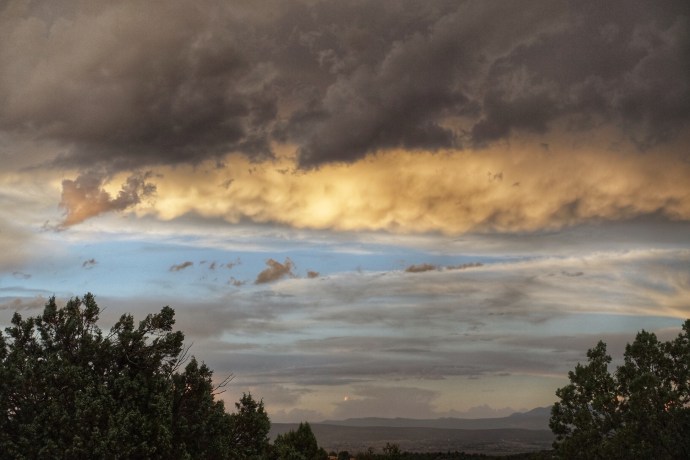
We have heavy rains in Arizona. They normally start in July and go through August. We call the rains monsoons, which may be hard to imagine for those who have not yet experienced the rhythms of the high desert. Sometimes, though, we have a drought year and the rains start later. The tall pines become over-thirsty, beyond being parched. In those times, all of us develop expectancy — trees, plants, animals and humans alike. We are all in it together after all.
But invariably the monsoons come, often with violent storms. Jagged lightning dazzles the sky and thunder cracks so loudly it can bring us up sharply if we’re not attuned. In a primal way, we are all more susceptible during periods of scarcity.
Wandering in the forest later, we can see the aftermath. In a sea of towering ponderosas, or their kin, there are those who stand apart. Not frequently, but infrequently, there will be those who are now shed of their needles, their skins laid open by the snaking of a lightning strike. Standing stark, they appear to be dead. They aren’t. When I go and put my forehead against their trunks, I feel the elemental filaments that have startled another kind of consciousness within them. Still dwelling in their habitat, they are even more alive than before. They draw our attention — our fascination.
The fire that discharged their coverings often may move to some of the surrounding brush and trees, those in close proximity. Sometimes it may travel from a tree to ignite nearly the entire forest. But before that could happen it was first necessary for that tree to be burned of its own covering before the fire that began with that One could affect its brethren…
The lightning strike oftentimes comes suddenly, a bolt unexpected. But there may well be a stirring before the charge and those who have grown the tallest stand most ready to receive…
In order to be ready, we do for ourselves what we know to do as best we can. Yet, there must be no striving. The striving of the material world has no place in this transmission. We need only send our willingness up as a prayer and merely stand waiting. This is for those souls who hold themselves available — to be struck.
— In the time of monsoons

For a few years, prior to a huge personal fork in the road in 1992, I worked as an internal consultant for the US government. (Those who know me find my long stint in civil service hard to believe. Now, so do I.) I was one of several in my small office trained to seed organizational development by focusing on leadership strategies, team building, conflict resolution and the like. The approach most meaningful to me was a holistic one. With intact work teams, we used the Meyer-Briggs Type Indicator or experiential activities that pointed to similar outcomes: the varied styles and capabilities of each individual made a stronger, more creative team. Everyone brings something to the table to contribute. Most of the time, I felt like I was banging my head against a stone wall. It was a challenge to get most of those managers to think beyond protecting their own turf and short-term thinking.
When that happened, we had another trick to pull out of our back pockets: WIIFM (pronounced whiff-um). When wanting them to consider a more holistic, visionary style, we’d guide them to consider, what’s in it for me? Back then I was fresh-faced and hopeful. Now, I see asking that question likely served to entrench rigid individualism rather than open a pathway toward higher values on Maslow’s pyramid and farseeing. It wasn’t long before all came to a head for me. I simply couldn’t do it anymore and cut those ties.
A friend recently said, we’ll all find something to justify our beliefs and actions. Of course, we do. That’s true no matter where you fall in the current deluge that assaults our moral compass or however else you make decisions.
Shortly after leaving disillusionment behind, I was first introduced to traditional Indigenous ways: seventh generation decision-making, sacred reciprocity and actions intent on the well-being of the planet and all beings. This is the world where I choose to dwell, one whose time is long overdue and endangered. In practicing stillness, these are some of the memories and metaphors that have guided my considerations over the last months.






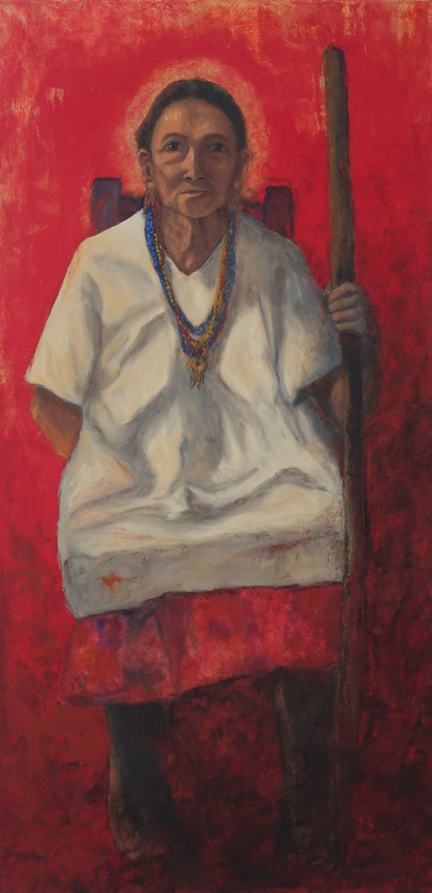

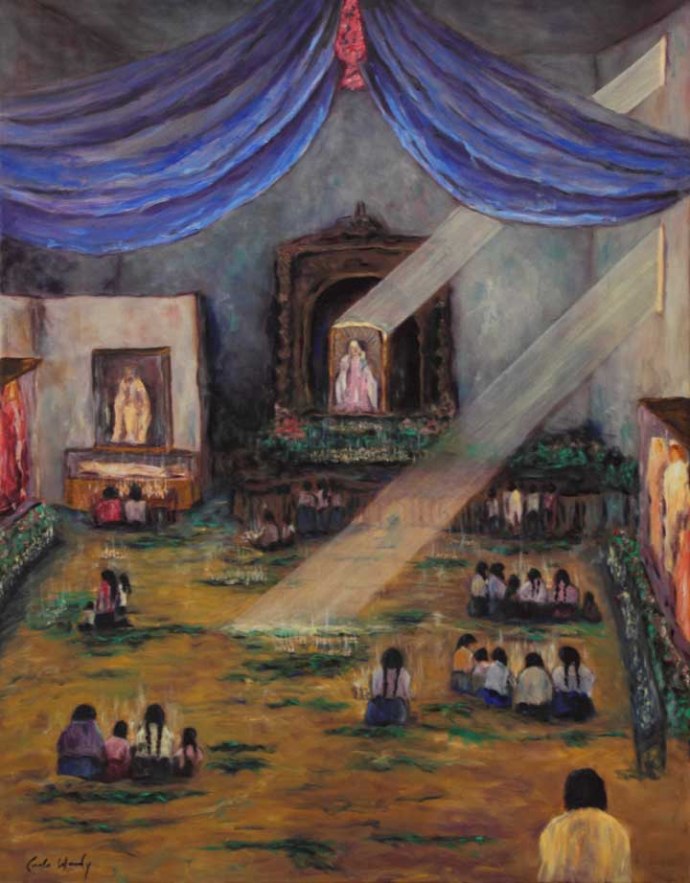


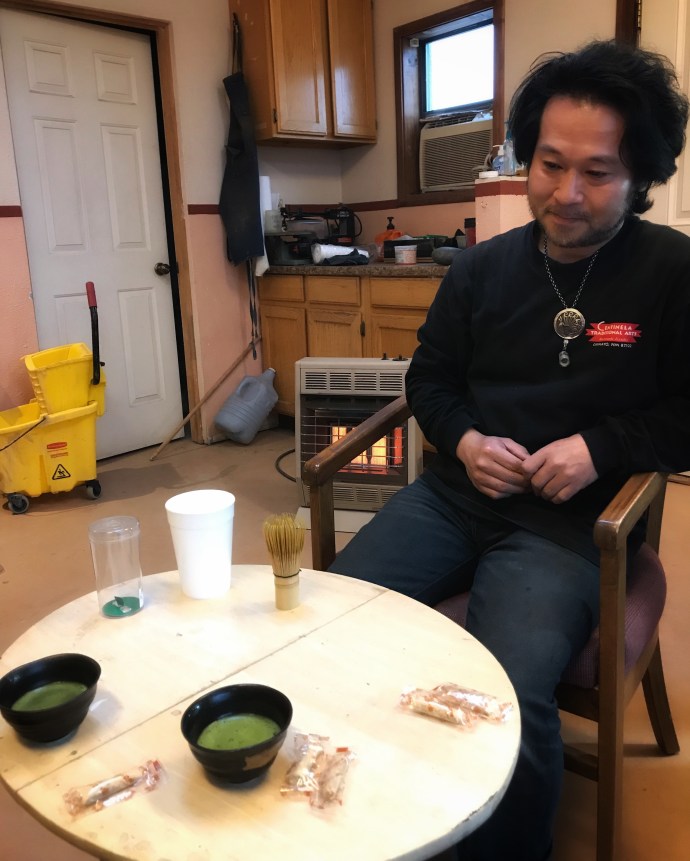
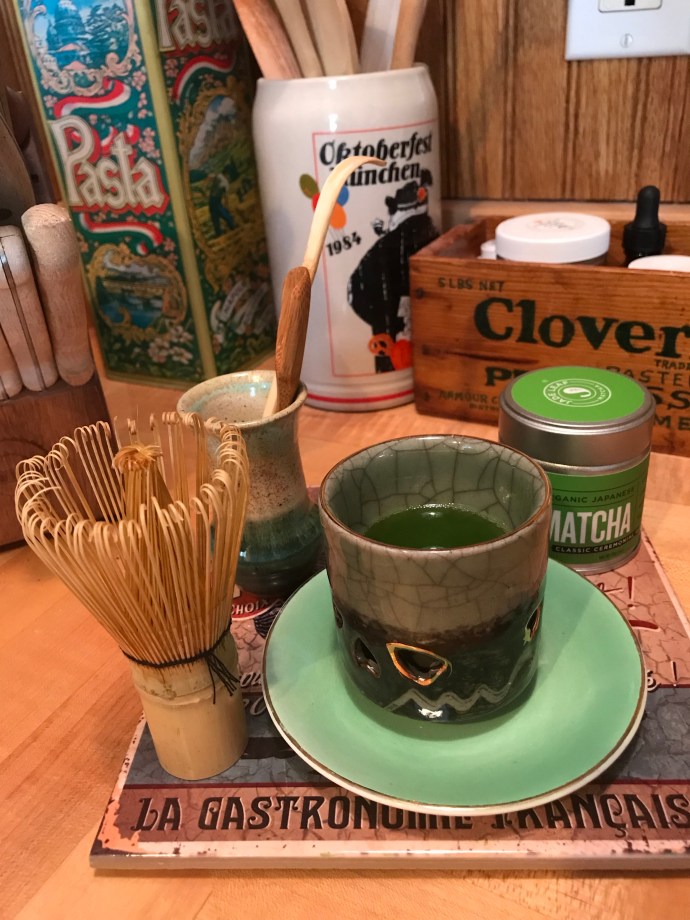


 Doña Panchita was not given to talking about herself or how she worked. She was humble. In my experience over the years, she was no-nonsense and wanted to get down to business. I imagine this was especially so because she would already have had a full day from early morning working as a maid in a local hotel. That’s before she would begin seeing anyone in her waiting room. But one time her husband slipped in and sat down with us. He disclosed that the spirits of the house, or the small plot of land where it sat, had made their connections with his wife many years ago, and she worked through them.
 I remember the first limpia with Doña Panchita maybe ten years ago. She didn’t know me, and I didn’t say anything about myself except whatever she may have gleaned from my request of her, something fairly benign. I closed my eyes and heard her praying under her breath then felt her brushing my body, head to toe, with a branch of holy basil. Once she was done, I opened my eyes. I remember feeling a bit spacey and had glanced over at the altar, which seemed to have come alive. She stood in front of me pointing to an ornate cross around her neck and told me in no uncertain terms that I must immediately buy
  It touched me, too. Dad is 85 years old and had held this bottle for 38 years, patiently waiting. He’s sentimental and loyal to his convictions. He holds things inside. Nearly every year for at least 25, he’s said to me, “We’ll wait until Ahmad comes back.” He kept it tucked safely in the bar. Now it sat on the top. It took something for him to do that, to make that final decision, waiting for me to come home for Thanksgiving.
 In the middle of my assignment in Tehran, Ahmad had to accompany his general to the US. He was gone a few weeks. They had business in different sites. One was Wright-Patterson AFB in Ohio, outside Dayton where I lived at the time. He visited my folks while there. They had him to dinner at their place. That’s when he gave Dad the cognac. For my mom, he brought an exquisite Persian miniature, an Iranian art form. My folks enjoyed his visit thoroughly. The next day Mom took him shopping.
 The Lifepath Dialogues