Music Review – Standing on Sacred Ground

MarshallAlbum-2

Listening to singer-guitarist Kathy Marshall’s latest release, I wanted to curl up in front of a fire with a cup of tea, close my eyes and let her words and music wash over me. I became nostalgic for those traditional folk ballads from times past…and yet found them in the songs contained in Standing on Sacred Ground.

The lyrics are deeply personal and introspective, reflecting values of the musician: respect for Mother Earth, an urging to slow down and find truth within yourself, gratitude for blackberries. She tells stories about elements of life that are familiar to most of us and led me to reflect on my own life where there may be a similar thread of love or loss, and largely…celebration of what is. The guitar and other instruments are a beautiful accompaniment to stories she shares.

From Secrets to Life: Met a grey-haired woman laughing in her rocking chair. ‘Come sit down beside me,’ she crooned, ‘I got secrets to share.’

I particularly love this line from Dreamcatcher: …I dream a song and I sing a dream. Nothing there is impossible to me…

All lyrics and music written by Kathy Marshall. CD available to purchase or download via her website and CD Baby where you may also listen to individual songs.


Categories: Gratitude, Healing, Music Review | Tags: , , , , | 1 Comment

A Not-So-Secret Access to Consciousness

In The Energy That Finds Its Source, I shared how I stumbled upon a strategy through meditation that greatly affected my artwork in a positive way. I want to build on that by discussing something a number of us do unconsciously—but brought to consciousness can generalize to different contexts of your life. It increases clarity and mental/emotional flexibility, in addition to creativity. I’ll use writing as a springboard for an example here.

One of the biggest challenges fiction writers have is to breathe life into the characters of their stories, to make them believable. This is particularly true if your book is character-driven. You want readers to connect with the story and those in it: to love or hate them. A reader of my latest book Portals to the Vision Serpent wrote to say how she couldn’t stand Sybilla, who features prominently in the novel—until she really understood her. Then she had great empathy. Even if the book is plot-driven, you want the characters’ actions to make some level of sense from their eyes.

We all have a specialized, individual template we live by. Here’s a quick review on how that happens. Your brain codes experiences you have. The original coding usually takes place early in life. The coding becomes your perceptions…translating to the beliefs you have about yourself, others, the world in general, even what’s possible. This template also becomes the filter through which you experience your life. You develop strategies for thinking and living that further reinforce the original beliefs—those that support and those that get in your way. When something significant happens to disrupt the old beliefs, things can shift dramatically.

Characters in a novel are no different. Here’s a way to uncover their templates by “stepping into” different perspectives.

  1. From your “self” position as the writer, note how you experience different characters: the nonverbal signals, the way they speak, your own response to them.
  2. Now taking each character at a time, imagine you can slide right into their body, look out of their eyes, become them—rather than witnessing them—and answer these questions: What is their family of origin like? Based on what they unconsciously ingested then, how do they experience their own identity, who they are? Note the trickle down effect: What beliefs were generated? What about capabilities? Resulting actions? How they experience their environment? This way you can really get inside the hearts and minds of the characters.
  3. Then step back. By being a detached observer you get additional valuable information. Given what you discovered about your individual characters, now you can really get a bead on important dynamics between the major players and incorporate them into your writing.
Secret Access

Secret Access
Mixed media on canvas
©2014 Carla Woody

By using a method like this, you also invite your reader to tag along through your writing, to undergo the same discovery and identify with different characters. They’re playing out the human condition, no different than the rest of us. We are all who we are based upon where we’ve been. But when something of great enough significance interjects itself, triggering a change in one character…it also affects the others in close proximity. That’s how things get shaken up; the story becomes so much more interesting; the characters can grow in various ways.

I realize in the writing of this piece that, because this strategy is so engrained in me, it’s another way of describing what I wrote about in The Energy That Finds Its Source. I was very much in the “self” when I was meditating. But when I came out of meditation, I became the “observer.” When the artwork communicated with me, I may have been in “other” position…or an unexplainable esoteric element occurred…

Of course, you can use what I’ve written here as a guideline to explore other aspects of your own life, not just your creative outlets. This is a brief primer toward self-discovery and relationship dynamics that I use with clients as a springboard for transformation.

I’ve adapted the content of this post from my mentoring program Navigating Your Lifepath addressing how to live through your deeply held values—and thrive.

Categories: Compassionate Communication, Creativity Strategies, NLP, Personal Growth | Tags: , , , , , | Leave a comment

Film Review: Q’ero Mystics of Peru

Seti Gershberg has produced an important documentary containing key elements for Westerners to fathom the mysticism of the Peruvian Andes: the descendants of the Inka who embody it, their history and traditions. The film is rich with interviews of Q’ero mystics and breathtaking vistas that perfectly enveloped this viewer, taking me back to all the times I sat in circle with these beautiful people. The energy they carry came through the screen.

We are offered teachings from the Q’ero worldview about interconnection, the inherent birthright of prosperity for all—not just a few—and how ayni, or sacred reciprocity, creates flow and balance. The Q’ero people are living examples, incarnating the natural laws that we all must embrace for global transformation. Segments show despacho ceremonies offering gratitude to the Pachamama (Mother Earth) and Apus (mountain spirits), and blessing prayers. How lightning is a message from the Apus signaling an individual’s role and healing methods are disclosed.

Paq’os (shamans) outline initiations and practices for the life of a healer and mystic—how the process happens over years of commitment, often with strong challenges. One young paq’o describes how, in earlier years, he helped gather materials for the despacho. Then at fourteen he assisted in the making, but it wasn’t until he was eighteen that he was deemed ready to do them on his own. I was personally glad to see this distinction included. Hopefully, it conveys to a Western audience that such a path does not happen in a weekend workshop; nor is it a romantic undertaking but one of humility and sacrifice to community.

Juan Núñez del Prado, Joan Parisi Wilcox, Elizabeth Jenkins, Holly Wissler and J.E. Williams share their understanding from an outside perspective as scholars and authors but also as practitioners of Andean Cosmovision.

The Q’ero are a people of dynastic lineage and strength, who only within the past sixty years have broken out of indentured servitude, having maintained their core identity throughout. These words are spoken during interviews:

 Our work is sacred.

We will not forget or lose this knowledge.

 Q’ero Mystics of Peru came at an opportune time, just as I’m preparing to return to Peru to be with Q’ero friends in the village of Ccochamocco for an unprecedented occurrence during The Heart of the Andes. Hopi Elder Harold Joseph from Shungopavi, Second Mesa, Arizona, is accompanying us, as an emissary of his religious leader, to seek prayers for the preservation of Hopi traditions. He says: The Q’ero spiritual leaders are strong in their prayers. So they are.

I personally thank Seti Gershberg for documenting the wisdom of the Q’ero Nation so effectively.

Categories: cultural interests, Film Review, Indigenous Wisdom, Q'ero | Tags: , , , , , | Leave a comment

Spiritual Integrity and Preservation

In 2009 an important tradition began, first started by Hopi elder Harold Joseph who accepted an invitation to accompany me on my spiritual travel program Entering the Maya Mysteries. As his religious leader’s emissary, the purpose was to reconnect with relations, those from Hopi migration paths. When I make these invitations on behalf of Kenosis Spirit Keepers, it’s without expectation of outcome. I’ve come to know that as long as we within the circle hold the container sacred…what fills it is rich, often with significance I never could have predicted.

The effect Harold had on Don Antonio Martinez, the last Lacandón Maya elder maintaining his timeless traditions, during a very vulnerable time is well documented in my article The Last Spirit Keeper available for download here. Equally significant are the indications Harold saw during our travels through Mayalands that validated his people’s oral history and common thread with these relations of the south. At certain sites he made offerings and prayers. Over these years several other Hopi Spirit Keepers have replicated what Harold started.

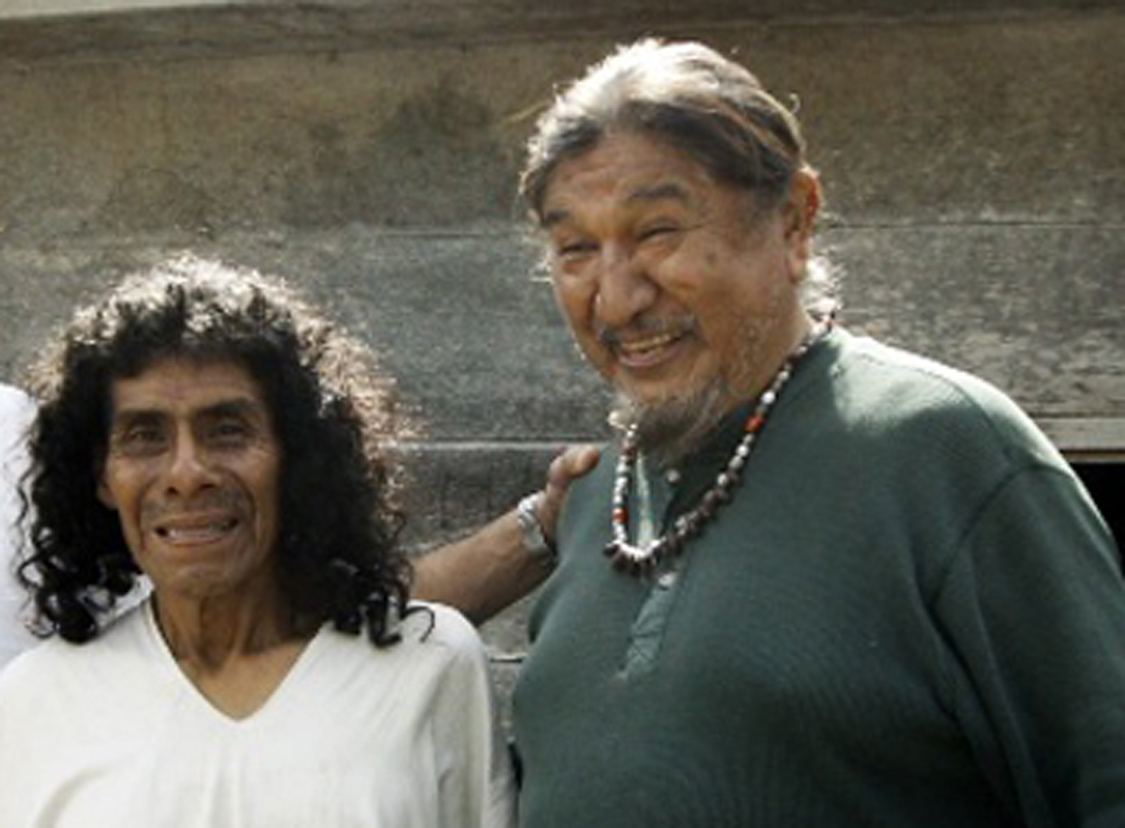
Don Antonio Martinez and Harold Joseph

Don Antonio Martinez and Harold Joseph at the Lacandón Maya village of Najá in 2009. Photo credit: Darlene Dunning

This coming January, Merle Namoki, Sun Forehead Clan, from Shungopavi, Second Mesa will continue the tradition, strengthening the bridge of relationship and respect, laying down prayers. A few years ago, Merle said to me, “…We all need to pray to keep our Mother Earth and Father Sky in balance…”

Mike Weddle is a member of the Kenosis Spirit Keepers’ board who, for more than twenty years, has immersed himself in the sacred ways of the Maya of Guatemala. In his essay Are the Maya and the Hopi Two Branches of the Same Ancestral Tree, he compiled examples of common practices linking the two. He also talked about the protectiveness that Hopi people have over their sacred traditions—in order to preserve them.

The intent I hold for spiritual travel has remained the same from the start. It is not to co-opt Indigenous traditions. It is to offer respect through our presence and to hold space that these sacred ways continue. Merle stated the need so well. If in the process we visitors are deeply touched—and we are—we bring this difference home. Who we are in the world is influenced…and felt by our families, friends and communities. Core spiritual elements are strengthened.

The anniversary of an important date is coming up for me. In late Spring 2008 I held my breath as I opened an envelope from the IRS…and exhaled with great relief to see that Kenosis Spirit Keepers was given status as a charitable organization, our nonprofit extension. It was signed and dated October 15, 2007.

Kenosis Spirit Keepers logo

In this post about the continuity of traditions, I also want to express much appreciation to those who have made donations over the years, and certainly to those who have traveled with me…holding reverence, making the circles and sponsorships possible. Through your spiritual integrity, this work continues. Last but certainly not least, the folks who have served on the board since the inception of Kenosis Spirit Keepers, worked hard and assisted with direction and decisions…I have gratitude.

*******************

If you are drawn to support connections between the Hopi and Maya peoples, join us January 18-28, 2015 in Chiapas, Mexico for Entering the Maya Mysteries. A portion of tuition is tax-deductible to support the travel of Hopi Merle Namoki and the humanitarian healing work of Don Sergio Castro in impoverished Maya communities.

To read more about the unusual occurrence that inspired the founding of Kenosis Spirit Keepers see The Ninth Evolution of the Spirit Keepers Journey (with video).

To learn more about the Maya worldview, listen to an excerpt of my interview with Tat Apab’yan Tew, K’iche Maya Daykeeper, who is part of the Maya spiritual travel program.


Categories: Gratitude, Hopi, Indigenous Wisdom, Lacandón Maya, Maya, Sacred Reciprocity, Spiritual Travel | Tags: , , , , , , , | Leave a comment

The Energy That Finds Its Source

Sometimes it’s powerful to change things up in your geography, to experiment and see how you may further engage creativity…and The Muse. In the last several months, I’ve done just that—albeit unknowingly—and have been fairly astounded at what has unfolded.

I meditate first thing in the morning, usually before dawn. Over the last thirty years of doing so, it’s set the stage for my days and provided a consistent segue for insights, higher guidance. But I’d never considered using it as a tool for my artwork. It happened accidentally.

I would undertake my daily ritual in the back room, sitting cross-legged with straight back, always in the same spot for as long as I’d lived in this home, an anchor to the process. One morning for no apparent reason, I chose to meditate in the front room. Whenever I feel complete, I come back with “soft eyes”…slightly defocused…slowly returning, integrating the state with my day ahead. That morning my gaze came to rest on the easel and canvas I’d been painting for a while. And suddenly I experienced the piece in a whole new way. I saw things I hadn’t seen before. I felt a previously undetected presence, perhaps waiting until I’d opened a door and it could reach through and guide me. I’ve continued this change in geography while keeping my long-time meditation ritual. My artwork has more depth and meaning. I feel the intent of pieces is coming across in a way I’d just hoped for before. I had the beautiful feedback from a couple from Canada who approached me—after seeing My Magdalen Heart in person—saying they’d experienced the piece literally speaking to them.

The Inner Chamber

The Inner Chamber
Mixed media on canvas
©2014 Carla Woody

People have puzzled over the creative process for eons. Some ascribe to a belief that the source of creativity rests within the self absolutely, which places enormous pressure if you find not so much coming through. Others are certain it comes from another source, perhaps a higher power. Author Elizabeth Gilbert spoke eloquently on TED regarding this controversy.

I believe it’s a combination of the two. First, I have the choice to say “yes.” Then it’s a matter of showing up consistently, having faith that something will be delivered…and being patient with the process. I recognize that I’m a vehicle. I’ve chosen to develop certain skills. But, for me, there’s no mistaking when I’ve tapped into another realm entirely outside myself that moves beyond the mundane. My senses are heightened and the energy moves—whether through brush on canvas, fingers on keyboard…whatever the art form—to find ground. There’s a distinct collaboration…and it’s something else again when your subject matter starts communicating with you. Strange as it seems, that’s how it’s happening for me these days.

When I was writing Portals to the Vision Serpent my practice was to begin writing after meditation, at least five days a week for at least three hours at a time. Again, I didn’t realize at the time I was accessing my craft through an altered state of being. It was as though I watched a movie and wrote down what unfolded in front of me. One day I reached a point in the book where I needed to get a main character down to the rainforest of Chiapas, Mexico but had no idea how. Within a few days, a completely new character stepped forward to introduce himself from the shadows where he’d been hidden. It turned out that he provided the way; the novel moved on.

The poet Mary Oliver said, “…The part of the psyche that works in concert with consciousness and supplies a necessary part of the poem—the heart of the star as opposed to the shape of a star, let us say—exists in a mysterious, unmapped zone…Say you promise to be at your desk in the evenings, from seven to nine. It waits, it watches. If you are reliably there, it begins to show itself—soon it begins to arrive when you do. But if you are only there sometimes and are frequently late or inattentive, it will appear fleetingly, or it will not appear at all…”

If it hasn’t yet happened for you in the way you desire, I believe it can. It means opening yourself up, stepping outside your comfort zone, changing up your geography. It’s an agreement you make…an intent you hold…and then let go.

Such an energy finds its reciprocal Source.

Categories: Arts, Creativity Strategies, Meditation, Sacred Reciprocity, Spiritual Evolution, The Writing Life, Visual Arts | Tags: , , , , , , | 5 Comments

Book Review – Deep Cinema: Film as Shamanic Initiation

Deep Cinema

Mary Trainor-Brigham’s Deep Cinema deserves your time and attention. I found myself re-reading pages and then sitting, to give the words an opportunity to enter my interior space. Immediately evident, this is a book written to connect with your Indigenous Soul, as the author calls it, the one many of us ignore in this Middle World. She guides us to delve into movies and stories so that they play back to us our own humanity, initiatory passages and further potential.

I’ve studied Joseph Campbell’s work in-depth: his instruction on myth, the Hero’s Journey and places we can readily see examples in film and storytelling. Deep Cinema adds to that work in a way that makes it unique by overlaying shamanic templates from Indigenous cultures. We’re then offered the Soul Compass, a model …designed to transform life from a series of dogmatic dictates or chaotic occurrences…into a rich, sacred Self-defining sojourn which we gladly undertake…the key here is that life becomes meaningful…  The path from Child as Nest Dweller to Elder as Diamond Cutter and Pearl Spinner shows the gateways—mundane to spiritual, balance of Female as Womb Weaver to Male as Navigator—that we all must pass through in order to morph into the next level of growth.

The author brings her background as art therapist, film critic, actor and scriptwriter naturally into play, pointing out the metaphors in a multitude of films, older to more current, that relate to the archetypal templates she offers. With lyrical language, she draws the reader in. On the Voudon shamanic tradition: …According to the Haitians, a person’s small self is like a fish that gets hooked in the heart and reeled in throughout life by the love of and for their Great Self, sitting on a throne beneath the Sea in Lower World…

I was glad to see The Serpent and the Rainbow movie included as a failure at translating anthropologist Wade Davis’ book by the same name. Instead of portraying the rich layers of the Voudon traditions Davis experienced, Hollywood chose to further the cartoon-like, fear-based image of practitioners. Mary recommends Divine Horsemen: The Living Gods of Haiti as a true portrayal.

Once Were Warriors indicates the power of film on a population. In the successful translation of Alan Duff’s novel, Maori director Lee Tamahori graphically depicted real-life struggles with alcoholism and domestic violence the Maori people suffered, bringing it back to loss of spiritual traditions and the turning point of re-engagement. It’s noted that one in every three New Zealanders has seen this film. Most importantly: …after the film hit the theaters, there was an upsurge in the number of men seeking help with domestic violence issues, citing ‘Warrior Troubles’…

I had already viewed a number of the movies covered in the book: Whale Rider, Mindwalk, Capote and others. But I’m going to go back and see some again with new eyes and Deep Cinema beside me. As I was reading, I thought to myself it would be really nice to have an index of all the films and where they’re discussed in the book. I was pleased to find just that at the end. Bottom line: Deep Cinema is not just a reference but also an ally for the spiritual journey.

Available through Amazon.


Categories: Book Review, cultural interests, Film, Indigenous Wisdom, Personal Growth, Spiritual Evolution | Tags: , , , , , , | Leave a comment

Shadow Dancing

Invitation to Shadowlands

Invitation to Shadowlands
©2005 Carla Woody

Shadows are a slippery aspect of human make-up. At times, we hear their whisper from the background. Other times, they bellow in the foreground. When the shadow side gets triggered we’ll know it through heavy emotions, bodily felt sensations and self-talk we experience. The trick is to recognize what’s occurring and the source. When we attribute the cause to another person and respond in a negative way, be assured: The cause resides within us, not them. Understand this isn’t about condoning true detrimental behavior on the part of someone else. It’s about separating out what’s ours and what’s theirs in order to heal.

Shadows are the parts of us that we’ve disowned and repressed because we don’t like to experience them and what they bring up. Some examples would be: a part that has the need to control, or is critical, or feels like a victim. The source has to do with unconscious limiting beliefs, most often developed early in life. It’s possible to turn these around.

There are also shadow parts that may be underdeveloped in other ways. For instance, there may be a part that aspires to something like creative expression or leaving the “day job” to move into “lifework that matters.” But to date, the aspiration remains fallow, and we focus instead on all manner of rationale not to take even the first step.

Shadow sides usually manifest through relationships, whether with an individual or group. There is a mutual attraction that fulfills a need somehow. Like attracts like in an often, strange convoluted reciprocity. Here’s what I tell folks I work with…

If there’s no investment, there’s no effect.

 This is what I mean by that statement: If we’ve transformed those parts of us that need healing, then someone else’s behavior is no longer a negative mirror. We don’t project onto them what we need to attend within ourselves. We know we’ve moved on when we can be in their presence without responding as we previously did. We notice the behavior, but it has no effect on us, other than awareness. We can go on about our business without getting triggered and responding in the old way.

In healthy relationships, people support each other in positive ways. Support does not mean taking over a role for the other one. It means encouraging and teaching each other through role modeling or, if asked, directly rather than just assuming control when there are no agreements. It means allowing each other to stumble, to see the positive intention behind the behavior, and have empathy. It means being unconditional with each other, even when it’s difficult and where to go from there is yet unknown. If we hold a space toward opening, all benefit.

We’re all in this together. The outcome begins with each one of us. Look at your own life. Explore the dynamics of your relationships. If your shadow side gets triggered in some way then ask these questions of yourself.

  • What do I want from that other person that I need to develop in myself?
  • What do I dislike in the other person that I’ve disowned in myself?
  • What messages from that other person trigger a negative response within me?

Truthful answers to these questions are markers of progress on your own spiritual development, fodder for the deeper journey and healthy relationships that come as a result.

***

If you’d like information on Navigating Your Lifepath with self-guided or private mentoring options, go here.

Categories: Compassionate Communication, Healing, Healthy Living, Personal Growth, Spiritual Evolution | Tags: , , , , | 1 Comment

Film Review: Séraphine

SeraphineTreeofLife

Tree of Life ­­- Séraphine Louis, 1928

Séraphine Louis, also known as Séraphine de Senlis, is the subject of this intense biopic—both inspirational and tragic—of a relatively unknown but brilliant artist who teetered between one reality and another. Her paintings were the product of creative and spiritual rapture, induced by spirits, and her love for nature. She was employed as a housekeeper doing the most menial labor and thought by the people around her to be quite odd and slow. But at night she disappeared into another world and turned out extraordinary works using pigments she made herself from unusual sources.

Her break came when Wilhelm Uhde, German art dealer and critic, saw a painting at his neighbor’s home and was astounded to discover that it had been done by his cleaning lady. At a time when avant garde artists such as Picasso and Rousseau were coming on the scene, Uhde became Séraphine’s sponsor encouraging her and finally including her in a show that he organized of the Sacred Heart Painters. Sadly, his patronage would come to an end with the advent of World War II. Séraphine became increasingly isolated and was finally committed to a hospital for the mentally ill. She passed in 1942.

Few of her paintings survive but some may be viewed here. This is the story of a woman who found deep meaning in life and was unusually resourceful, even in the face of periodic ridicule and little support, save one person who proved to be her angel.

This haunting film was a sleeper when it came out in 2009 but later won seven French Academy Awards. Streaming on Amazon. In French with subtitles. Yolande Moreau stars as Séraphine. Film directed by Martin Provost and co-written with Marc Abdelnour.

Categories: cultural interests, Film Review, Visual Arts | Tags: , , , | Leave a comment

Lifepath Dialogues Interview with Maya Daykeeper Apab’yan Tew

Apab’yan Tew is an Ajq’ij, a Day Keeper, spiritual guide, dancer and musician, of the K’iche’ Maya tradition from the village of Nawalja’ in Sololá of the Guatemalan highlands. He approaches his sacred calling with humility and passion. I am honored that he’s part of my spiritual travel program in Mayalands during which he shares openly and holds a fire ceremony to send prayers and call upon the ancestors.

In November 2012 I interviewed Tat Apab’yan on the subject of Maya worldview, farming practices and the GMO issue. I included many of his words in Seed Intelligence: Indigenous Perspectives and Our Collective Birthright published in the Anishinaabe (Ojibwe) Farming Curriculum developed by Honor the Earth Foundation for Tribal Community Colleges.

His words are so important for our understanding of the integrative way traditional Maya people live, as well as other Indigenous peoples. I’m sharing an excerpt of our two-hour conversation with you here with his complete permission.

In just this short excerpt Tat Apab’yan covers a lot of ground. He chuckles over the wave of ‘organic’ farming in the West—as though it’s something new—when his people have had such practices for time immemorial. He puzzles over the Western way, now predominant, of dividing land into property when “…the Sky has no conditions…the rains are for everything…” and discusses the sacred sense of reciprocity in everyday Maya lifeways. “…We plant five seeds…only one is for us…”

I hope you enjoy the excerpt and take his words to heart as I did.

To learn more about Spiritual Travel to Chiapas, Mexico: Entering the Maya Mysteries in February 2016, go here. Join us and experience Tat Apab’yan’s teachings in person, along with those of other Maya spiritual leaders and healers who serve their communities. A warning though: It’s life-changing. Tuitions support the continuation of Indigenous traditions and help the spiritual leaders, their families and communities. A portion is tax-deductible through Kenosis Spirit Keepers, the nonprofit extension of Kenosis.

Categories: cultural interests, Gratitude, Indigenous Wisdom, Interview, Maya, Sacred Reciprocity, Spiritual Travel | Tags: , , , , , | 3 Comments

Book Review: Quiet – The Power of Introverts in a World That Can’t Stop Talking

200px-QuietBookCoverPeople are often surprised when I say that I’m an introvert. They’re fooled by the fact that I’m articulate, do public speaking, work with groups and engage socially. They assume that I’m an extrovert. I can do the things I do because I’ve arranged my lifestyle to support my biological make-up and preferences. I love to engage when they’re things I care about deeply—BUT I retreat to regenerate myself. Whether you lean toward introversion or extroversion primarily has to do with how you expend your energy and the way you renew it.

However, our culture values extroversion. There must be something wrong if you’re not talking: You’re secretive, have nothing of value to contribute and probably not so bright.

As a child there were countless times when I heard I was “too quiet.” Not by my parents, who are also introverts, but mostly by teachers, causing me to retreat even further into my inner world. As a teenager, it was even more hurtful, especially when it came from friends. All that input translates to: You’re not good enough. It haunted me for a long time.

 Indeed, your biggest challenge may be to fully harness your strengths. You may be so busy trying to appear like a zestful, reward-sensitive extrovert that you undervalue your own talents, or feel underestimated by those around you. But when you’re focused on a project that you care about, you probably find that your energy is boundless. – From Quiet.

Later in life I have often been called “intense” as though something is wrong with that as well. But by the time I heard it the first time I’d begun to value my own sensibilities and could translate the meaning to “passion.” And the years I worked in a corporate environment…meetings were my most dreaded activity. Those who were most vocal blathered on saying nothing. It was an effort for me to keep in my seat. I wanted to jump out of my skin and flee.

Author Susan Cain has gotten a lot of play in the media since Quiet was published in 2012. It’s been on the bestseller list for many weeks running. Nevertheless, I didn’t know about it until I was perusing my local library for CD books to accompany me on a recent road trip to Utah.

I’m writing this review for those who missed this important book like I did. Whether you’re more introverted or extroverted, Quiet contains highly useful information for valuing both preferences. It also contains data on biological differences and distinctions of introversion. If you’re an introvert, it cites numerous studies and other pointers that will validate your value. If you’re an extrovert, it will help you understand the many introverts around you. I was horrified at one story about two extroverted parents who sought psychiatric intervention and medication for their introverted child. When one psychiatrist found the child to be normal the parents moved on for the next opinion.

My most transformative experiences have never happened in groups. That said, there is extraordinary energy that builds when groups entrain to strong spiritual intent, kickstarting a process of opening. Then integration comes through balancing the internal and external. That is the premise underlying any retreats and spiritual travel programs I sponsor.

The highly sensitive [introverted] tend to be philosophical or spiritual in their orientation, rather than materialistic or hedonistic. They dislike small talk. They often describe themselves as creative or intuitive. They dream vividly, and can often recall their dreams the next day. They love music, nature, art, physical beauty. They feel exceptionally strong emotions–sometimes acute bouts of joy, but also sorrow, melancholy, and fear. Highly sensitive people also process information about their environments–both physical and emotional–unusually deeply. They tend to notice subtleties that others miss–another person’s shift in mood, say, or a light bulb burning a touch too brightly. – From Quiet.

The quote below was quite interesting to me. Such practices don’t just occur in Evangelicalism. I’ve personally had experience of being expected to utter prayers and entreaties out loud while in sweat lodge and other ceremonies, although not as common. I remember the first time it happened I was shocked at the intrusion on my privacy in a spiritual setting. To me, such things are so sacred they’re not pronounced aloud. Of course, the leaders didn’t see it as an affront. Now, if such a thing occurs, I pass to those who want to speak these things out loud and remain comfortable with my own way.

Evangelicalism has taken the Extrovert Ideal to its logical extreme…If you don’t love Jesus out loud, then it must not be real love. It’s not enough to forge your own spiritual connection to the divine; it must be displayed publicly.

 There is a compilation of quotes for the book on Goodreads. Ultimately, this is the teaching of the book.

We know from myths and fairy tales that there are many different kinds of powers in this world. One child is given a light saber, another a wizard’s education. The trick is not to amass all the different kinds of power, but to use well the kind you’ve been granted.

There’s also an excellent TED talk by Susan Cain giving an overview. Quiet is available on Amazon and elsewhere in print, ebook and audiobook.
Categories: Book Review, Compassionate Communication, Creativity Strategies, Healthy Living, Personal Growth, Sacred Reciprocity, Solitude, Spiritual Evolution | Tags: , , , , , , , | 1 Comment

Blog at WordPress.com.