Posts Tagged With: sacred reciprocity

Lifepath Dialogues Interview with Maya Daykeeper Apab’yan Tew

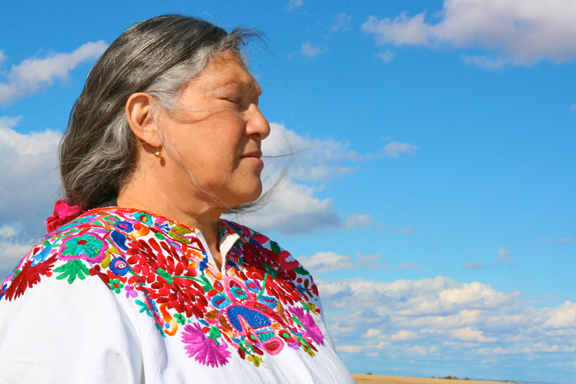
Apab’yan Tew is an Ajq’ij, a Day Keeper, spiritual guide, dancer and musician, of the K’iche’ Maya tradition from the village of Nawalja’ in Sololá of the Guatemalan highlands. He approaches his sacred calling with humility and passion. I am honored that he’s part of my spiritual travel program in Mayalands during which he shares openly and holds a fire ceremony to send prayers and call upon the ancestors.

In November 2012 I interviewed Tat Apab’yan on the subject of Maya worldview, farming practices and the GMO issue. I included many of his words in Seed Intelligence: Indigenous Perspectives and Our Collective Birthright published in the Anishinaabe (Ojibwe) Farming Curriculum developed by Honor the Earth Foundation for Tribal Community Colleges.

His words are so important for our understanding of the integrative way traditional Maya people live, as well as other Indigenous peoples. I’m sharing an excerpt of our two-hour conversation with you here with his complete permission.

In just this short excerpt Tat Apab’yan covers a lot of ground. He chuckles over the wave of ‘organic’ farming in the West—as though it’s something new—when his people have had such practices for time immemorial. He puzzles over the Western way, now predominant, of dividing land into property when “…the Sky has no conditions…the rains are for everything…” and discusses the sacred sense of reciprocity in everyday Maya lifeways. “…We plant five seeds…only one is for us…”

I hope you enjoy the excerpt and take his words to heart as I did.

To learn more about Spiritual Travel to Chiapas, Mexico: Entering the Maya Mysteries in February 2016, go here. Join us and experience Tat Apab’yan’s teachings in person, along with those of other Maya spiritual leaders and healers who serve their communities. A warning though: It’s life-changing. Tuitions support the continuation of Indigenous traditions and help the spiritual leaders, their families and communities. A portion is tax-deductible through Kenosis Spirit Keepers, the nonprofit extension of Kenosis.

Categories: cultural interests, Gratitude, Indigenous Wisdom, Interview, Maya, Sacred Reciprocity, Spiritual Travel | Tags: , , , , , | 3 Comments

Book Review: Quiet – The Power of Introverts in a World That Can’t Stop Talking

200px-QuietBookCoverPeople are often surprised when I say that I’m an introvert. They’re fooled by the fact that I’m articulate, do public speaking, work with groups and engage socially. They assume that I’m an extrovert. I can do the things I do because I’ve arranged my lifestyle to support my biological make-up and preferences. I love to engage when they’re things I care about deeply—BUT I retreat to regenerate myself. Whether you lean toward introversion or extroversion primarily has to do with how you expend your energy and the way you renew it.

However, our culture values extroversion. There must be something wrong if you’re not talking: You’re secretive, have nothing of value to contribute and probably not so bright.

As a child there were countless times when I heard I was “too quiet.” Not by my parents, who are also introverts, but mostly by teachers, causing me to retreat even further into my inner world. As a teenager, it was even more hurtful, especially when it came from friends. All that input translates to: You’re not good enough. It haunted me for a long time.

 Indeed, your biggest challenge may be to fully harness your strengths. You may be so busy trying to appear like a zestful, reward-sensitive extrovert that you undervalue your own talents, or feel underestimated by those around you. But when you’re focused on a project that you care about, you probably find that your energy is boundless. – From Quiet.

Later in life I have often been called “intense” as though something is wrong with that as well. But by the time I heard it the first time I’d begun to value my own sensibilities and could translate the meaning to “passion.” And the years I worked in a corporate environment…meetings were my most dreaded activity. Those who were most vocal blathered on saying nothing. It was an effort for me to keep in my seat. I wanted to jump out of my skin and flee.

Author Susan Cain has gotten a lot of play in the media since Quiet was published in 2012. It’s been on the bestseller list for many weeks running. Nevertheless, I didn’t know about it until I was perusing my local library for CD books to accompany me on a recent road trip to Utah.

I’m writing this review for those who missed this important book like I did. Whether you’re more introverted or extroverted, Quiet contains highly useful information for valuing both preferences. It also contains data on biological differences and distinctions of introversion. If you’re an introvert, it cites numerous studies and other pointers that will validate your value. If you’re an extrovert, it will help you understand the many introverts around you. I was horrified at one story about two extroverted parents who sought psychiatric intervention and medication for their introverted child. When one psychiatrist found the child to be normal the parents moved on for the next opinion.

My most transformative experiences have never happened in groups. That said, there is extraordinary energy that builds when groups entrain to strong spiritual intent, kickstarting a process of opening. Then integration comes through balancing the internal and external. That is the premise underlying any retreats and spiritual travel programs I sponsor.

The highly sensitive [introverted] tend to be philosophical or spiritual in their orientation, rather than materialistic or hedonistic. They dislike small talk. They often describe themselves as creative or intuitive. They dream vividly, and can often recall their dreams the next day. They love music, nature, art, physical beauty. They feel exceptionally strong emotions–sometimes acute bouts of joy, but also sorrow, melancholy, and fear. Highly sensitive people also process information about their environments–both physical and emotional–unusually deeply. They tend to notice subtleties that others miss–another person’s shift in mood, say, or a light bulb burning a touch too brightly. – From Quiet.

The quote below was quite interesting to me. Such practices don’t just occur in Evangelicalism. I’ve personally had experience of being expected to utter prayers and entreaties out loud while in sweat lodge and other ceremonies, although not as common. I remember the first time it happened I was shocked at the intrusion on my privacy in a spiritual setting. To me, such things are so sacred they’re not pronounced aloud. Of course, the leaders didn’t see it as an affront. Now, if such a thing occurs, I pass to those who want to speak these things out loud and remain comfortable with my own way.

Evangelicalism has taken the Extrovert Ideal to its logical extreme…If you don’t love Jesus out loud, then it must not be real love. It’s not enough to forge your own spiritual connection to the divine; it must be displayed publicly.

 There is a compilation of quotes for the book on Goodreads. Ultimately, this is the teaching of the book.

We know from myths and fairy tales that there are many different kinds of powers in this world. One child is given a light saber, another a wizard’s education. The trick is not to amass all the different kinds of power, but to use well the kind you’ve been granted.

There’s also an excellent TED talk by Susan Cain giving an overview. Quiet is available on Amazon and elsewhere in print, ebook and audiobook.

Categories: Book Review, Compassionate Communication, Creativity Strategies, Healthy Living, Personal Growth, Sacred Reciprocity, Solitude, Spiritual Evolution | Tags: , , , , , , , | 1 Comment

How the Dreams of Chief Hawk Pope Came True

In the late 1980s after my return to Ohio, I took oil painting classes for a couple of years from Chief Hawk Pope of the Shawnee Nation United Remnant Band. I valued his sheer presence and laser-like critiques. He was direct, something I appreciated. I was there to learn, not to have my ego soothed. When something worked, he pointed it out. When it didn’t, he showed how it didn’t and guided correction—explicitly.

I’ve learned that his methods are part of his personality, the make-up of a strong chief, not asking any more of his People than he demands of himself. But that understanding wasn’t even on my horizon when I knew him back then. My interest and passion for preservation of Native ways was yet bubbling beneath the surface, not to fully emerge until the mid-1990s. By that time we had fallen out of touch for some years.

But a strange thing happened.

In the first months of 2014, he began to cross my mind periodically. These occurrences were fleeting; I didn’t hang onto them or wonder why.

In early April I went to Ohio to visit my folks, still living near Dayton. As soon as I arrived I had an overwhelming compulsion to find Chief Hawk—if I could—and reconnect.

I googled his name and discovered his life had taken quite a turn in the 1990s and later. He’d provided vocals for one of the scenes in the movie Dances with Wolves and been extensively involved with the PBS documentary mini-series 500 Nations. In the book Imagining Native America in Music author Michael V Pisani wrote of the musical language he used in the documentary: …the singer Chief Hawk Pope relied on this melodic cadence to underscore moments of great sadness and tragedy such as the Trail of Tears sequence. I also noted he’d been on tour with Spirit the Seventh Fire, a multi-media production conceived by his friend Peter Buffet, with music written by them both. And the Shawnee Nation United Remnant Band now had a home on original Shawnee land, previously lost as a result of genocide advocated through the Indian Removal Act, purchased back by the Tribe.

Shawnee SignI found contact information for the Tribe through their Facebook page and sent a private message explaining who I am and that I’d like to reconnect if Chief Hawk was interested. I got an immediate response from one of the Tribe asking me to come to the Zane Shawnee Caverns, on Shawnee land, a few days later for a meeting. Prior to the appointed day, my mom and I ventured out for a day of sightseeing and got hopelessly lost in an area of Ohio unfamiliar to us both. We ended up in the tiny town of Zanesfield looking for a museum we were told was at least 100 miles north. A few days later on the way to my meeting with Chief Hawk, I was astounded to end up in the very area my mom and I got lost, indeed going right through Zanesfield and drove just a few miles beyond!

I really had no idea why I received inner direction to initiate the request I did. I merely followed that strong, not-to-be-disregarded energy. When I walked into the Zane Shawnee gift shop for our reunion, it was evident that I was supposed to be there. The reconnection was powerful for us both. Beyond that day, I returned to spend another in deep conversation prior to my departure on other travels east. We agreed we’re going to work together—although neither of us know exactly what that means at this point.

Before I left I told Chief Hawk about my unprovoked thoughts of him coming to mind the months prior…then the inner urge to initiate a reunion…even getting lost in the countryside near Shawnee land…when I had no idea they were there.

He looked intently into my eyes and said, “Well, I’ve been throwing out a net these last months.”

I’m glad I paid attention and answered.

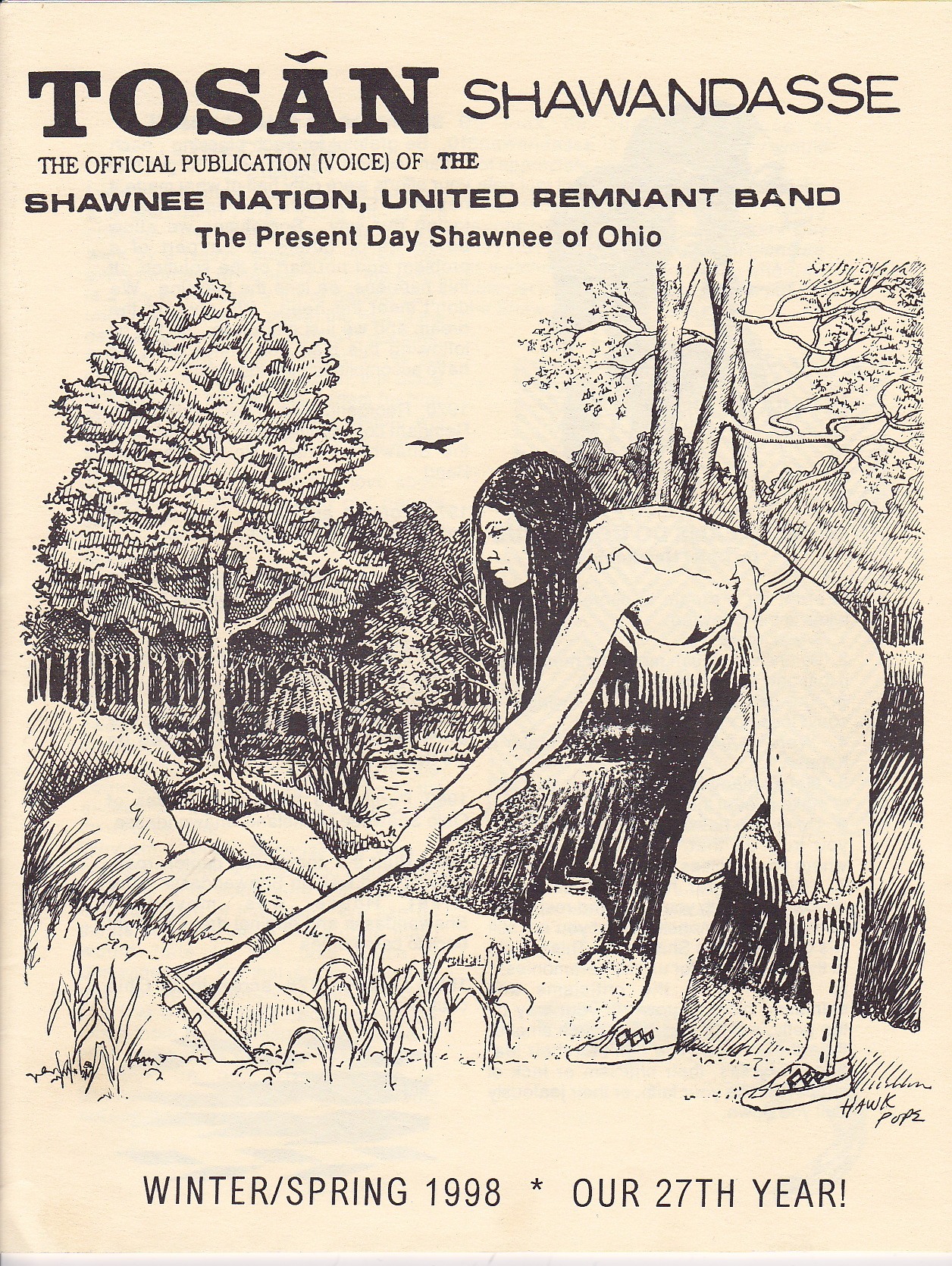
Below is an open article written in 1998 to his People in Tosãn Shawandasse, the official voice of the Shawnee Nation United Remnant Band, beautifully illustrating elements of intent and belief.* What Chief Hawk doesn’t expressly share is the tremendous sacrifice he has borne through his 40+ years as chief since taking on this spiritual responsibility as a young man, given to him by his grandfather.

While directed to the Shawnee People, any of us can take heart and guidance here. His words are truth.

HawkArticle_0001

Some Dreams Do Come True

by Chief Hawk Pope


In order for a dream to come true, all it takes is the following:

– A real need.

– Believing you can meet that need even if that only seems to be a dream.

– The courage to go for it, knowing you could lose.

– Work as hard as it takes to make it happen.

– Get as many of the People as you can to make a team that can do the job.

– Do all you possibly can, knowing that if you truly do that, Creator will take up where your abilities leave off.

– Convey your hopes, dreams, and needs along with your love and respect to Creator and demonstrate that you are still His Children (The Shawnee). This you do in the way He left for us, the ceremonies.

– Rise above the criticisms and stumbling blocks thrown in your way by the petty, evil or just those much smaller than the dream. You can’t let their fear become yours, their criticism or lack of support shake your faith, or their jealousy pull you down.

– Stay the course, no matter what.

– Be grateful for each blessing, each dream come true, and never forget that your efforts were only half of what made it happen. Sometimes we come close to losing our way. Sometimes we allow ourselves or others to be part of a problem and not part of the solution. If this happens, we lose the blessing. We don’t meet the need. We give up the dream and we just plain lose. So far, by following this plan and philosophy, we have accomplished the following:

 — 1970: Reorganization of the people of the Remnant communities and reformation of the Shawnee Nation, United Remnant Band.

— 1974: Formed an interim core Council and moved back to Ohio homeland.

— 1980: Gained State recognition as the descendant Tribe of the historic Shawnee in Ohio.

— 1982: Brought back the ancient ceremonies after 30 years.

— 1985: Constructed our first Great House since historic Lower Shawnee Town on the Scioto.

— 1989: Purchased the first 31 acres of Ohio Shawnee Homeland-Shawandasse.

— 1992: Built the community center, road, electric and well on Shawandasse. The Great House was moved to Shawandasse and original dress brought back to ceremonies.

— 1995: Total of 228 acres in 3 Ohio counties.

******

You are invited by Chief Hawk Pope to visit Shawnee lands located at Zane Shawnee Caverns near Bellefontaine, Ohio. See their website for information on Pow Wows, camping, cave visits and other events and developments on Shawnee lands since 1995.

******

* Reprinting of this open article was used with full permission granted by Chief Hawk Pope.

Categories: cultural interests, Gratitude, Indigenous Rights, Indigenous Wisdom, Sacred Reciprocity | Tags: , , , , , | 7 Comments

Unexpected Developments

Have you ever had a sense that something is bubbling beneath the surface? That you don’t know what it is…but something is getting ready to give birth…to step forward…to unfold? If you focus on it, you recognize there’s an energy building. It’s palpable. And then when it does present itself, you’re taken with the depth of feeling, realizing it’s come through you? If you’re reading my words here, then you’re likely one of those who has experienced this process consciously, perhaps in a variety of forms, and recognized the gift. If you look back in time, you could identify what kickstarted the process.

I’ve defined spiritual travel as any time you step outside the usual parameters you set for yourself to experience something that’s out of your norm—whether you choose it with intent or unseen forces push you. Either way it’s about growth. In Spiritual Travel: Destination or Process? I wrote about it this way:

 …Invisible to the naked eye…are myriad ways to be drawn into the deeper journey that define these potentially uncharted waters…enter aspects that: may have no words or audible sound, cannot be held in your hands, your eye can’t get a bead on, can seem ordinary but aren’t. Yet it produces something akin to a lightning strike that splits the rough outer covering and creates an opening, a probable pathway—and a tangible result. There appears a fork in the road inviting decision…

Breakthrough

Breakthrough
©2001 Carla Woody

On March 10, I returned from Hopi and my first spiritual travel program there, only made possible recently—with much gratitude to Hopi Spirit Keeper friends. From opening to closing circle, there was something greater than any there carrying us all. It felt as though another door had opened, some kind of emphasis marking out the great importance of honoring sacred Indigenous ways—now. If I ever had a doubt about the lifework I’ve chosen it was blown out of the water. Such a thing is bigger than any small-minded worry I’ve ever had. Intent gave evidence throughout our time there and unfolds yet in its effect.

An unanticipated gift stood out particularly: permission from Hopi religious leader Lee Wayne Lomayestewa for entry to Prophecy Rock. Such a privilege is not usually granted to outsiders. We all felt the honor, and I’d invited people to sit in meditation and open to whatever was there for them.

One of the travelers had been on a spiritual journey, involving extensive physical travel as well, since major life transitions in 2012. She indicated to me that, while what follows is deeply personal, it’s universal and gave permission to share. Relationship had become foremost in her awareness and the unexpected time at Prophecy Rock became her personal connections in prophecy. Climbing high, up beyond her comfort zone, to find her meditation spot, three figurative “drawings” forged by nature, on weathered rock, spoke to her: “…of prophecy, unity and stages of living and dying…” She said she could form few words to describe the experience, but “…words and song came forth. The experience is etched in my being.” I heard her song floating on the breeze. I tend to think it entered us all.

Since returning home, the group has communicated what continues to unfold for them. There has been talk about clarity and shifts in perception. Deborah Downs of Sedona, Arizona had to get her fingers in the dirt, along with a creative project that came unbidden. Liz Anderson from Prescott said, “…I have been to the Hopi reservation many times, but I have never had the privilege of seeing the petroglyphs or meeting so many fascinating Hopi people…There is a certain quality of the energy on the mesas that gives one the experience of being on truly sacred ground. I had forgotten how powerful this experience can be until this trip…”

Janet Harvey of Asheville, North Carolina said poetry began to pour through her and shared several. Piki Bread, the expressive poem below strikes me as a message about the beauty of simple actions that sustain us over time. They create meaning in life. She mentioned that the physical shape of the lines as they’re shown seemed significant. I told her it reminded me of the backboards worn in some ceremonies by Hopi dancers.

Piki Bread

For my part, I’ve noticed another level of ease appearing in my writing. It comes out as though waiting for me to take the initiative. With my artwork, an uncontrived process began shortly before our time on Hopi and has amplified since.

Testimony

Testimony
Mixed media on gold leafed canvas
©2014 Carla Woody

In the morning I began to sit in meditation near my easel, a different part of my home than habit for my daily ritual. And placement of images, color and symbolism, have been relayed to me during this time in a way I can’t describe except by sharing what I’ve recently produced. These pieces have taken on depth of meaning introduced from somewhere other than me. I don’t claim ownership.

But perhaps the greatest gift came inadvertently from the Hopi Spirit Keepers themselves and expressed directly to me by the group in our closing circle. My Hopi friends opened their hearts, gave us their trust and spoke unequivocally of the real dangers acting against continuity of their sacred traditions. It was poignant.

This is a time to listen and integrate from those who, on a daily basis through their prayers and actions, hold the sacred threads that weave our deeper values. There are many voices to be heard, not just one. Hearing them lends respect and supports continuance. We who hold sacred witness become better for it. It affects us, too. Certainly it eschews any hint of commercialism but is rather something of deeper service. Somehow I have been graced with holding such a precious container. The group reinforced what I already knew but drove the point home succinctly in a way I couldn’t set their message aside.* The work continues.

************

*Any of us experience doubt, particularly when we’re called to something. It’s only because we’re called that something steps forward to test intent. When internal conflict is resolved, you step through a threshold.

Note: By participating in our spiritual travel programs you support the ongoing existence of Indigenous wisdom traditions in danger of decimation.

Spiritual Travel to Peru, Oct 24-Nov 2, 2014: I have been invited to the Q’ero village of Ccochamocco, a real honor and rare opportunity. Tuitions help support: sponsorship of Hopi Elder Harold Joseph on this journey seeking prayers for his people from Q’ero relations; the new Q’ero Ancestral Culture Center and natural medicine clinic; and Grandmother Flordemayo’s seed saving program.

Spiritual Travel to Mexico, Jan 19-29, 2015: Tuitions help support sponsorship of David Mowa, Hopi medicine man, to share traditions with Maya relations; and the humanitarian healing work of Don Sergio Castro in Chiapas, Mexico. This program in final planning and will be uploaded here shortly.

If you’re interested in my artwork entitled Testimony or others, go here. Twenty percent of profits go to support Native traditions through Kenosis Spirit Keepers, the nonprofit arm of Kenosis.


Categories: Gratitude, Healing, Hopi, Indigenous Wisdom, Spiritual Evolution, Spiritual Travel, Travel Experiences | Tags: , , , , , | Leave a comment

Book Review: Indigenous Message on Water

Indigenous Message on Water

In 2012 a call went out from the coalition of Indigenous leaders of the Indigenous World Forum on Water and Peace (IWFWP) to Native elders, writers, artists, activists—Knowledge Keepers—for poetry, art, chants and prayers on Water, expressions from their own traditions. Over the next several months, submissions poured in, pure harvest from tribes all over the world. The You Tube video below beautifully illustrates the intent to pull together an anthology on this life-giving element that would be called Indigenous Message on Water—and why its needed.

By January last year the editors had begun the process to ready contributions for publication. From June through August 2013 an Indiegogo campaign was opened to pull enough funds together to publish the book, in print and e-book formats, and send copies back to the authors to seed their communities and elsewhere with this important message we all need to hear and hold. They were able to raise $5,000 of their $10,000 goal. I was so glad I was able to support this valuable treatise, even in a small way, having received my copy a few weeks ago.

I am deeply touched by the words and art that leap off the pages from the contributors: Chamoru, Pinay and Maori peoples from the Pacific; Sakhe from Russia; Cree, Tsalagi, Cherokee, Yoeme, Anishinaabe, Lakota, Lipan Apache, Metis, and Gitxan from North America; K’iche’, Kaqchikel, and Q’anjob’al from Guatemala; Maya and Nahuatl from Mexico; Wayuu, Palenque and Kuna from the Caribbean; Uitoto, Okaina and Tikuna from Amazonia; and Kichua, Yanakuna and Mapuche-Huilliche from the Andes.

Spiritual connection and gratitude to Water are ever present in the anthology. It may be used to open community discussions, raise awareness, and as an offering. At the beginning of the book, Juan Sánchez, one of the editors, advises that the passages are meant to be read aloud to the Water; words have the capacity to heal. Grandmother Mona Polacca suggests, “…Once you read them, you may find that you can never escape them, or you may find yourself resisting the narratives in this collection, not wanting to deal with the reality they describe; perhaps it reminds us of our own vulnerability…”

Grief for scarcity, strife and loss of life over water rights is also prevalent in these pages. Forest without Destiny by Judith Santoprieto of Mexico is an example, dedicated to the Indigenous people of Bagua in northern Peru who were senselessly murdered by special forces police during a 2009 protest about natural resources rights.

A crackling is heard in the surroundings

of a forest without destiny,

the first sign of the great uproar;

outside, the bullets:

the rainy season yet to come…

***

We can be reminded to embody the teachings offered.

 Water was our first medicine.

—Gideon MacKay, late Cree Elder, Canada

 ***

We’re called to cup Water

carry it carefully   cradle

within bare hands or ladle

wood to pour resplendence

from ama who makes us

human,  holds us here in

memory brings us back

into ourselves each time

we enter dipping seven

times until we become

who we need to be.

—Allison Hedge Coke, Huron/Cherokee/Cree/Metis, USA

 ***

My oldest brother was 115 years old and died because of his age, not because of illness and this longevity was due to the fact that he used to pray to Water. The Water sang to him. For him, Water was both male and female and, as he practiced meditation, Water rewarded him with a long life.

—Lorenzo Aillapán Cayuleo, (Bird Man), Mapuche Nation, Chile

***

The e-book version is available to treasure and consult. You may go here to download for the minimal cost of $7.00. When you do, you’ll know you are serving Water. The proceeds go to support the gathering of Indigenous leaders, over 60 organizations and other like-intended folks for the Indigenous World Forum on Water and Peace 2014 held September 9-13 in New York that collaboratively seeks to resolve issues for the benefit of all peoples.  Read a 2009 collective statement from the United Nations Permanent Forum on Indigenous Issues about the need for the IWFWP. New information will be posted soon on the IWFWP blog. Go here to subscribe for updates.

Categories: Book Review, Compassionate Communication, Gratitude, Healing, Healthy Living, Indigenous Rights, Indigenous Wisdom | Tags: , , , , , , | Leave a comment

Holy Intent, Invisible Threads

This season is a holy time for many peoples in the world. While multitudes participate fully in—what has become—frenzied materialism, others take a pause or at least strike a balance.

Hopi Ceremonial Calendar by Filmer Kewanyama

Hopi Ceremonial Calendar
by Filmer Kewanyama

Hopi artist friend Filmer Kewanyama says this about December: “The earth’s crust is very fragile. For us, we are supposed to be quiet and reflect on who we are. It is a time for us to be quiet and listen.” This is when storytelling takes place, passing on oral history to the next generation, and the Soyal Ceremony occurs in the kiva, looking to the coming year with great spiritual focus. It’s when the men fashion prayers feathers. Traditionally when Hopi Spirit Keepers have accompanied my groups to Mayalands, they’ve given prayer feathers to those of us holding the center of the journey. The paho, or prayer feather, we each receive is from the roadrunner and meant to protect us as we travel and enter the new year. I wear mine throughout the journey and, upon return home, place each one in a special vessel I keep on my altar.*

This season has become a quiet time for me in the sense that I step back from external activity, a way to remember my own roots, an instilled period of reflection and solitude. And explicitly because there is such space and time for exposure, it’s become heightened with insights, dreams and creative surges for me. Messages come through from the Infinite and that still point inside is given voice.

In that spirit, I’m sharing a dream here that I had early Christmas morning.  I was sponsoring an event, and the person who was to present didn’t show. I knew I needed to step in with an impromptu talk. The audience was getting restless. I thought to speak about the work I believe in: preserving the sanctity of Native traditions to inform the next generations, to bring us back to those core elements that hold the world together. But the words wouldn’t come. How do you express something whose meaning runs so deeply that it can only be felt, that words wouldn’t do justice?

I floundered. Anxiety was showing its face. Just as some of the audience started to collect their coats and leave, Native and non-Native people began to materialize out of the ether to stand on either side of me. Some I knew; others I didn’t. In turn they related the effect, tangible and intangible, that our projects and journeys had on them personally, the importance of continuity toward spiritual grounding, hope, or a wound tended that would otherwise have gone unhealed.

Acknowledge My Relations

Acknowledge My Relations
by Filmer Kewanyama

I came fully awake, feeling resolve to continue holding the vision, even when it seems like few others do, roadblocks appear, or I don’t personally see the ultimate outcome of the intent. For me, these are aspects of true faith realized in this sacred season.

Typically, I don’t remember my dreams. When I do, I know it’s from that invisible realm that retains more wisdom than I do on a daily basis. I would be lying if I said I don’t falter, feel like giving up many times and throwing in the towel. It’s a human condition, especially so when any of us hold a vision that runs counter to the mainstream world, and progress is defying gravity uphill. This is what I sense happens in the kiva: restoring of faith, strengthening of purpose.

True advancements come not from the mainstream but from a collective retaining the holy vision, with understanding how invisible threads may be woven.

That was the prayer feather of my dream Christmas morning that protected me from loss of faith. With renewed intent, I share it here as my own offering—for the circle of life—to guide the next year.

***

Kenosis Spirit Keepers is the nonprofit arm of Kenosis. To learn more about our work, please go here. Your end-of-year donation is tax-deductible and strengthens our mission to preserve Indigenous wisdom for a better world.

The words and artwork of Filmer Kewanyama are used with his full permission. To view a collection of his expressive artwork, go here.

*Most years Entering the Maya Mysteries spiritual travel journeys occur in January.

Categories: cultural interests, Healing, Hopi, Sacred Reciprocity | Tags: , , , , | 5 Comments

Interview with Dianna “Snow Eagle” Henry, Seed Saver

Flordemayo documenting seeds.

Grandmother Flordemayo documenting seeds.
Photo credit: The Path

Grandmother Flordemayo had twice mentioned Dianna “Snow Eagle” Henry to me during my visits to the Seed Temple in Estancia, New Mexico. Each time she lamented, “You just missed her! She was here helping but went back home.”  Home turned out to be Arkansas. When Flordemayo began to establish the Seed Temple, which Kenosis Spirit Keepers helps support, she called Dianna to consult her expertise regarding seed preservation. Dianna has gone back and forth providing service ever since.

The last time I was there, Flordemayo put a book in my hands. Dianna’s coffee table book Whispering Ancestors: The Wisdom of Corn is an illustrated treasure trove of information on Native varieties, some lost to time and then resurrected. In certain ways it takes you back in time by identifying which Native Tribes carried different strains, planting instructions—and hints at the esoteric, ancestral knowledge in the Seed Collective. I was intrigued.

Native Seeds

Native seeds.
Photo Credit: Wisdom of Corn.

Dianna consented to an interview for The Lifepath Dialogues. Below you’ll find the audio recording uploaded to You Tube. She graciously shares how the seed-saving path opened to her, rather unexpectedly as passions sometimes do, and the ways that spiritual knowledge from seeds began to come. One of the many things I appreciate about Dianna is her willingness to follow a path that’s unknown but fueled by intent. She shares it all.

Kenosis Spirit Keepers is pleased to sponsor Grandmother Flordemayo, Dianna Henry and Greg Schoen for events in Phoenix on January 31-February 1, 2014. Greg is also a respected seed saver with many years’ experience and will take us “down the rabbit hole” into the mysticism of seeds. You can read his article about Rainbow Corn in Mother Earth News here.

This Friday night talk and Saturday experiential workshop will directly benefit the Seed Temple’s preservation work. You’re invited to join us and know that—as you are receiving the teachings—you’re also benefiting the wider work of global consciousness.

(Note: The benefit dates mentioned in the recorded interview were changed so that Grandmother Flordemayo could also personally participate, offer her knowledge and prayers.)

Categories: cultural interests, Healthy Living, Indigenous Wisdom, Interview, Sacred Reciprocity, Spiritual Evolution | Tags: , , , , , | Leave a comment

When Hopi Spirits Come to Life: Home Dance at Moenkopi

In July 2009 I was invited by Harold and Char Joseph to Home Dance, the first one in the Hopi village of Moenkopi in 50 years—a very historic event. It’s during this July dance ritual that the Katsina spirits are ushered back to the San Francisco Peaks, the mountain range north of Flagstaff, Arizona, where they live until their return to Hopi in February of each year.*

A friend and I arrived at Moenkopi village outside Tuba City just before dawn. Harold was already leaving home. Moenkopi being Char’s home village, Harold acted as a helper. Normally Harold would have been at Second Mesa’s Shungopavi, already a long time in the kiva, a subterranean chamber reserved for religious rituals, engaged in ceremony in his home village. But this time being quite special he was lending a hand the way relatives do.

The previous night we’d ventured down to the plaza with other family members, carrying chairs, staking out a place in one of several rows already formed. The dirt plaza was long and narrow, enclosed by the original stone homes dating back to the 1870s. I felt like I’d stepped back to another era.

Going Home Shungopavi

Going Home Shungopavi
Oil on canvas
depicting Home Dance.
©2011 Carla Woody

That early morning we sat at the edge of the village with others who had gathered, high on the bluff overlooking the lush cornfields below, a sharp contrast to the red rock cliffs surrounding them. I only discovered later that we actually perched on a kiva. An elder came and asked everyone to move. He slid the wood covering over to reveal its secret and climbed down.

We waited, slightly chilled by the light wind. Glancing around me, some of the people were in special dress, the women in beautiful shawls, and a few young girls wore the traditional hairstyle with fluted buns over each ear. There was a low buzz of conversation and greetings. Everyone waited patiently for the sunlight to hit the cornfields below. A number of pick-up trucks were parked to the side of the fields. In my mind, I converted them to horses. A sound was on the breeze that led me into another time and dimension.

At first it was faint but then it grew, rising up as though from the bowels of the earth. A chant that rose and fell, coming from an area of trees near the field. Those around me went quiet in anticipation, eyes glued, fingers pointing. And finally when the light hit the field just so, Katsinam emerged from the copse forming a single line as they began the slow walk up to the village, carrying cornstalks. It seemed like the line had no end. Finally, all Katsinam came into full view from the woods. They numbered 130, give or take.

As we shifted to our seats at the far end of the plaza, Katsinam poured in one-by-one, forming an ellipsis, continuing the chant, making the small repetitive movements that created the dance, virtually right in front of us. The sound of bells and rattles, strapped to each knee, accompanied each step and joined the drone of their voices. Even though sun now heated the air, I got chicken skin.

They gave cornstalks, a symbol of prosperity, to those watching and gifts of fruit and piki, a paper-thin rolled tortilla made from blue corn. The dancing continued. Then it was time for the first round to end. And the Kachinam left the plaza to be sequestered again. They performed at great sacrifice, foregoing food and water in the blistering sun until much later in the day.

But it was now time for the rest of the village to eat. We returned to the Joseph home and feasted on hominy stew and drank strong coffee. When the phone rang, I’d hear them tell the person on the other end, “Come eat!” One of the family members told me, “This is the Hopi way!” Indeed it was. As people poured through the door, they were directed to grab a plate and ladle a good helping.

The Katsinam were to dance eight times that day. Between dances families and friends gathered at homes, many from out of town it being such a special time. Each time food was shared. We were encouraged to nap in the heat of the day—which I did, in a room full of people that felt like family to me even though it was my first time meeting some of them.

How was it that this was the first Home Dance in Moenkopi in 50 years? Many Hopi people have fallen away from the traditions, and the necessary initiations haven’t occurred to support the ceremonies. Shungopavi is the only village that keeps the complete cycle of religious ceremonies unbroken, the elders staunch.

A strong older woman instigated the 2009 Home Dance. Her son was marrying. She wanted to show off the wedding robes of her son’s bride as part of the ritual. Other brides would be able to do the same. Through her commitment the village re-engaged, others coming from elsewhere to support the ceremony, accounting for the large number of Katsinam, a profound example of what determination can do—and for good cause. Traditions take us back to where we began. For my part, an appreciative outsider greatly stirred by the experience, I hope the Home Dance continues in Moenkopi. At this writing, it’s recurred once. That was in 2011.

***
*A Katsina is a spirit being of the Pueblo Tribes, an invisible natural force that can be called upon to bestow protection and wellbeing for the village. Katsinam is the plural form. In the Hopi tradition there are approximately 400 different Katsinam, each one different and having a separate purpose. For days prior to religious dances, initiated males enter the kiva and undertake long rituals. When they emerge from the kiva to dance, they are no longer who they were when they entered. Instead, they are the embodiment of these powerful spirit beings, dancing in human form, on the earth.
***
I will sponsor Spiritual Travel to Hopi: Sacred Guardians of the World during March 6-9, 2014. This is a rare chance to experience Hopi Spirit Keepers in their homes, hear the ancient stories, visit sacred sites, learn about medicine ways and attend the Night Dances, all that weaves the very identity of the Hopi people as guardians of the world. Only recently is it now possible to be invited to such an experience. It’s only through relationships I’ve developed over a number of years that this program has been born. Join us for this adventure of the spirit! Early registration discount ends November 6. A portion of tuition is tax-deductible to support Kenosis Spirit Keepers’ projects preserving Native traditions.
Categories: cultural interests, Hopi, Indigenous Wisdom, Sacred Reciprocity, Spiritual Travel, Travel Experiences | Tags: , , , , , , , | Leave a comment

Book Review: The Last Report on the Miracles at Little No Horse

The Last Report on the Miracles

In The Last Report on the Miracles at Little No Horse, Louise Erdrich has written a book that transports the reader not only to another time, but also to a field where all could dwell with increased respect and understanding.

Agnes is the main character, an inventive person of strong character who found a way to deal with living in a time when women had few choices—the early 1900s. Timing, opportunity and a desire to leave her old situation behind allowed her to step into the identity of Father Damien Modeste, a priest who was expected shortly at a remote Ojibwe reservation in North Dakota called Little No Horse. The narrative takes us over nearly a century of what it was like to have a foot planted in both worldsa woman living as a manministering in one culture yet not intruding with another, developing roots and living with a sporadic fear of one day being found out. Would everything Father Damien built in his beloved community, all trust and love given to him, be discarded if Agnes was discovered?

The telling of this chronicle comes about through the investigation of one Sister Leopolda who is up for sainthood. When the church’s emissary comes to interview Father Damien, we have the opportunity to witness a life well lived, intricately woven and deeply connected to community. Not the life of Sister Leopolda but that of Father Damien.

Equally important is the telling of the Obijwe traditions, the sometimes funny and bizarre antics of medicine man Nanapush and the difficulties often endured. Peppered throughout are enormous gems of wisdom. A couple of examples are shown here.

…even careful plans cannot accommodate or foresee all the tricks of creation…

…We see the seasons pass, the moons fatten and go dark, infants grow to old men, but this is not time. We see the water strike against the shore and with each wave we say a moment has passed, but this is not time. Inside, we feel our strength go from a baby’s weakness to a youth’s strength to a man’s endurance to the weakness of a baby again, but this is not time, either, nor are your whiteman’s clocks and bells, nor the sun rising and the sun going down. These things are not time… (Nanapush)

It’s also punctuated with Father Damien’s frequent, unanswered notes to the Pope such as this one.

Pope!

Perhaps we are no more than spores on the breath of God, perhaps our life is just one exhalation. One breath. If God pauses just a moment to ruminate before taking in a new breath, we see. In that calm cessation, we see. All I’ve ever wanted to do is see.

Don’t bother with a reply.

Modeste

The characters in this novel are so rich and their stories so resonant, there’s a part of me that secretly hopes the writings are based on fact. They have an underlying inherent truth. Life is indeed layers of complexity, with all its attendant emotions. Here it’s delivered to us through Agnes and Father Damien, their voices intermingled. This book is much more than entertainment, and it’s one of my all-time favorites.

Available on Amazon and retail bookstores.

Categories: Book Review, cultural interests, Indigenous Rights, Indigenous Wisdom | Tags: , , , , | Leave a comment

Seed Intelligence: Indigenous Perspectives and Our Collective Birthright

In October 2010, Flordemayo was in Los Angeles attending a conference. At break she returned to her room on the 23rd floor. Before lying down to rest her eyes, she noticed an emerald green glow on the wall. When she opened them again the light had taken up the entire wall and a vision unfolded. “There was a panoramic landscape and everything was emerald,” she said. “It was so beautiful that I said to myself, ‘I’m going into this light.’ I have absolute memory of walking in a field dialoguing with everything. I noticed a mountain to my right. Then everything began to change! At the top, it split and there was movement like an avalanche! The forest and everything in it came tumbling down—trees, animals, stones, water. It crossed the road below and I saw that all domestic life was being swept away! I thought, ‘I have to get to my cornfield!’ I was praying and running as fast as I could, and then I’m grabbing the yellow corn, the blue, the red, the black…and then I grabbed all the rainbow corn I could grab! I bundled all the corn I could carry up in my long skirt. But I couldn’t run fast enough! I heard a voice from above, ‘Flordemayo! What are you doing? The military is coming!’ I answered in a cry to the Universe, ‘It just doesn’t matter anymore!’ Then I was standing in the hotel room again facing the wall. The emerald light was gone. I had tears in my eyes. I fell back on my bed. I was devastated.”
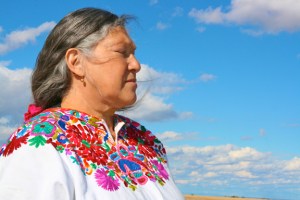
Flordemayo

Grandmother Flordemayo
Photo credit: Linda Rettinger

As a young child, Flordemayo was recognized as a seer. By the age of four, she had already begun her training as a curandera espiritu, a healer through divine spirit, a gift inherited through long family lineage, originating from the Maya highlands of Central America. She is a member of the International Council of 13 Indigenous Grandmothers, standing for peace and healing of the Mother Earth. When messages come strongly, Flordemayo knows to answer them—no matter the obstacles.

What is the timeliness of this vision?

Apab’yan Tew is an Ajq’ij, a Day Keeper, and spiritual guide of the sacred K’iche Maya tradition from the village of Nawalja’ in Sololá of the Guatemalan highlands. His ceremonial work most often takes place in caves, engaging with resident energies of the natural site and timing of the Tzolkin calendar in conjunction with needs of communities or individuals. Like Flordemayo, his gifts evolved from childhood until he ultimately answered the call through a series of difficult shamanic challenges.

Apab'yan Tew

Apab’yan Tew
Photo source: Apab’yan Tew

Apab’yan elaborates on the Maya worldview: “We cannot be who we must be without the land. Another principle is that the body we have is not really ours. It is lent from the Mother Earth herself. So if you create any kind of danger to your body, you are also hurting the Mother Earth. What the Earth produces and what we produce is part of the same cycle, the same system. We are not separated from the Earth—and the Earth is not to be thought of as just another provider of goods. The term that is used in the West is ‘natural resources’ as something to be taken, something to be transformed. For us, we don’t use this term. We use the term ‘elements of life.’ It is our life! It is not a resource.”

In Indigenous traditions, every aspect of life is integrated and sacred. This Maya spiritual leader is quite clear that to surpass a cycle creates imbalance. Nothing should be moved from its place in the Universe. His people think of the seed as a living feminine entity, not a commodity. There is a proper way to carry her, to talk to her, the Sky and the field in the act of sowing according to specific timing. This in itself is a ceremony, integration of a flow that already exists and must not be taken from those like himself who hold these ways close.

There are those who seek to eradicate the sacred ways.

Apab’yan talks about the Maya ways of respect: “It is our purpose not to take more than we can give back. But it is also our purpose not to change. We must not touch what is not ours. It is not ours from the beginning. It is ours to have a dialogue. The seeds talk to us. We have five seeds. Only one of the five is for us. One is for the Sky. One is for the Earth. One is for the brothers in the fields. Maybe there’s a crow that’s going to come. The last one is for anybody who needs it. In my harvesting, maybe I’ll have some extra seeds to give to someone or sell them. There’s no harvesting for commercial purposes. But we have extra if someone needs it. We are Corn Beings. So we must not even play with the seeds.”

He believes there is no current problem with GMO seed infiltration in the high altitude area of his village: “You don’t sell milk to a cow!” For the Guatemalan highlands, there’s not enough room for the politics of Monsanto. What the West calls “organic” these Maya farmers have been doing for eons—and the best selection has long ago been made. However, he sees a danger as any of his people become more influenced, perhaps by emigrating and then returning home, to set aside their ancient ways of living.

That same protection isn’t available to Native and heritage farmers in the US. Five years ago I sat in a conference session and heard a Zuni man sadly express the fear he held: the real possibility of GM seeds blowing into the fields that he and his ancestors had planted with their pure Native strain for hundreds of years. It was disheartening and outrageous.

If the spirits of Earth and Sky are no different than the seeds they sow, the food they eat, what their bodies are made of…then to tamper with any part is an outright act against religious freedom and quality of life, rights the US constitution is supposed to uphold. For giant agribusinesses to also attempt to spread their seed where people have few rights equates to preying upon those who have a voice but are ignored. When spiritual tradition falls apart, grounding dissolves; detrimental influences make additional in-roads; suffering takes over—a process proven over history. Spiritual pride is lost; ethnic groups are additionally marginalized.

A grassroots movement has sprung up.

Learn About GMOsPeople are starting to come together, much as in past times of threat or needed change. Coalitions are appearing like GMO-Free Prescott, a small, volunteer-run nonprofit organization in Prescott, Arizona specifically formed to educate and support everyone’s right to choose food and products that have not been genetically modified. Founder Shea Richland states, “I got involved due to health issues when I was leaving ‘no stone unturned’ to find answers. The more I learned, the more concerned I became. When the documentary Thrive was being shown in our area, I felt it was an opportune time to do more. So, GMO-Free Prescott was born. If people were walking what the Native people teach, then our organization wouldn’t be necessary.”

Winona LaDuke, an Anishinaabekwe (Ojibwe) enrolled member of the Mississippi Band Anishinaabeg, is known as an environmental activist. She is the Executive Director of Honor the Earth, where she works on a national level to advocate, raise public support and create funding for frontline Native environmental groups. She lives and works on the White Earth Reservation. Her organization offers a number of naturally derived products that may be found via Native Harvest online to help fund the White Earth Land Recovery Project.

Winona LaDuke Source: Native Harvest

Winona LaDuke
Source: Native Harvest

She shares this: “When I was a young woman, my father would listen to me patiently, with great compassion, as I explained to him the many environmental issues facing our community and the complexities of the world. His name was Sun Bear, or Vincent LaDuke. He used to tell me, ‘Winona, you are a smart young woman, but I don’t want to hear your philosophy unless you can grow corn.’

I remembered this for many years but was not as smart as he thought. It took me until the turn of the millennium to become a corn grower. I thought about this often and wondered about the corn varieties my ancestors in northern Minnesota would have grown. I began a quest, one of many. The first corn that came to me was a Bear Island Flint corn, eight to twelve inch, multicolored cobs. The seeds were gifted from Ricardo Salvador, then a professor at Iowa State University. He had found them in a seed bank. The corn came from an island in the middle of Leech Lake Reservation, where I later learned, after many interviews and much research, that our people often grew corn on islands, away from predators, in micro-climates surrounded by water. Ingenious. We began to grow. Then, I moved onto Manitoba White Flint, the northernmost varieties of the Ojibwe, grown about 100 miles north of Winnipeg.”

Winona notes the importance of growing Native seeds and seed saving: “Never a crop failure after all these years with this corn! It is hearty (with) twice the protein and half the calories of market corn. And it is resilient. (Through) frost, drought and high winds, it stays. We were the northernmost corn growers in the world. And yet, we had lost much of our corn and our seeds. So, we have grown that corn now for a decade. Again…resilient. Monsanto’s crops failed in 2012, but ours did not. We are grateful. That was the beginning. Today, we are growing an 800-year-old squash, found in an archeological dig in Wisconsin. And we are growing many other varieties. It is our hope to create a northern Anishinaabe seed bank.”

The vision that Flordemayo received was a strong message coming from the Creator to uphold the welfare of our interconnections. As she accepted what seemed like a monumental task, things quickly began to fall in place—as it so often does when a vision is true. Exactly the funds required to purchase the forty acres of land that came available near her home in Estancia, New Mexico appeared. She established the Seed Temple as a volunteer-run project under her nonprofit organization, The Path. Smaller donations came to excavate the underground seed vault, construct the classroom building that covers it, and to create its accompanying medicine circle and fire temple. Flordemayo said, “You can’t have plants without water. We need a place to go and pray…to hold the spirits of water and plants in prayer.”

Rainbow Corn

Rainbow Corn
Photo: Greg Schoen

Local volunteers and those from some distances come regularly to continue building and advise. Greg Schoen is one of them. He’s impassioned about seed preservation: “Crops are being stripped and ‘dumbed down,’ the diversity bred out of them. When we do this to the corn, we do this to ourselves.” He got his start as a seed saver in the mid-1980s receiving his original “Glass Gem” jewel-like kernels from Carl L. Barnes, a mixed blood man of Cherokee/Irish/Scots ancestry now in his eighties living near Liberal, Kansas. Over the years, Greg received other Native varieties from Carl, planted them himself and gifted them to such organizations as Native Seeds/SEARCH in Tucson, Arizona.

“I think of corn as holding a knowledge, like a recordkeeper. Sometimes when Carl would grow corn in his fields, Native strains that had gone extinct would re-emerge. When Native people here lost the corn they carried, it’s like they lost the central point that anchored them to the land, like they lost their language. So, when Carl would reintroduce their ancestral corn to them, they would light up. It would be like you were wandering in the desert and your ancient scrolls were returned to you!”

Greg freely gifts baggies of “Glass Gem” seeds to anyone who wants them. In the coming year he will plant at the Sufi community near Silver City, New Mexico where he now lives. When asked what direction the Seed Temple would take, he said, “We’re starting to provide educational support to seed savers. There will also be a ‘seed lending library.’ Individuals can take portions of the seed stock of one of more items from the seed bank, with the agreement that they will grow out the seed according to proper growing practices, and return a portion of the seed produced to the seed bank. Those are just some of our plans.”

Flordemayo affirmed Greg’s statement and added, “The seed has a spirit, but it doesn’t have a voice. We are giving the seeds a voice! We are welcoming Native and heritage seeds from growers. The only restriction is that the seeds are organically grown; and we know where they came from and who is growing them. So we need to have documentation in receiving them.”

Kenosis Spirit Keepers is the volunteer-run nonprofit I founded to help preserve Indigenous wisdom traditions. We see the Native seed issue as an integral aspect of Indigenous spiritual traditions and are helping to support the Seed Temple. More is still to be done in the way of construction and obtaining all things necessary to start up and maintain. One way Flordemayo plans to help fund the project is through classes in the growing and use of medicinal herbs, sacred bathing, and vision and dream work. She has turned the Hogan, located next to the seed vault, into the Temple of the Golden Child, which will be used for this purpose.

More and more independent seed saving operations are being established in pockets around the globe. Greg Schoen continues to quietly do what he can to preserve our heritage by sharing his passion, experiences and seeds with others on a similar track. Shea Richland believes so strongly in our birthright for health and well-being that she reluctantly stepped into the public eye to form GMO-Free Prescott and educate regarding our choices. Winona LaDuke works at the national level through organized environmental activism. Flordemayo answered a vision. Apab’yan Tew performs ceremonies for the well-being of the planet in the dark recesses of caves.

It takes all of us, each bringing our own way, in the face of such forces that would act against us, to support and maintain our collective birthright—and succeed.

***

This article is being incorporated into the Anishinaabekwe (Ojibwe) Farming Curriculum that will be part of the Tribal Community Colleges in the region where Honor the Earth Foundation is active.

***

Kenosis Spirit Keepers is sponsoring Grandmother Flordemayo and seed savers Greg Schoen and Dianna Henry for events on January 31-February 1, 2014 in Phoenix, Arizona. The proceeds from ticket sales go to support the seed saving project founded by Grandmother Flordemayo. For information and to purchase tickets, please go here.

***

Sources:

Interviews with Flordemayo, October 17, 2012 and February 1, 2013.

Interviews with Greg Schoen, October 17, 2012 and February 8, 2013.

Interview with Apab’yan Tew, November 6, 2012.

Interview with Winona LaDuke, November 27, 2012.

Interviews with Shea Richland, November 9, 2012 and January 2, 2013.

Categories: cultural interests, Indigenous Rights, Indigenous Wisdom, Sacred Reciprocity, Uncategorized | Tags: , , , , | 4 Comments

Blog at WordPress.com.