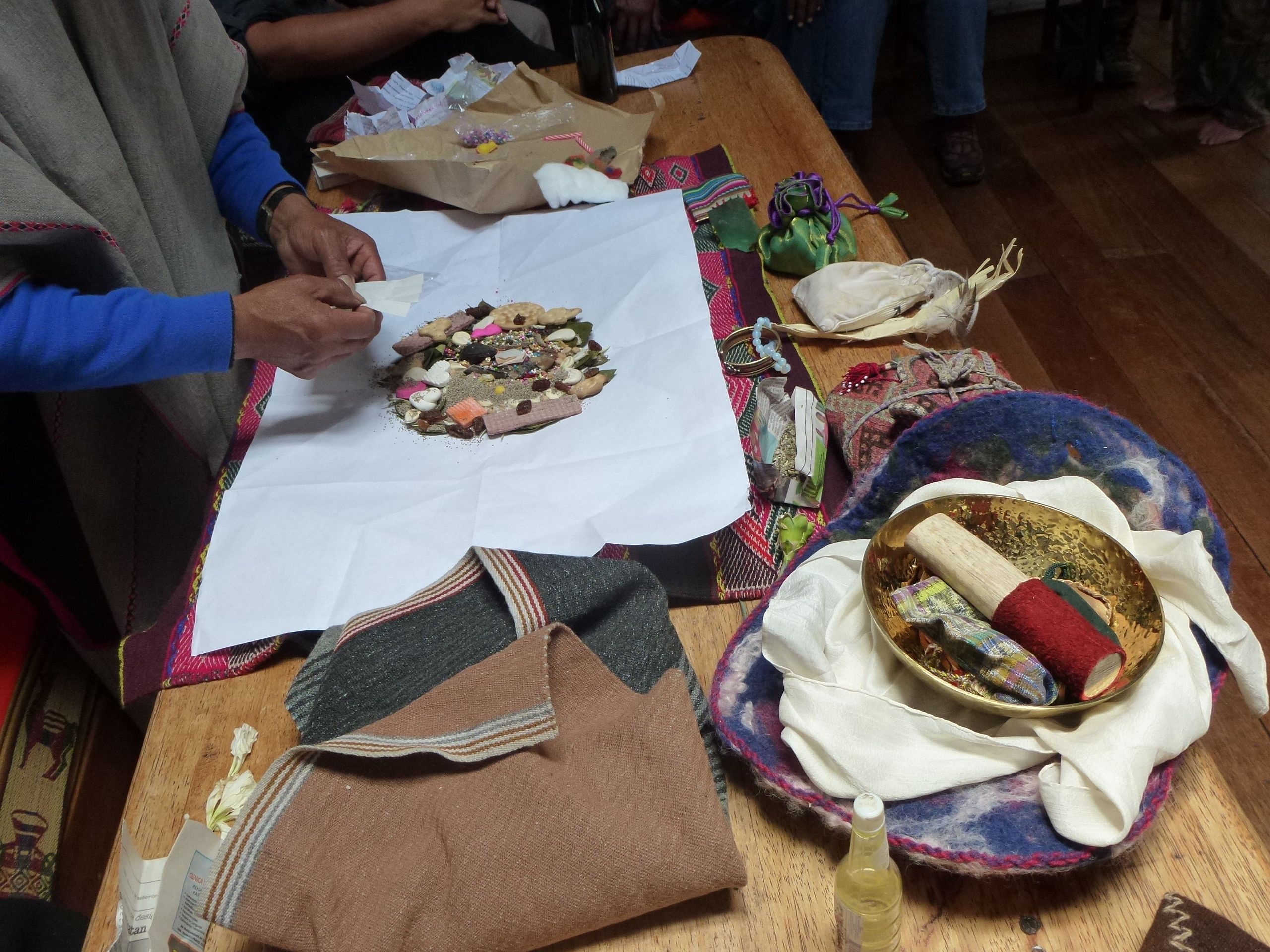
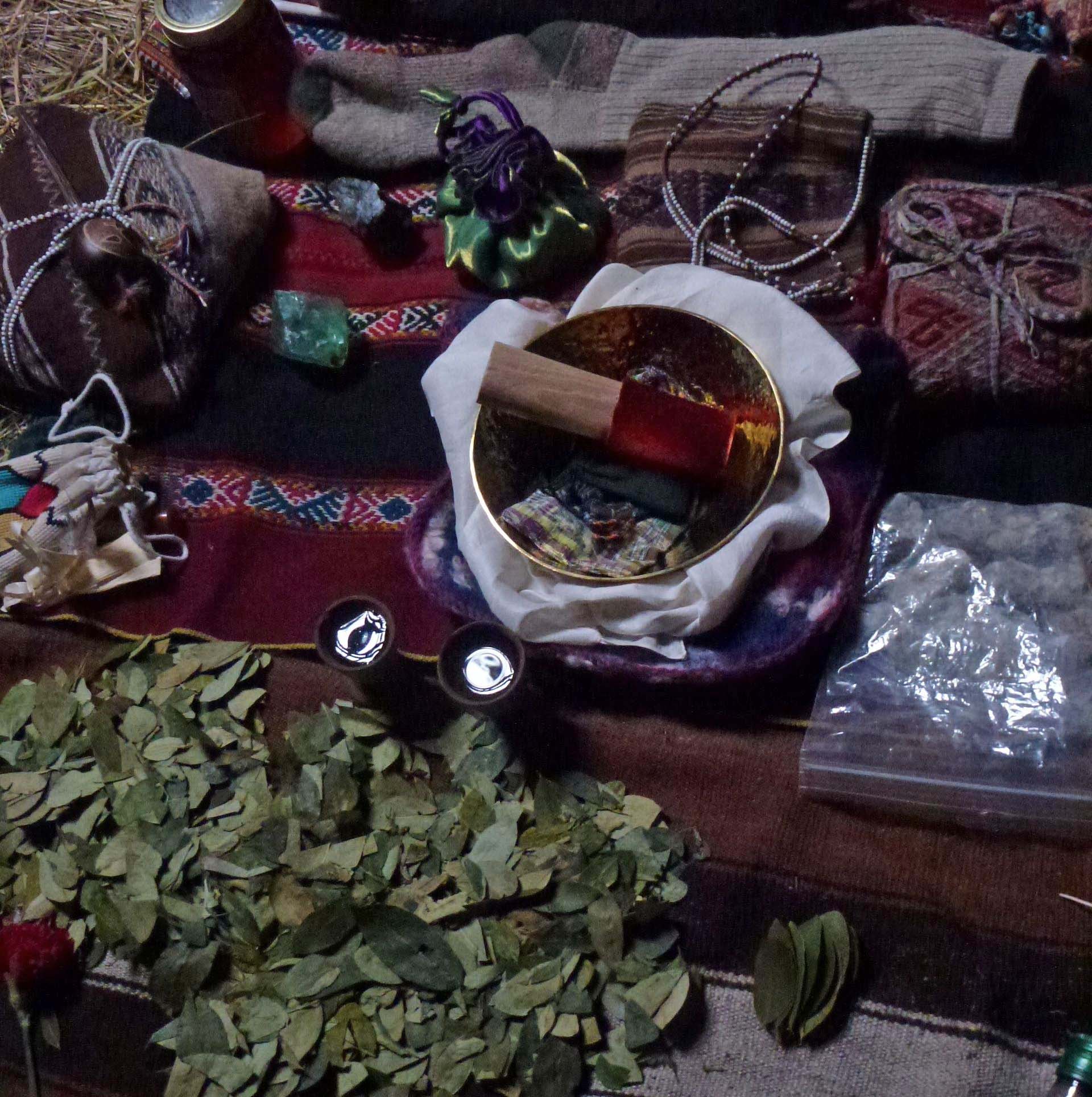
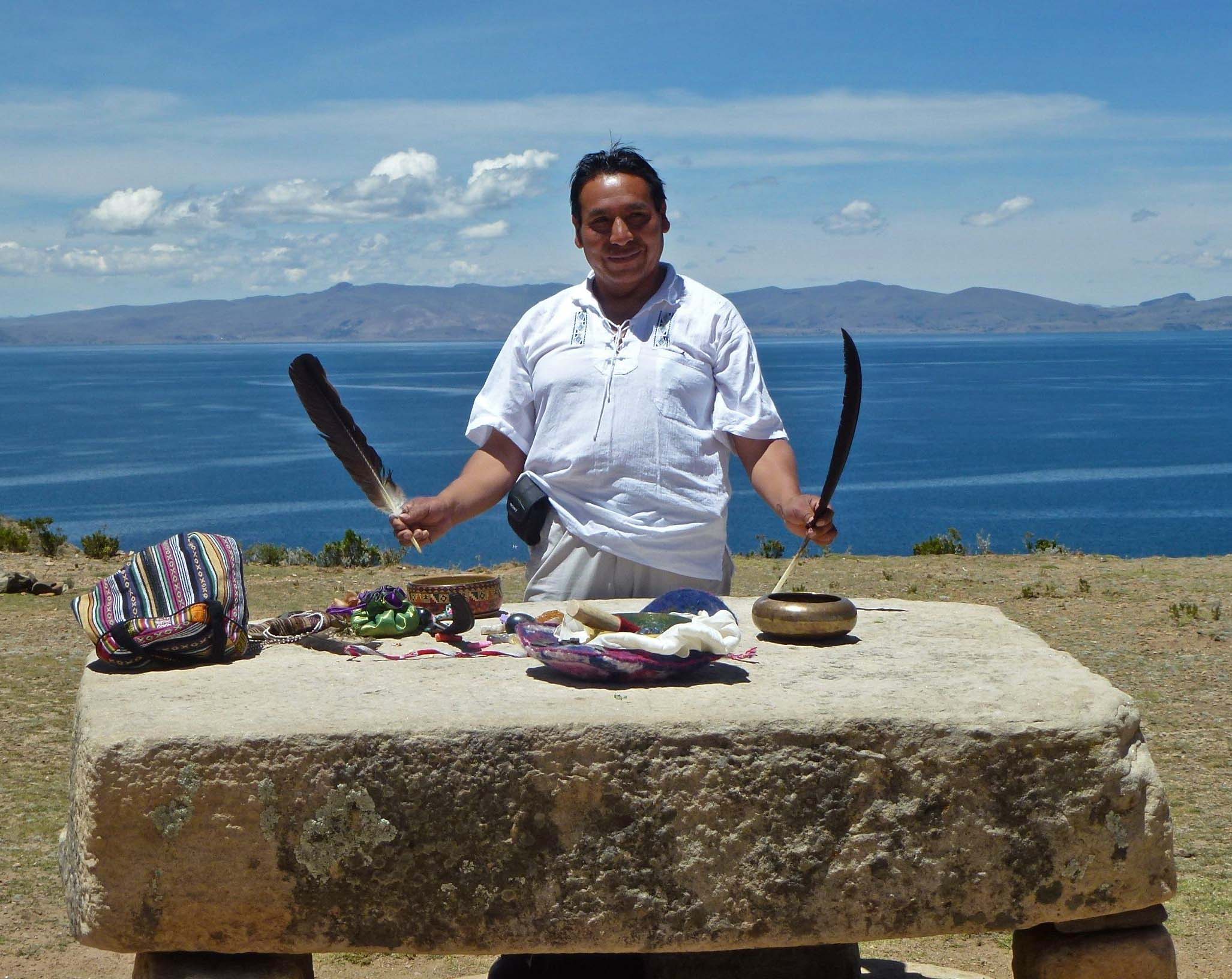
Video: Coyote Medicine with Lewis Mehl-Madrona, MD, PhD

In January 2015 Kenosis Spirit Keepers was pleased to collaborate with Johns Hopkins Center for American Indian Health to bring Lewis Mehl-Madrona, MD, PhD, to Baltimore to speak on Coyote Medicine: Lessons in Native American Healing. Dr. Mehl-Madrona, Lakota-Cherokee author of the Coyote Trilogy, shared about historical trauma, lessons about community healing and resilience that come from Native communities.

We were able to video his presentation and offer it to you here. Enjoy…

Categories: cultural interests, Healthy Living, Indigenous Wisdom | Tags: , , | 1 Comment

Review – Sleep Paralysis: A Guide to Hypnagogic Visions & Visitors in the Night

Sleep Paralysis by Ryan Hurd

Imagine this … You wake up in the dead of night. You had settled yourself onto a rough pallet in this rustic adobe room some hours before and drifted off to sleep, feeling the sharp contrast between the cold on your face and the warmth of your body in your sleeping bag.

You’re alone.

But suddenly you’re not alone. A few feet away, the door to the outside flies open and a Quechua man strides in. He crosses in front of your bed, glancing over at you and peeks into the rudimentary bathroom just beyond. Then he turns around and strides out.

About that time, you glance across at the window and see several Quechua faces staring in at you. Strangely, you can see their features clearly in the glow of a light—even though they should have been backlit by the full moon.

That’s when you realize you’re levitating slightly…and can’t move. Your body is paralyzed, hanging in space. You’re terrified. You attempt to scream and nothing emerges. But you can feel the sound building in your throat trying to burst out.

Your eyes dart frantically around the room. There’s a diaphanous figure over in the corner that begins to float toward you. Your heart pounds as you struggle inside your paralysis.

Then the figure sits beside you. You feel a loving energy projected toward you. All your fear disappears.

You awake the next morning refreshed…with every detail of the last night’s occurrence emblazoned in your mind.

This is not a story I invented. It happened to me in a remote site in the Andes—another strange event along a string of others that were similar in the mechanics. When they occurred, there were always other-dimensional aspects for which I had no explanation.

The only thing I could isolate that was different from other experiences I’ve had was the paralytic nature, and this particular type had only thus far happened when I’d been away from home, usually during time set aside for a spiritual activity.

I devoted part of my book Standing Stark to paranormal activity in my own spiritual evolution, not to titillate but to offer readers knowledge toward what may occur during the process in the way of energy, visions, physical sensations and more. Some deeply meaningful, others not so much. There’s little in spiritual literature that addresses these things.

Somewhere along the line, I heard the term sleep paralysis and began to wonder if there was an explanation for my experiences. So when Ryan Hurd’s book came to my attention I had to read it.

Early into his book, there’s a chapter on personality characteristics of life-long sufferers. Some of those he lists pertain to me. Others don’t at all. He goes into various components of the SP (sleep paralysis) experience. Again, there are some common aspects to mine.

He links SP to lucid dreaming, hypnagogic visions and core beliefs. It also may be one symptom of spiritual emergency, a condition validated in the DSM IV, the diagnostic manual for the American Psychiatric Association, that may occur when people are undergoing deep spiritual questioning or other significant life transitions that create chaos. Stan Grof and the late Christina Grof, known for their work in holotropic breathwork, spearheaded research in this area in the 1980s and were central in providing a spiritual emergency network for those who needed support during such a crisis.

There’s a chapter on what Hurd calls The Stranger, meaning the spirit-type figure that appears in “about 14-18% of isolated SP cases” with details on types of experiences. I’ve experienced most of them, some without the SP component in a fully awake state in broad daylight. Much of the information is addressed in relation to what answers scientific and psychological studies can give for something that occurs across cultures and stretches way back in history. It’s particularly prevalent in Indigenous cultures that value dreaming, parallel worlds and the life instruction that can come as a result, as well as those who inhabit places that have strong geomagnetic characteristics.

Hurd offers practical ways to deal with SP and apparitions—and gain self-mastery in the process. These include: grounding yourself, diet, lucid dreaming and out-of-body practices, even ways to trigger SP if you’re so inclined.

This book doesn’t answer everything having to do with the events in my own life, but it’s certainly a good start, guidance always being welcome. I recommend this book certainly if you’re undergoing anything described in this review, or for anyone who is curious.

Available in print or e-book on Amazon.

Categories: Book Review, Personal Growth, Spiritual Evolution | Tags: , , | 2 Comments

Release

Stopped short. Pain out of nowhere…and it recurred over and over with increasing frequency and intensity. It was a mystery. I hadn’t hurt myself in any way that would warrant it. I couldn’t even track what movement caused it. But the laser-like sensations zeroed in on my trunk, and the points shifted inexplicably, as if it wanted to remain elusive. It literally brought me up sharp, halting motion.

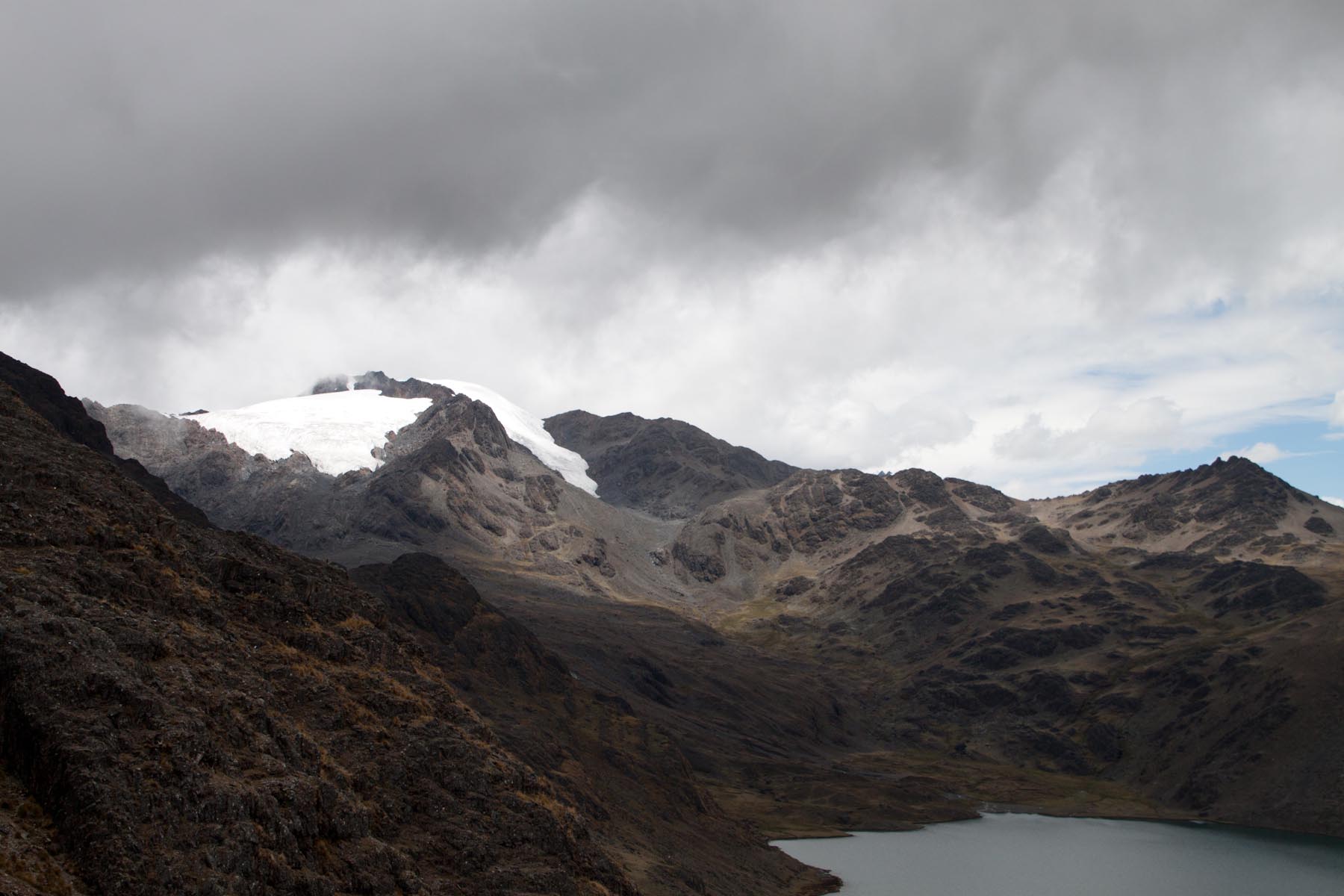
I began to have real concern, particularly on how such transient pain, consistent only in its constant appearance, would affect my ability to be fully present. An important journey was coming up—my Heart of the Andes program in late October. Those 2014 travels involved riding a horse and hiking at elevations up to 16,000 feet on our way to the Q’ero village of Ccochamocco.

Arrival in Ccochamocco

Arrival in Ccochamocco in late October 2014.
Photo credit: Sage Garrett.

By that time, I had already attempted to address the issues in ways I thought would work to loosen things up: Swedish massage, deep tissue massage, network chiropractic, regular chiropractic, energy work. All gave temporary relief but not what was needed.

I’ve been a spiritual mentor and practitioner of holistic health for over 20 years. I knew that, more than likely, this physical challenge I was dealing with had a strong, integral mind-body-spirit component.

I remembered back to the mid-90s when a man came to me with severe pain originating in his neck and radiating down one arm. He told me it was so severe he’d gladly cut his arm off to get rid of it. That’s pretty severe. He’d been medically diagnosed with osteoarthritis. The doc told him there was nothing he could do about it.

But I was listening to his language as he spoke about the progression of the pain and asked him: What was going on in your life when you first noticed discomfort? He’d identified a time nine months prior. He thought about it and said with surprise: It was the break-up of my relationship, and I had no control over it! I then guided him through processes to resolve any lingering grief, and then forgiveness. His pain disappeared entirely. It happened in one session.*

During the processes we used, he also realized he’d been conflicted about issues within the old relationship that resolved during our work. I followed him for about a year after that. The only time he’d had any slight recurrence of pain was when he wasn’t being true to himself, which he adjusted. The body has a wonderful way of giving us signals to those things we attempt to push aside or are unaware of in the first place. Hence, we’re supported in our spiritual development this way if we pay attention.

I knew to ask myself these questions and did so. Indeed, I identified an exact point a number of months prior when—out of nowhere—something occurred that went against my values and caused a foundational break for me. Isn’t it interesting how the body can mirror…and what better place to reflect such a thing than the first chakra region, that of foundation?

The truth is: This was an area of my life I’d been uncomfortable with for quite a while. I just didn’t want to look at it. I was forced into it through the circumstances. It had to do with loyalties and impeccability. Qualities I hold highly. But I finally had to answer a question a few folks had directed to me in the last years: Why do you maintain such loyalties when it’s really not beneficial?

I began to do the self-work I knew needed to be done, and over the next couple of months lost the emotional charge to the event that instigated this deep work. In fact, I became grateful for the incident. I experienced relief and so much more alignment. I felt some slight physical discomfort during my Peru program that dissipated entirely over the course of the journey.

But then I returned home.

I address re-entry with the folks on my spiritual travel programs, counseling them how we’ve been in a beautiful, expansive cocoon, an altered state really. It’s necessary to create such a space so that such deep learnings can enter and gain a heart-hold. When we return home though, things at home haven’t changed even though we have. It’s a time of integration and realigning those things hanging out there not fully addressed.

There was that pain again right on cue.

I finally asked my massage therapist, Rhonda Hamilton, if she had any ideas. She’s well plugged into the alternative healing community in our area. She recommended I make an appointment with Ruth Backway, a physical therapist in town who has an excellent reputation. I called for an appointment and was told by the receptionist that she had a long waiting list. But through some miracle, Ruth called me back and got me in within a few days.

I was not in good shape when I showed up at the end of her workday. This woman knows what she’s doing. And my body responded readily as though it had been poised for release. When I left session that day I’d say I was about 80% better. Over the next few weeks I saw her, I vastly improved to the point of complete release.

Release is the operative word and state here. Unbeknownst to me, my entire trunk was twisted to the left. Bizarre. How do such things happen when nothing to cause it occurred? She directed her work on the fascia in that area of my body, the slippery membrane that holds organs and muscles in place. Her approach was painless, a gentle holding until the fascia let go….as though all it wanted was acknowledgement. Isn’t that what we all want?

Ruth had questioned me closely on any accidents I may have had over the years. The only one of any significance I could remember was relatively minor when I was 18. But it was the one I mentioned. In my own practice I always pay attention to what is mentioned, even if it’s not the most obvious. We carry our own wisdom.

Ruth had me recall exactly what happened… and I remembered even the angle of impact…which it turns out was mirrored in my body in the present issue. The question she in turn asked me to consider: Why is this coming up all these years later? We’re talking 40+ years after the fact, especially with such force, when there was no visible injury or emotional trauma at the time. An old pattern stepping forward perhaps?

Why am I telling you all this? Sometimes things hold on…or may have gone underground but affect us in ways we don’t discern…for years. Sometimes there’s a conflict, generating an attempt to go two ways at once. It stops us in our tracks. Sometimes these aspects look for an avenue of recognition, maybe through related issues or correct timing. They become exacerbated.

Any mind-body-spirit residue must be fully identified and released in order to move through the next threshold. When it’s something deep, we can’t address it fully ourselves—even if we have all the tools—and it takes guidance outside ourselves, someone who knows what they’re doing and can see the forest for the trees…and the way out.

With Maya spiritual leaders Don Xun Calixto (l) and Apab'yan Tew (r) in January 2015.

With Maya spiritual leaders Don Xun Calixto (l) and Apab’yan Tew (r) in January 2015.

I am so glad I did. The momentum through the threshold is palpable.

*********

*To read an article originally published in Anchor Point Journal on The Effect of NLP on Physical Pain and Trauma relating the case history in this post, go here.
Categories: Gratitude, Healing, Healthy Living, Spiritual Evolution | Tags: , , , , , | Leave a comment

Book Review – To the Field of Stars by Kevin A. Codd

To the Field of Stars

In his introduction the author begins with: It may well come to pass at a certain point in the course of a life that a person hears of stars dancing in a field at night…I am about to share here a story about stars at dance…

And he immediately had me hooked because I’ve learned over a lifetime to answer a call, never regretting it. I’ve seen stars shining from a high altitude lagoon at the base of Apu Ausangate, a sacred mountain in the Cusco Region of Peru, when none were overhead. I’ve felt waters enter me as I made an offering at one of St. Brigid’s Holy Wells in Ireland. I’ve experienced a transmission through the gaze of Santa Marta after the religious festival of San Sebastián in the highland Maya village of San Juan Chamula. So I believe in such things.

Kevin Codd is a priest. Don’t let that deter you if you’re not Catholic. I’m not. Or let the trappings surrounding the Camino de Santiago stop you, whether it’s a passing interest or a real pull to go. As Codd describes in this book, the 500-mile pilgrimage to Santiago de Compostela is so much more than its religious history. It’s where you discover yourself and what else you’re connected to and how. With centuries of tradition, so many feet covering the same path, the Way to a place, which translates to mean field of stars, is an undertaking to do so.

Codd tells us why through his own experience at age fifty on his first Camino. He is quite generous in his descriptions. As much as I read the book as a spiritual guide, it also serves as a practical one. He walked the Camino Francés.* I’m walking the Camino Francés in May. I appreciate his descriptions of the villages, refugios and more hidden places to visit I might otherwise miss.** He warns about being competitive and the blisters it can get you. But he also tells you how to take care of the blisters and how to prepare in ways he didn’t. Codd openly wrote about his own emotional and mental struggles in the course of the journey. His honesty was compelling because I know I’ll have my own.

I’ve read or perused other books on the Camino as I prepare for my own journey. This one remains my favorite. Available on Amazon and elsewhere in print or e-book.

◆◆◆

*There are many Camino routes that take you to Santiago de Compostela. The Camino Francés begins in the French village of Saint-Jean-Pied-de-Port in the Pyrenees and crosses into northern Spain.

**Refugios are specially run dorms for pilgrims walking the Camino.

Categories: Book Review, Spiritual Evolution, Spiritual Travel | Tags: , , , , | 1 Comment

Pilgrimage

Pilgrimage infers travel, a journey undertaken with intent—not as a lark, although fun can be a part of it. Sometimes the mission is known ahead. Or it’s discovered along the way. Just as true, it may only be in hindsight, a lengthy time passed from the conclusion, that all comes into focus. Ah, there’s the reason I went…

One thing is certain. It’s a passage made with holy purpose, and you must leave the homeland in order for the pilgrimage to occur. I’m using the word ‘holy’ for a reason. It’s a term people usually back away from because of its connotations, often for the same reasons ‘pilgrimage’ is given wide berth. Here I’m using both for common purpose, giving them due because they take us to a place we normally don’t dwell.

To undertake a pilgrimage, your soul must come through, reaching out from that core level. It’s a call to engage, go deeper. It’s a yearning to venture into the unknown. Some conclusion is sought. It’s time to step beyond a threshold, out of the status quo.

Your soul is offering the invitation. But it’s your everyday self that has to accept it at some level because…

 You’re offering yourself up to a foreign land…

Little is likely to be what you’re used to…

There’s certain to be physical, emotional or mental discomfort—maybe all three!

And it’s through such radical departure that you discover what you’re made of—sometimes quite the surprise. As a result, you’re enlivened. Your constructs are stretched. You’re taken beyond your limits. Your new world emerges.

Sometimes folks attempt to fool themselves into it by saying such things as:

 I’m expected to do it.

I’m here to support my spouse…friend…(fill in the blank).

That’s a place I always wanted to visit.

 Whatever it takes to get you there is fine. In the end, there will be certain recognition for most:

 This is spiritual travel. And it’s pure medicine.

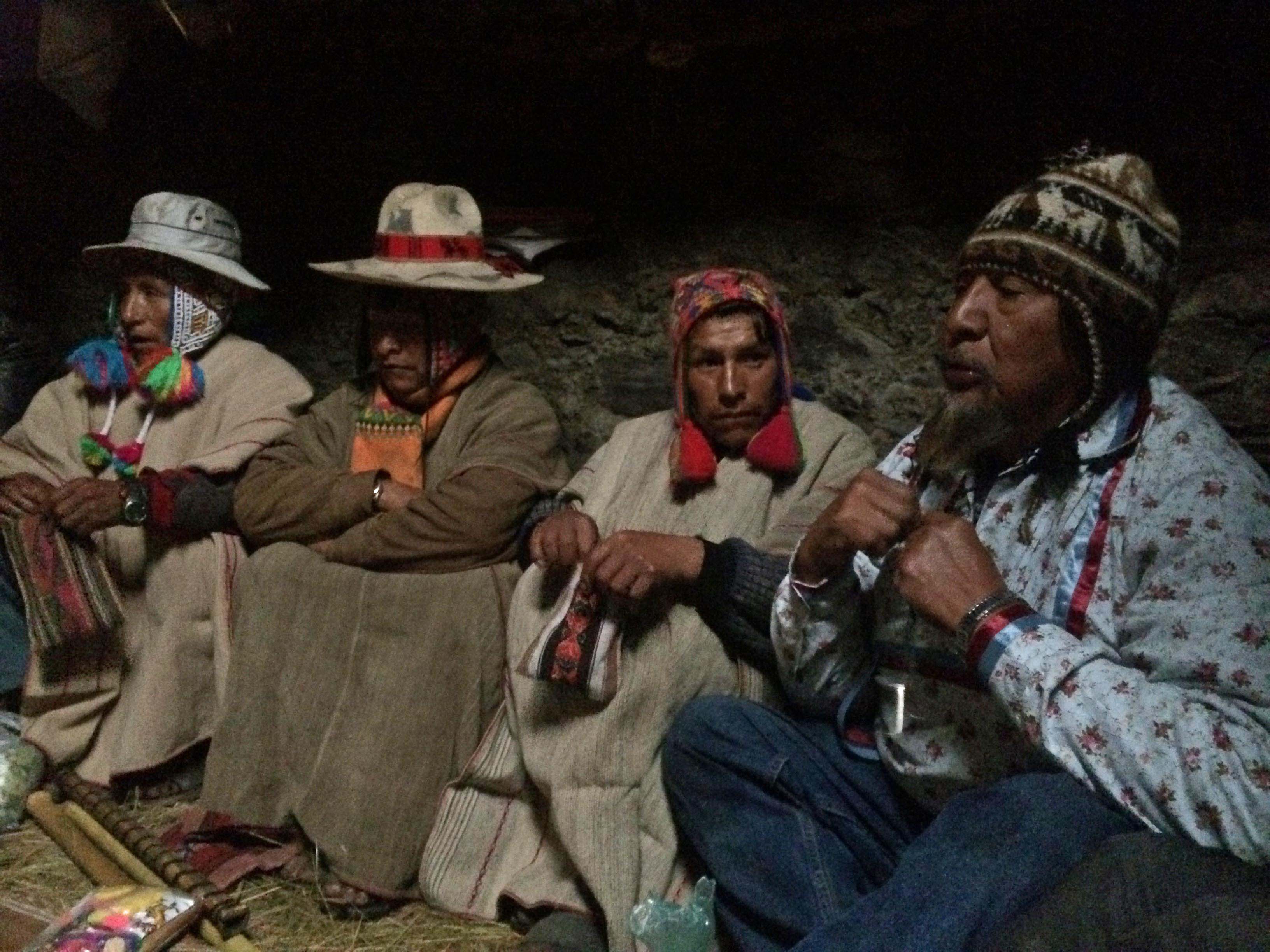
In early November I returned from The Heart of the Andes during which we made a pilgrimage to the Q’ero village of Ccochamocco, perched at 14,300 feet.* Harold Joseph, a Hopi Wisdom Keeper from the village of Shungopavi, Second Mesa, Arizona, was sponsored by Kenosis Spirit Keepers as an emissary for his religious leader Lee Wayne Lomayestewa with a mission to request prayers from the Q’ero community for continuity of threatened Hopi traditions. Harold said, “The Q’ero spiritual leaders make strong prayers!”

There is no road up to the village. In order to get there we sometimes rode on horseback, much of it walking through some of the most beautiful and steep landscape I’ve experienced. Harold stopped a number of places on our journey to give his own prayers and leaving offerings, as well as during despacho ceremony during our time in the village.* We were truly privileged to be part of all of it.

Hopi Harold Joseph (rt) during despacho ceremony with Q'ero spiritual leaders. Photo credit: Sage Garrett.

Hopi Harold Joseph (rt) during despacho ceremony with Q’ero spiritual leaders. Photo credit: Sage Garrett.

The highest point to and from the village is 16,000 feet before descending. On our return, as some of us were already ascending, I began to hear a voice echoing from the valley below, calling forcefully every few minutes. I couldn’t understand the words or see who it was. Later I learned it was Harold giving us all a message that Hopi Spirit Keepers used with each other during times of challenge in the kiva, after many long hours of prayer or enduring inclement weather during ceremonial dances.

Be strong!

Pilgrimage to Ccochamocco

The highest point at 16,000 ft on the pilgrimage to Ccochamocco. Photo credit: Carla Woody.

Return from Q'eros.

Returning from Q’eros. Photo credit: Carla Woody

He said it’s meant to strengthen spiritual warriors, to remind them they’re doing what they’re doing for more than just themselves. They’re doing it for their community and more…for all humanity. I will never forget Harold’s message bouncing from mountain to mountain.

After we were home for a few weeks, Harold sent me a note about our spiritual travel journey: “The effect on my life has been enormous in terms of the spiritual connections that was made in behalf of the Kikmongi.*** The awareness that we are spiritually connected to creators and keepers of life: Katsi. No changes in my life but emphasis on the importance of carrying on my responsibility as a Hopi and its ceremonial practices that rejuvenates life here on Mother Earth and the Universe for future generations.”

Harold Joseph. Photo credit: Sage Garrett

Harold Joseph. Photo credit: Sage Garrett

In early May I will begin walking the Camino de Santiago, a 500-mile pilgrimage in northern Spain. My old friend Oscar Panizo is going with me. People ask me why I’m doing such a thing. I can’t honestly give a concrete reason. I just know I’m called to undertake it. The whisper had been hovering in the background for a while, and now is the time.

I also know without a doubt: I will repeatedly hear echoes through time—Harold’s voice encouraging me.

*********************

*The next Heart of the Andes will be October 23-November 5, 2015 and include Bolivia and Peru as a special initiation journey mirroring the path designated by Viracocha, the Incan Creator God. Six Q’ero Spirit Keepers have been invited to accompany us in a pilgrimage that will take them back to their origins. A portion of tuition is tax-deductible to support their sponsorship.

**A despacho is a prayer or blessing bundle made in ceremony by Quechua and Q’ero peoples of the Andes.

*** Kikmongi is Hopi for religious leader.


Categories: Hopi, Q'ero, Spiritual Evolution, Spiritual Travel, Travel Experiences | Tags: , , , , , | 5 Comments

Series Review: Sacred Journeys with Bruce Feiler

In December, PBS aired a series called Sacred Journeys with Bruce Feiler. Given that I offer spiritual journeys myself, it caught my attention. Bruce Feiler is the bestselling author of several books on religion and contemporary lifestyle, as well as New York Times columnist for This Life in the Sunday newspaper. In the program, he goes along with US travelers to six separate sites around the globe as they participate in sacred gatherings and pilgrimages. As viewers we get hour-long glimpses of:

  • Lourdes, France where the young peasant girl, Bernadette Soubirous, claimed the Virgin Mary appeared to her over a period of time in 1858;
  • A 750-mile pilgrimage route on the Japanese island of Shikoku to 88 temples and shrines honoring the esteemed Buddhist monk Kobo-Daishi, responsible for bringing Buddhism from China in the 9th century;
  • The holy sites in Jerusalem encompassing Judaism, Christianity and Islam;
  • The annual Hajj pilgrimage to Mecca in Saudi Arabia, which mirrors Muhammad’s return to his home as leader of the new Islamic religion;
  • The Kumbh Mela, the largest religious gathering in the world, occurring every 12 years at the intersection of the Ganges and Yamuna Rivers in Allahabad, India;
  • The annual festival of Osun-Osgobo in Osogbo, Nigeria, honoring the goddess of fertility, Osun, of the Yoruba religion.

All features in this series are worth the watch. They’re inspiring and caused me to look at my own reasons for pilgrimages I’ve taken…and the one I’m preparing to take.

The Lourdes segment focused on the annual International Military Pilgrimage that has been ongoing since WWII. This filming showed US veterans of the Iraq and Afghanistan wars, carrying visible and invisible wounds, and was especially poignant.

The Yoruba feature was particularly interesting to me, showing elements of initiation rituals. An explanation offered why there were influences from other religions incorporated into Yoruba: As with many sacred traditions, those who are indigenous to the land incorporate the conqueror’s religion in order to stay alive. They become so intertwined in order that the original form may survive, even if hidden. The statement validated what I’ve seen in some Native traditions I’ve known, and sought to explain myself.

Inasmuch as this series is a visual feast for variety of cultures and spiritual rituals, there’s a thread that remains constant: the sense of seeking and renewal. The pilgrims “move between the questions in their lives” and “step outside themselves to reach for higher meaning.”

I found the pilgrims’ expressions and intent in these segments to be no different than those of the travelers on the spiritual travel journeys I sponsor.

Streaming free at PBS online for a limited time. Also available via DVD or to download.


Categories: cultural interests, Film Review, Healing, Spiritual Evolution, Spiritual Travel | Tags: , , , , , | Leave a comment

We Are All Artists

When I’m especially taken with a book, I greatly anticipate the author’s next one. This was the case with one of my favorite novelists, Jim Fergus. Visits to his website had promised one for several years, even with a specific title and subject matter that is of interest to me. But each time I checked … nothing … and I’d log off disappointed. A few weeks ago I checked, this time discovering he had a new one out. I promptly ordered it. Yet again he’d produced a story that touched me in tender places, as much as it informed. I did something I don’t normally do: I emailed him to express my gratitude that he’s writing again.

He responded. It started a conversation.

Jim told me the book had been published in France and done quite well. But when he went searching for a US publisher, no one was interested. Unbelievable, I thought. This is a writer whose two previous books—One Thousand White Women and The Wild Girl—were bestsellers! But with this new one? He’d stepped out of his genre of The West and Native Americans. He was no longer in the neat slot US publishers had placed him—therefore, a risk.

He went on to say the specific title he’d named on his website, Marie-Blanche, was published in France in 2011, currently in development for a mini-series there. Same problem with US publishers. Jim finally decided to self-publish The Memory of Love, the novel I’d most recently read … just to have a new book in print in my own country.*

This goes to show that even widely celebrated writers—and any such artists really—don’t necessarily have it made, as our fantasies tell us. They’re subject to the same tight restrictions and imperious whims if they depend upon the old-school bureaucracies and structures.

Now he’s writing a sequel to One Thousand White Women, the genre he’s known for, accepted by US publishers. There’s no doubt I’m wildly anticipating its publication. And I’m quite sure it will be a commercial success.

However, the unconventional part of me automatically made an appearance. I shared that I’d written three books and had chosen to self-publish specifically to avoid all the nonsense traditional publishers try to lay on you. I don’t have the time or energy to deal with it. Those who have found my books receive them quite well. **

I also mentioned that it’s the same with most art galleries. To accept an artist’s work, they want to make sure you’re consistent, no matter your talent level. Consistent in this definition means same general subject matter and media, same slotting as above. I’m fortunate to have found two galleries who are happy to show my work, no matter how much I experiment. And I do. I’m not a production line.

All aspects of my work—mentoring, spiritual travel programs, writing or art—appeal to a particular small niche, not the mainstream. And I’ve got much gratitude to those who engage with any of it. It means we’re part of the same tribe.

I often listen to Krista Tippett’s On Being interviews when I’m painting. I find them inspiring, and they sometimes inform the piece I’m working on in the moment. Right on the heels of the conversation I relate above, I listened to her interview with Seth Godin on The Art of Noticing, and Then Creating. No coincidence. Here are some relevant take-aways … ***

  • The assembly line is going away. The things that used to make you feel safe are now risky.
  • Putting something new into the world? The industrial order doesn’t want us to do that.
  • Change comes from the margins.
  • When you do something out of the box, you’re not going to be picked by the old regime.
  • Bottom-up change is the future, not top down.
  • One person can make a difference. You matter.
  • Find people who agree with you and lead them to greater depth.
  • You’re an echo of your art if you’re not making new art.
  • Do it as the gods would do it: with intent, no holding back.
Mystery School in process on the easel.

Mystery School currently in process on the easel.

This is the time of year—as we’re on the threshold of the next one—when I remind myself of these truths by viewing Sean Connery’s rendition of Ithaca by C.P. Cavafy, featured in this blog before.

It reinforces my intent.

 Engage your passion. Fine tune. Put it out there.


 ***

 *My conversation with Jim Fergus was relayed here with his complete permission. This is the review for The Memory of Love I uploaded to Amazon and originally sent to Jim with my first email:

Truly, Jim Fergus is one of my favorite novelists having also read  ONE THOUSAND WHITE WOMEN and THE WILD GIRL. This book is indeed a departure but at least equal to the others. I was personally touched by Chrysis’ striving against convention and evolution as an artist, and Bogey was portrayed as though the writer had lived inside those very emotions. The foreword shared why a man could write this way about love, and only at the end did I realize the characters had actually lived. I’d been waiting a long time since THE WILD GIRL for Jim Fergus’ next novel. I’m very glad he’s writing again. Now I’m looking forward to MARIE-BLANCHE.

 **To view my books and readers’ reviews on Amazon, go here. To view artwork online, go here.

***I recommend listening to the unedited versions of On Being interviews with Krista Tippett. They’re much longer but without the fine polish that editing brings. They’re real.

Categories: Arts, Book Review, Creativity Strategies, Interview, The Writing Life | Tags: , , , , , , , | 1 Comment

Special Notice: Coyote Medicine with Lewis Mehl-Madrona, MD

Kenosis Spirit Keepers logo

SPECIAL NOTICE:

We are pleased to announce our special collaboration with Johns Hopkins Center for American Indian Health bringing Coyote Medicine with Lewis Mehl-Madrona, MD, PhD to Baltimore for a free public talk, January 15, 12 noon-1:15 p.m.

Dr. Mehl-Madrona, Lakota-Cherokee author of the Coyote Trilogy, will share about historical trauma, lessons about community healing and resilience that come from Native communities.

Location: John Hopkins Bloomberg School of Public Health, 615 N. Wolfe Street, Room 1020.

To reserve your space contact Nicole Pare, John Hopkins University, npare1@jhu.edu or phone 410-955-6931.

KSKMehlMadrona2-page-0

***

With special thanks to Mike Weddle, MD, KSK Board Member, and Dr. Allison Barlow, Associate Director, John Hopkins Center for American Indian Health, in their efforts to make this event possible.

Categories: cultural interests, Healthy Living, Indigenous Wisdom | Tags: , , | Leave a comment

The Prayer Journeys of a Singing Bowl

Ton Akkermans has had a life-long interest in blacksmithing and lives in the Netherlands. Decades ago he had a memory of ancient Tibet where he made gongs and singing bowls. With this remembrance came the understanding of exactly how they were made in that long ago time and their use. The process was a prayerful one of deep intent—not casually hammered out—for the task he’d been given was a sacred one. Monks carried them as part of their spiritual journey, an ally for meditation, a way to release prayers through vibration when sounded. Sometimes they carried the same one all their years. It held the memory of their spiritual evolution.

Present-day Ton makes the bowls and gongs in the old way and, along with wife Carolina, teaches others. The bowls are imprinted with particular frequencies needed now, a vision toward global healing.

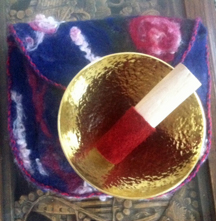
But I knew none of this until my dear friend Hilary Bee, a spiritual teacher in the UK, sent me a note this past July. She reminded me of the beautiful bowl she’d shown me in February when she’d been in the US for a visit. She mentioned Ton’s work, that he’d empowered his students Gabriella Kapfer, Heather Smith Cowen and Quentin Cowen to help further his vision. Thus the Peace Bowl Project of Resounding Earth was founded with a mission, as Hilary told me: “…to make bowls as an offering to the Earth herself, to assist with ushering in a new era of peace and harmony, similar in concept to the Japanese Peace Pole project; and have these entrusted to bowl keepers in different parts of the world…” She said she’d been invited to go to Scotland in September as one of the seven who would make the first of the bowls. The European Sanctuary of the World Peace Prayer Society  supported with the offering of their site.

Then Hilary asked me to be a bowl carrier.

She’d like to make the bowl for me, that my way of talking about the work I do—as a sacred container—was a clear sign to her. I realized in that moment what an honor she’d offered. But, truly, only later did I know to the extent. Of course, I agreed.

She’d asked me to send something for her to tune into as she was making the bowl. After sitting with the request for a while, I put together a package with items representing the Indigenous peoples I’ve worked with most: a Hopi prayer feather I’d been given to carry, an image of Lake Najá with young Lacandón Maya men in their traditional dugout canoe, and huayruro seeds from Peru. I intended to bring the singing bowl to Peru to be part of ceremonies there during our October-November journey in Cusco and Q’ero, and on to Bolivia where I was going afterwards.

Singing bowlWhen I opened the package I’d received in the mail, the energy that issued from it literally took my breath. The bowl and its covering fairly shimmered in their beauty. Through a Skype conversation with Hilary, I learned how deep her own process was. Every indentation in its make-up was an inlaid prayer. There was a network of meditators holding with the intent of the bowls’ forming during that time. Several in Hilary’s teaching circle sent their own bowls along in support. And a young woman named Manuela hand-felted the carrier bag. Her daughter Mayaan made the trim while partner Mark carved the wooden button to close it. Folks across countries gave support. It was then I really began to understand the nature of bowl carrying and just how much had gone into the making. Our conversation was emotional.

I knew that the bowl is not mine. It belongs to everyone.

I sent out an invitation for people to send their prayers. They would be carried in the bowl and resonance released at each ceremony. A number of people responded. Upon my return I wrote to Hilary.

The bowl was present at all ceremonies and circles, sounded separately by everyone, including each paq’o.* After the formal group closed I went on to the Islands of the Sun and Moon with a few folks and a Quechua-Aymara paq’o [Hermógenes] …where at the Temple of the Virgins on the Island of the Moon…after an offering and sounding…I felt the Pachamama breathe beneath my feet. I’m quite sure it was in response.

Despacho in Cusco for a safe journey up to Q'ero.

Despacho in Cusco for a safe journey up to Q’ero.

The energy of this journey was extraordinary for many reasons, a big one certainly due to the singing bowl … and all the prayers spoken and released along the way.**

During despacho ceremony in the home of my Q'ero friend Modesto in the village of Ccochamocco.

During despacho ceremony in the home of my Q’ero friend Modesto in the village of Ccochamocco.

Perubowl-3

Gi Thomas passes the singing bowl to Doña Carmina.

I have never carried a mesa in the traditions of the Andes, even though I’ve been part of the teachings for twenty years.*** I don’t sing Native American songs or hold Maya fire ceremonies. I hold great reverence for Indigenous ways, but I’m sensitive to co-opting traditions that weren’t given to me, or that I have no concrete proof I was born or adopted into. My own lineage was hidden and lost to time.

Perubowl-4

Altar offering at Puma Rock on the Island of the Sun with Hermógenes Romero Sanchez.

But in Bolivia Hermógenes began referring to the bundle I carried to each sacred site and placed on his mesa during offerings …as my mesa. And I realized that I do have a mesa. It was given to me, coming up through time, crossing cultures. And it carries a voluntary responsibility, perhaps one now made visible that I’ve felt for a very long time. This is my grounding.

P1050533-2

Offering at the Temple of the Virgins on the Island of the Moon.

No words suffice for my gratitude toward Hilary for her generosity, spirit and friendship, and all the people who hold the vision of worldwide filaments of peace and healing circling the planet … resonating …

***

 Anyone is invited to send prayers at any time. Just send them to me in a private email. The next journeys this singing bowl will make are to Mayalands in January and Hopilands in March, finishing the year with a return to Bolivia and Peru. But it’s always available and sounded during my own morning meditations.

*************

*Loosely translated, paq’o means shaman in Quechua.

**Hopi Wisdom Keeper Harold Joseph was sponsored on this journey, an emissary of his religious leader on Shungopavi, to seek prayers from Q’ero spiritual leaders for the continuity of Hopi traditions. Harold stopped  a number of areas along our journey, marking the path and laying prayers.

***A mesa is the medicine bundle of a paq’o in the tradition of the Andes.

Categories: Gratitude, Healing, Meditation, Sacred Reciprocity, Spiritual Evolution | Tags: , , , , , , | 2 Comments

Documentary Review – Dakota 38

Dakota 38

Smooth Feather Productions

I’ve seen the Dakota 38 documentary three times now. Each time it’s stirred something in me that has no words, but much emotion. This film is about the Dakota Wokiksuye Memorial Ride first undertaken December 10-26, 2008 and held at the same time each year since. [Update: The last Memorial Ride took place in 2022.]

In 2005 a dream vision came to Jim Miller, a Dakota Vietnam Veteran—one so terrible that he tried to forget it. He said you have a sense when something was real and “it wouldn’t go away.” What he saw was a dark occurrence in the name of justice, largely hidden in history and unknown to Jim at the time.

On December 26, 1862 at 10 a.m. in Mankato, Minnesota, 38 Sioux warriors were hung in the public square, the largest mass execution in the history of the US. President Abraham Lincoln ordered it so on December 6. Two more warriors were executed the following year.

With the influx of more whites and military, the Sioux had been herded into a narrow strip of land, not allowed to leave the enclosure or hunt. As part of the treaty they were supposed to receive rations. They didn’t. They were starving. To defend themselves, they fought back rather than starve. Atrocities were committed on both sides.*

In the opening lines of the film, Jim Miller talks about what it means to be Dakota—”to walk in harmony with every living thing.” Feeling directed by the Creator, he organized a ride on horseback over 330 miles, leaving on December 10, 2008 from Lower Brule, South Dakota to arrive for ceremony at the hanging site in Mankato on December 26. The Memorial Ride was meant to honor the ancestors and as resolution …forgiveness. This was not an easy undertaking. There were blizzard conditions to be endured. Participants faced conflicting emotions related to racism, something openly discussed. There were many poignant moments when the riders disclosed why they were riding: for ancestors, family, to lay something to rest within themselves. Communities along the way heard about their mission and helped out, unbidden, by providing food and shelter for the riders and their horses, especially in extreme weather.

The film lends hope, portraying people pulling together—even in emotional discomfort—attempting to heal and overcome horrible tragedies that never should have happened. We need so much more of this today. And such things kept in the dark must be known.

View the full-length film free on You Tube. Length: 1 hour, 18 minutes.

*****************

*Further research beyond the documentary showed the trials to be a farce, each one lasting about 15 minutes. In the end 303 were slated for execution, which President Lincoln reduced to 38.

See related material:

The Sand Creek Massacre.

Co-Opting the Memory of the Dakota 38 + 2.

Categories: Compassionate Communication, Film Review, Healing, Indigenous Rights, Indigenous Wisdom | Tags: , , | 2 Comments

Blog at WordPress.com.