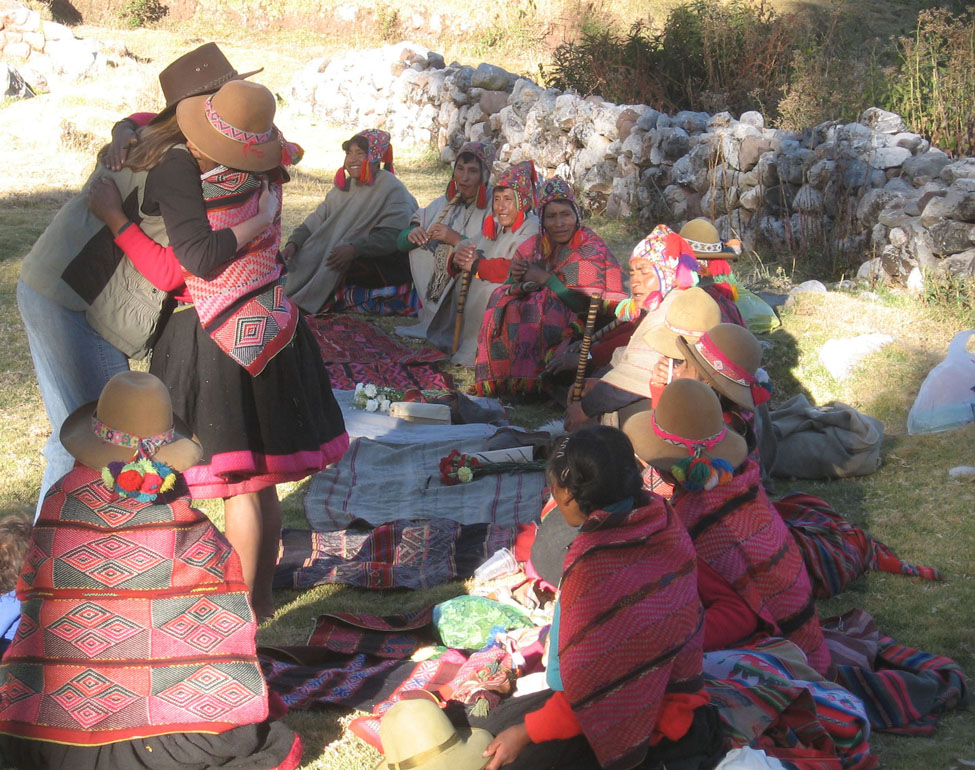
Posts Tagged With: intent

Book Review: The Painter from Shanghai

painter_from_shanghai

By Jennifer Cody Epstein

I’m always attracted by novels with a backdrop of art, controversial times and exotic locales and quickly became engrossed in The Painter from Shanghai. Only at the end did I realize the central character and many of the supporting ones actually lived. The times were dangerous and the daring commitment of those chronicled in the book’s pages is penetrating.

The author has written a fictional account of Pan Yuliang, a Chinese artist often known in her own country as the “Famous Western-Style Woman Painter”—a title she abhorred because it noted her gender. As a young girl in the early 1900s she was sold to a brothel by her uncle. This is the story of her origins and how she managed to leave that life to enter the world of art, something unheard of in those times, to become a well-known international artist and professor. The reader travels with her from China to Paris to Rome and back to China as she maneuvers between the strong pressures of Chinese tradition, dedication to her art and the political, sometimes deadly upheaval of the 1930s and 1940s. The book provides excellent entertainment as a novel. But it also educates about strict Chinese conventions, some of the heart-breaking practices Chinese women had to endure, and the intersection of Communism and Chiang Kai-shek’s Republicans. Above all it’s about the inner life of an artist and hard choices she makes to adhere to her dream.

Available at Amazon and elsewhere.

Categories: Book Review, Visual Arts | Tags: , , , , | Leave a comment

Spiritual Responsibility? Duty? Cargo?

I’ve been toying with terms to express what I mean and the process I’ve been evolving through in the last year. Responsibility or duty: both have a heavy connotation, not something done freely but something expected.

Within Maya communities there is the “cargo system” still in effect from colonial times. It has to do with civic and religious hierarchical positions, each held for one year. In the Andes, a similar system exists. “Cargo” may be translated as “burden.” Those “carrying cargo” incur expense, the higher the role in the hierarchy, the more monetary investment. In colonial times, the Spanish used the system as a means of control and exploitation. Today, it’s supposed to be a means of mediating wealth and sharing. But in reality, it creates separation. Those who have the most to expend are the ones who rise in community stature. Hence, they have more prestige. This aspect of the construct is quite distasteful to me, not much different than what often exists in western churches.

Going Home ShungopaviOil on canvas depicting Home Dance.©2011 Carla Woody

Going Home Shungopavi
Oil on canvas
depicting Home Dance.
©2011 Carla Woody

Over these last years, I’ve developed friendships with Hopi people who keep the old ways, and learned much about their traditions. Their clan system is complex, each clan and its members carrying separate spiritual responsibilities. Their religious and cultural ceremonies happen monthly according to the cycles of the Hopi calendar. Each ceremony takes up a good portion of each month due to preparation in the kivas and kitchens, aside from the actual dance and closure afterwards. I’ve witnessed the amount of work that goes into them, as well as listened to friends sharing what they can with an outsider. Truly, I marvel how they are able to get anything else done! For those who have chosen to maintain their traditions…it’s a huge investment of time and energy. Many have found it to be too much and put the sacred ways aside to a great degree. Tradition is going to the wayside.

That brings me to my own process. I founded Kenosis Spirit Keepers, as the volunteer-run nonprofit extension of Kenosis, back in 2007. I took that step because I fully believed that the Indigenous wisdom traditions must be valued and supported in a time when powerful influences across the globe sought to devalue and deplete what was life-affirming. Little did I know that my decision would take me on an unexpected, personal odyssey.

Initially, there was abundant support, both financial and sweat equity. We were able to contribute significantly and support community projects in the Peruvian Andes, sponsor intimate meetings between Native spiritual leaders, and eventually began to offer educational outreach in the local community. It was hard work but we could see the positive outcomes that resulted. Those were exciting times. It was exhilarating.

Then the recession hit. Funds dried up and people pulled back and holed up. I found that I was working harder and harder with few outside resources. My commitment to the mission never waivered. But such things eventually take a personal toll on the spirit and physical body.

Finally, a loud internal voice intervened when I was most tired and discouraged, “Why bother? No one out there cares. You’re wasting your time. It’s hopeless.” I’d set the questions aside but they’d return…until the voice became my nearly constant companion. First, you have to understand that it’s normally quite rare for me to have such messages play in my mind. I finally recognized that my internal struggle was a spiritual test.

Maya PrayersOil on canvas depicting the church in San Juan Chamula.©2011 Carla Woody

Maya Prayers
Oil on canvas
depicting the church in San Juan Chamula.
©2011 Carla Woody

Something happened last January during my spiritual travel program in Chiapas, Mexico that shifted my perspective. During “free time” I’d gone to the Maya church in the traditional village of San Juan Chamula, taking those with me who wanted to return. Every year I spend as much time as I can in this powerful place where the very air vibrates with energy. A few days prior we’d been there for the Festival of San Sebastián, during which the statues of the saints, wearing layers of robes, are taken out of their glass cases and carried on the shoulders of cargo holders in a processional in the main square.  When we returned, the saints had not yet been returned to the glass cases that lined the walls. Maya men were removing the outer layers of vestments on the saints and carefully putting them away in special wooden trunks that would later be stored and protected in individual homes.

I stood watching a few feet from a table where Saints Lucia and Martha were resting. Maya women sat on the floor alternately talking with each other and chanting in unison. Candles were everywhere; pine boughs covered the floor; copal smoke was thick in the air. It was magical in the sense that deep reverence can be. I looked at Saint Martha’s painted eyes—and they suddenly seemed to come alive and gaze deeply into mine. I felt penetrated as though some sort of transmission had taken place.

Then one of the men motioned to another who then approached the table. Very carefully, he lifted Saint Martha in his arms and slowly walked over to her case against the wall. But before he placed her inside, he paused.

And then he danced with her, a beatific expression on his face.

My breath caught and my eyes filled with tears. Such a display cannot be from a “burden” one carries, but directly from the heart. Since then I find that each time I share what I witnessed, tears come again. I continue to be moved and the memory has rooted itself within me for purpose, I believe.

A few weekends ago we were privileged to host Hopi Spirit Keepers Harold and Charlene Joseph for our Series here in Prescott. Some aspects they shared had to do with the involved process of Hopi weddings, their ceremonial cycles and community participation. People were touched, to the point that one participant later told me she had no words. Afterwards, a friend and I took Harold and Char to dinner.

We discussed the “Why bother?” questions that had been haunting me, although less frequently in the last months. Surprisingly, those questions were common to all of us sharing that meal. Yet, we all persevere because the core element of spiritual belief and service is implanted somehow in our DNA.

So after all the months of testing—mental angst, physical exhaustion and spiritual inquiry—I’ve returned again to one central theme that I learned years ago in the Andes: ayni, or sacred reciprocity. That’s the term I was looking for; it was under my nose all along. I even wrote about it again in recent blog posts! But I’m revisiting the meaning in a different way.

This is what I’ve re-learned so far:

—    Such ways of being are the invisible strands that hold the world together;

—    It’s possible to operate within a construct that is riddled with shortcomings and still hold pure intent;

—    Intangible things that you value spiritually are worth the hard work, sometimes requiring a lot of faith;

—    Strike a balance in all things;

—    Touch just one person and it touches others;

—    Ask for help; some things take a community.
Categories: Healthy Living, Hopi, Indigenous Wisdom, Maya, Personal Growth, Sacred Reciprocity, Spiritual Evolution, Spiritual Travel, Visual Arts | Tags: , , , , , , , , | 4 Comments

The Holy Places

A Chance Encounter

In July 2012 I visited Ireland with my folks. We’d driven to the Cliffs of Moher finding the coast socked in with fog, nothing visible. Somewhat disappointed, we continued on the narrow, winding road toward the village of Liscannor following the map back to the cottage where we were lodged miles beyond. I almost didn’t see the small sign pointing off to the right that said: Saint Brigid’s Holy Well.

At the time, I didn’t know anything about Saint Brigid or Ireland’s holy wells. But I did know that springs, caves and other natural formations are often special places of ceremony and prayer for ancient and present-day peoples who connect with the Creator through those means. Due to the countless rituals and natural properties of such sites, pronounced energy resides in an ongoing way, a container. I’ve experienced many of them.

Shrine

Altar at Saint Brigid’s Holy Well.
Photo: Carla Woody

 Saint Brigid’s Holy Well

The holy well wasn’t immediately apparent. In fact, we doubled back on the country lane that took us way back in farmers’ fields to return to the original intersection. On top of the hill was a cemetery but below was a small courtyard. Tucked into the hill was a slit just wide enough to hold one person. Visible even from the outside, figures of saints sat in a tight row leading into the darkened inner chamber; layers of rosaries adorned them. The short path ended in front of the spring. Prayer cards, handwritten messages and photos of loved ones covered the walls. One step inside and there was no doubt that we had entered sacred space; the energy was palpable. Petitions for healing, devotion and hope hung in the air. My mother said she felt sadness. I’m sure that was present, too.

But there was also celebration and gratitude. The note from five year-old Jimmy Delany said that at three weeks old he stopped breathing in his mother’s arms. He was revived but in a coma. He recovered without the side effects expected by the docs—that he’d be a “vegetable.” “Unexplainable,” they said.

Jimmy Delany's Note of Thanks

Jimmy Delany’s note of thanks.
Photo: Carla Woody

Holy Waters

Holy Waters
Photo: Carla Woody

I stayed there for quite a while, long after my folks went ahead to the cemetery, and performed my own ritual. Kneeling before the spring, I dipped my palms and brought the waters over my head, whispering my own prayer. And in that moment, I felt the sweetest sense of fullness, an energy transmission that deposited itself in my sacral chakra. I have no other way to speak of it—and it’s with me still, present every morning during meditation.

On the stairs up to the cemetery a small tree was covered with ribbons, small pieces of cloth and more rosaries. An old custom most often maintained by Ireland’s Travellers, when something is hung from a “rag tree” it’s believed to heal the person it belongs to as the item weathers and disintegrates.

I had no foreknowledge that: “…This site has a particularly mysterious atmosphere which may be felt at once by the pilgrims as they enter…” But I can speak from experience just as from other times at the holiest of places.

Before being claimed by the Christians, Brigid was known as the “exalted one” credited with miraculous healings and patron saint of the Celtic Druids. Saint Brigid’s crosses are seen all over Ireland. The story goes that, after healing a chieftain, she made a cross out of rush in thanks. I bought one to bring home but I need no reminder of my time at her holy well.

Categories: Healing, Meditation, Spiritual Evolution, Travel Experiences | Tags: , , , , , | 7 Comments

Sacred Reciprocity – Part II

Excerpted from Navigating Your Lifepath by Carla Woody.

THE NATURE OF TRUE COMMUNITY

In Part I, I wrote about ayni, which can be loosely translated from the Quechua as “sacred reciprocity.” In my estimation, it bears exploring over and over again, as we can dip more deeply into the meanings that rest beneath the surface. Ayni is not merely a concept, something nice to talk about, to the people of the Andes and other Native peoples. It is an actual day-to-day practice so embedded that they don’t even question it.

Carla and Q'ero Waikis

The author greeting Doña Carmina and other Q’ero waikis (friends) before a despacho (blessing) ceremony outside Cusco.
Photo credit: Oakley Gordon

In Western culture we think more in terms of giving and receiving. I give you something. You owe me something in return. In the Andean tradition there’s a much different flavor to giving and receiving. It has to do with the support of the entire community, not just one person.

If one person knows how to do something very well and the other person doesn’t, the one who has the skill automatically shares the teaching. The reciprocity comes to the first person in two ways. First, the teacher is validated for her knowledge base and may also learn more through the teaching. Maybe even more importantly, the entire community benefits because there are now two people with added value instead of just one.

COLLABORATION ONLY WELCOME

In 2004 I heard a radio program on global cultural change called “Andean Harvest” on Worlds of Difference that lent a further distinction to ayni and its influence. The interview took place in one of the mountain villages in Peru and had to do with the potato crop, of which there are a few hundred varieties. The challenge had to do with the farmers growing more of the different kinds of potatoes and getting them to market. To do so would give the opportunity to increase their livelihood. As a part of this undertaking, they were being advised by outside sources.

But the farmers rejected most of the sources’ advice. In the interview one of the elders said, “We will do nothing that would put one of us in competition with the other.” He went on to explain that introducing competitiveness would negatively impact the overall health of the community. What he said gave me pause and a great deal of consideration by contrasting it with my home culture.

THE WORTH OF WHO WE ARE

In Western culture, competition is considered healthy, naturally a part of our capitalistic society. Sports teams compete. Sportsmanship behavior is encouraged. But there are a few other strange, although familiar twists, which get in the way and preclude the practice of true ayni as yet.

The programming of our society says that success means we have to “be somebody.” That translates to a profession: doctor or lawyer but not “merely” a mother or father. If we define our worth and identity through career choice, or lack of thereof, there’s a huge convolution to the psyche; it sends the ego scrambling. The natural follow-on is one of competition, individual gratification, the need to “win” in order to be validated. The behaviors that come of this particular mindset produce not community, but a fractured society generating discordant energy.

Competition introduced into locales such as those in the Andes would create confusion, disrupting their underlying spiritual tradition. People there are known not so much by what they do, but by who they are. Many of the shamans and mystics that I have come across in Peru and elsewhere can determine who we are by seeing our energy field. That tells everything. A light energy field and the intent to evolve are what garner respect, not a livelihood.

Witnessing our own thoughts and actions is a slippery slope at best. The ego has all kinds of rationale to convince us that what we do is for our own good and that of those around us. Coming from the culture we do, unconsciously ingesting what we have, we perform a service to ourselves, and ultimately our communities, by being alert and wiser than the ego mind. The Core Self insists on it. Here are a couple of questions to consider.

– How do you find the level of competition around you?

– How can you make space for and “sponsor” others?

***

Go to Sacred Reciprocity, Part I.

Categories: Indigenous Wisdom, Personal Growth, Sacred Reciprocity, Spiritual Evolution, Spiritual Travel, Travel Experiences | Tags: , , , , , , , | 2 Comments

Review – Sacred Reciprocity: Courting the Beloved in Everyday Life

The Poetry of Jamie Reaser

The beauty of Jamie Reaser’s poetry causes my heart to thrill, to ache, to still—with each turning of lyrical phrase. In Sacred Reciprocity she is both transparent seeker, sitting in deep communion, and gentle guide, gracefully leading us to those innermost places where the Soul revels.

The Sacred Way of Giving and Receiving

Sacred Reciprocity by Jamie Reaser

Sacred Reciprocity by Jamie Reaser
Newly published by Hiraeth Press

Jamie and I have a mutual connection through Andean mystic Don Américo Yábar where, many years ago, we were both exposed to the life-affirming practice of reciprocity—in a vastly different way than when we think of that word in our culture. The Quechua word ayni has no exact translation but can be understood as a sacred sense of giving and receiving, a balanced energetic exchange. You see, in the Andes, all is related to energy and respect. Ever since I learned of ayni, its my daily intent. I’ve taken it to heart.

So has Jamie; she offers this further distinction in the introduction to her new book: “…Ayni can be established among people, between humans and all other beings, and between all beings and the animate Cosmos…What is given may not be anywhere near as important as how it is given. In ayni, it is the heart that counts.”

Jamie Reaser is a naturalist who has worked around the world as a biologist, environmental educator, eco-psychologist and much more. But the aspect that allows me to know her true nature—and devotion to ayni—is her ability to: sit in silence where she lives in the Blue Ridge Mountains of Virginia; take in the glory she experiences…and transmit it back in such beautifully accurate ways that speak of our common condition. Here is just one sample.

 Dawn Kiss

The Sun,

dressed in dawn robes,

rose with time enough

to kiss the Moon, his beloved,

on full, wanting lips.

Birds,

still distinguishing themselves from

the wings of dreamtime,

looked abashedly at each other,

wondering…

How often had they

failed to seize

a precious passing moment…

A moment that could have

united the transiting heavens.

That was the morning birds

decided to sing.

Jamie will be joining us for our Winter Solstice “Entering the Maya Mysteries” journey to the highlands of Mexico and Guatemala. I’m delighted that she has consented to share her poetry during sacred periods of those travels because—I know—it will add to the deep meaning of that time.

Sacred Reciprocity: Courting the Beloved in Everyday Life is a new title published by Hiraeth Press in August 2012; also available via Amazon. My review of Note to Self, her previous book of poetry, is located here. And be sure to visit her poetry blog Talking Waters.

Categories: Book Review, Meditation, Spiritual Evolution, The Writing Life | Tags: , , , , , , | 3 Comments

Readiness

Author at Hayu Marca

The author at Hayu Marca, Puno Region, Peru.
Photo credit: Darlene Dunning

Excerpted from Navigating Your Lifepath.

Preparing for the Journey

The point of readiness is exactly that.  It’s a pinpoint in time, a moment of decision when we are poised at the threshold contemplating intent’s power to move us to a farther path from where we’ve been.

Hopefully, readiness endures. Some people dance back and forth or even all around it. Others try to ignore it. But it’s hard not to notice a strong wind at your back urging you to go somewhere, to fly over the landscape.

Still others go willingly, pausing for a moment and then stepping deftly through the doorway. But they, too, had to come to that marker called readiness—even if more subtly—the love of adventure already built into their personality.

This is the path called evolution. We’re all on it. Some of us rest on the plateau longer than others. Most of us take a series of leaps in our lifetime. The question here is to consider: How do we know when it’s time to go? To jump? To move through? To evolve?

The movement we entertain or undertake may not even be visible to those around us. Yet there is a part of us that is restless, that’s weary of standing still—or worse, running in place. It’s this part that asks: What needs to be in place in order to come to readiness? Is there something to settle? Or maybe a little used quality to call into service? Perhaps it’s the courage to open to something new instead of settling for what has been.

I invite you to reflect on your own readiness and the questions here. Add more of your own. Then allow your expression to emerge.

Announce yourself.

Categories: Healing, Personal Growth, Spiritual Evolution, Spiritual Travel | Tags: , , , | 1 Comment

The Tasking

Excerpt from Standing Stark.

Rio Paucartambo
Salk’awasi, Mollamarka, Peru
Photo: Carla Woody, 2004

Set your intent and let it go. Your intent is your beginning. Worrying about the details detracts from the intent. In your strong intent, the attraction will take care of the details.

The first aspect of beginning is assessing yourself and taking responsibility for your own course, where it has taken you and where you are now. That responsibility will determine your future—the one that exists through the vibration you now exude.

This is the Separation and then the Search. It isn’t really a search as much as it is a surrendering to intent. The giving over is to intent. Then intent takes the lead and brings you what will take you further. It will take you further to recognize your Core Self, the Self that had been hidden from you previously, but the one that had been there all along.

Sometimes the realization comes through sitting still—through patience and listening. It’s not listening to what has been habit, but listening to the quieter place and the guidance there.

Sometimes the realization comes through an action, but only an action made from clarity, from impeccability. Otherwise, it’s an action taken from habit. Then the action will merely tell you something about your habit.

An action arising from the deeper place will have a solid knowing and urging about it. It’s a bodily felt energy that envelops you in knowing. It’s not a feeling of desperation accompanied by inappropriate or castigating internal voices. That’s the dialogue through which the actions of habit are fulfilled.

Actions of impeccability move you along the warrior’s path of utter surrender to the destiny of Knowing and Not Knowing. It is the knowing of the Core Self in all aspects, in all human tendencies, in all that is resident of Source. It is the not knowing of the profound comfort of the Infinite.

It is the mind overtaken by Spirit.

It is the mind having willingly succumbed to the wider wisdom dwelling within and without.

And you have to leave the place of previous comfort and familiarity in order to uncover it.

Categories: Healing, Meditation, Personal Growth | Tags: , , , , | 4 Comments

Wanderings and Inspiration

This is an excerpt of an article I published in 2006 about what happens when you leave “home” with intent; what can show up to inspire; and a bit about the beauty of the land and people of Chiapas, Mexico.

Lake Najá Photo

Lake Najá
©2011 Carla Woody

If I have an indulgence, it’s travel. On second thought, it’s not an indulgence at all, but one of the significant ways I care for myself. It serves as a gateway to wider experience of the world—and self-discoveries as well. These are intangibles I can bring home, like souvenirs, even if no one else can see them. But they won’t be put away in a drawer or gather dust on a shelf. Instead, they impact who and how I am in the world.

But it’s not just any kind of travel that has this effect. It’s the kind where I choose to step outside time. Having identified specific points in the calendar that the journey will begin and end, with a wide reach in-between, l just let go of any schedules or agendas. So strongly programmed by our culture to have both those things as absolute necessities of life, the residue may linger on for a bit until it clears completely. When the space vacates, it opens a portal toward untold treasures.

Palenque in the Mist

Palenque in the mist
© 2010 Carla Woody

Palenque

Over the years I’ve found myself drawn repeatedly to the Mexican state of Chiapas bordering Guatemala, particularly the Palenque area. The village of Palenque holds no real fascination. Stepping off the bus though, I did feel the familiar sense of anticipation. For as we headed out of town in a taxi toward our destination, climbing a bit in elevation, feeling the balmy air soothing my skin, a part of me sighed, “Ahhhh… home again.”

There was the dirt path alongside the road. Playing over memories of the many different times I traversed there, to and from the ruins, breaking out of the thick, moist rainforest from who knew where, or headed to Mayabel for a cold one in their open-air café, the screams of howler monkeys periodically punctuating the air in early morning or dusk.

The Palenque ruins, and those of Yaxchilán and Bonampak buried in the rainforest, contain a resonance, one captured through history and brought up through time. Unfortunately to me, things have changed and these places aren’t as obscure as they once were, but the vibration endures. Tourists who sprint through won’t experience it though. It takes lingering and opening to what these timeless places have to share. It takes immersion. Only then will they offer up their secrets.

The Lacandón Maya

The Lacandón Maya reside in this region in the depths of the Lacandón Jungle. Their appearance and form of traditional sacred rituals set them apart from the highland Maya. Their creation stories have the familiar ring of what we know from the ancient Maya of that area. For centuries they avoided contact with the outside world, continuing their practices and passing stories down through generations. They weren’t hidden enough. In the last several decades, like an infestation of fleas, missionaries and loggers descended.

Chan K’in Viejo

Chan K'in Viejo

Chan K’in Viejo
©1960 Collin Hanney

The central guardian of the ancient traditions was Chan K’in Viejo, the spirit holder of the Lacandones, living in the small enclave of Najá, a place, difficult to reach, in the heart of the Lacandón Biosphere. As the vast rainforest was whittled away around him, and more of his people were enticed away by Western trappings, he was steadfast in the virtues his tradition brought him. Quietly tending his crops, feeding the god pots with copal, leading the balché ceremonies and telling stories for those who would still listen, he held to the central truth. “The roots of all things are connected. When a tree is cut in the forest, a star falls in the sky.”

By the time he left this world in 1996 he may have sadly marveled there was any light left overhead so open was the view to the heavens! His great concern was also that the Lacandones would have no home and their ancient, esoteric tradition would no longer exist. (To link to a recording of Chan K’in Viejo speaking to his children in 1991, go here. The audio is in Lacandón Maya with transcripts also in Spanish/English.)

Trudi Duby Blom

Gertrude Duby Blom

Gertrude Duby Blom
Date and credit unknown

From the 1950s until her passing in 1993, Gertrude Duby Blom photographed many parts of Lacandón life, thereby documenting people and their traditions, nearly lost to us today. A deep friendship endured. Even today, should any Lacandones venture from their jungle homes to San Cristóbal de las Casas, they have lodging at Na Bolom, the House of the Jaguar. Once the home of Trudi and Frans Blom, it’s now a museum focusing on the life and traditions of the Lacandón Maya.

When my companion and I were in San Cristóbal, we visited Na Bolom, having lingered over the photos and ritual objects. I stood a long time in Trudi Blom’s small bedroom, looking at her personal items, gazing at her clothing still hung in a wardrobe, imagining what it must have been like to live her life.

What inspires me?

People who stand for what they believe, living an un-prescribed life—unless it’s a prescription of their own making. They are fresh and enduring, even if their un-prescribed life is a secret they hold, unknown to the masses, one practiced alone or acknowledged by few.

Then there are the places in this world that have invoked inspiration for many. The collective energy is maintained through the intensity of the ageless offerings and the beauty of the land.

These things are food for the soul discovered through my own wanderings and with those who consent to accompany me.

❖❖❖

To read the complete article go here. To learn more about our upcoming Winter Solstice 2012 and January 2013  Entering the Maya Mysteries program go here.


Categories: Indigenous Wisdom, Lacandón Maya, Personal Growth, Spiritual Travel | Tags: , , , , , , , | Leave a comment

Blog at WordPress.com.